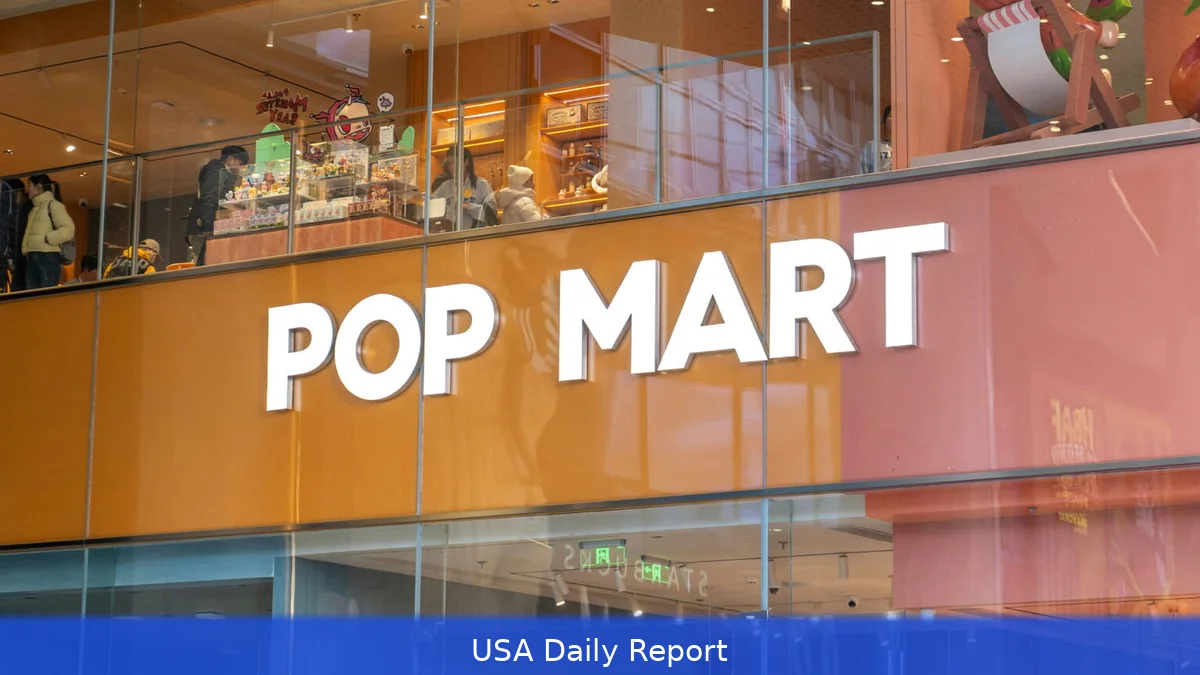
Since last August, Pop Mart’s shares have dropped over 40% from their peak. In response, the Chinese collectibles giant just announced its largest-ever share repurchase, aiming to shore up confidence and stabilize the stock.
From Sky-High to Slumping Shares
Pop Mart's stock soared to an all-time high of HKD 339.8 (about $43.60) per share on August 26, 2025. But the rally didn't last. Over the next five months, shares tumbled by over 40%, dragging the price down to roughly HKD 200. The main reason? The fading allure of Labubu, Pop Mart’s flagship intellectual property.
Labubu’s popularity once fueled a craze in the blind box market, lifting Pop Mart’s sales and stock price to new heights. But data from the Dewu app reveals a harsh reality: the average price of Labubu “Big Into Energy” blind boxes recently dropped to RMB 100.25 ($14), down 23% from its peak in the past three months. Even more striking, prices have cratered by over 84% compared to last June’s record high of RMB 639.32 ($89.50) following the launch of the “Wacky Mart” series.
Market Saturation and Price Pressure
Some unopened blind boxes have even sold below Pop Mart’s official retail price on discount platforms like Tmall. For instance, prices as low as RMB 86 ($12) have been spotted, signaling weak demand or aggressive discounting.
That consumer hesitation bled into the capital markets. Short selling of Pop Mart shares surged since August 2025, nearing 10,000 shares at one point, according to Wind data.
Investors betting against the stock have grown bolder as confidence waned.
Management’s Bold Buyback Move
To combat the downward spiral, Pop Mart announced a hefty share buyback on January 19, 2026. The company plans to repurchase up to 1.4 million shares at prices between HKD 177.7 and HKD 181.2 ($22.80–$23.20) per share.
This will cost about HKD 251 million ($32.2 million), marking the firm's first buyback since 2024 and its largest to date.
This buyback shows that Pop Mart’s leadership thinks the stock is undervalued and aims to boost investor confidence.
Keeping Control Over Labubu’s Market
Pop Mart’s founder, Wang Ning, has publicly acknowledged the need to curb speculative trading around Labubu. After September 2024, the company ramped up monthly sales to ten million units worldwide, aiming to flood the secondary market and limit scalpers’ influence.
Data backs this up. Following the “Wacky Mart” launch, Pop Mart restocked Labubu vinyl and plush toys six times. This expanded supply slashed prices for mini Labubu editions, undermining hoarders who hoped to profit from scarcity.
Plus, the company dialed down online hype, deploying robotic vending machines that funneled demand to physical stores instead. That shift helped stabilize prices, allowing standard editions to trade near retail, while rare versions still hold modest premiums.
Revenue and Production Growth
Despite the recent turbulence, Labubu remains a major revenue driver. In the first half of 2025, the Monsters series—including Labubu—brought in RMB 4.81 billion ($673.4 million), nearly a third of Pop Mart’s total revenue.
Deutsche Bank research noted that Labubu’s production capacity jumped from 10 million units in early 2025 to an average of 50 million units per month by year-end. The dramatic scale-up has helped Pop Mart regain control over supply and pricing dynamics.
But flooding the market has its risks. If demand doesn’t keep up, overproduction could weaken the brand and squeeze margins. Pop Mart seems to be managing this trade-off.
What’s Next for Pop Mart?
The buyback might steady the stock price for now, but the company still faces tough challenges. Maintaining Labubu's popularity without over-saturating the market will be key. Investors will be watching closely to see if Pop Mart can reignite consumer excitement and fend off further drops.
Still, the collectibles market changes quickly, and trends can shift overnight. Pop Mart’s strategy to control supply and demand could work—or it might fail if consumer tastes shift. Right now, the buyback stands as a clear sign that management is confident despite the challenges.
Pop Mart’s $32 million buyback shows management’s commitment to supporting the stock. But can the company keep Labubu relevant and profitable as consumer enthusiasm cools? The coming months will reveal if this gamble pays off.


