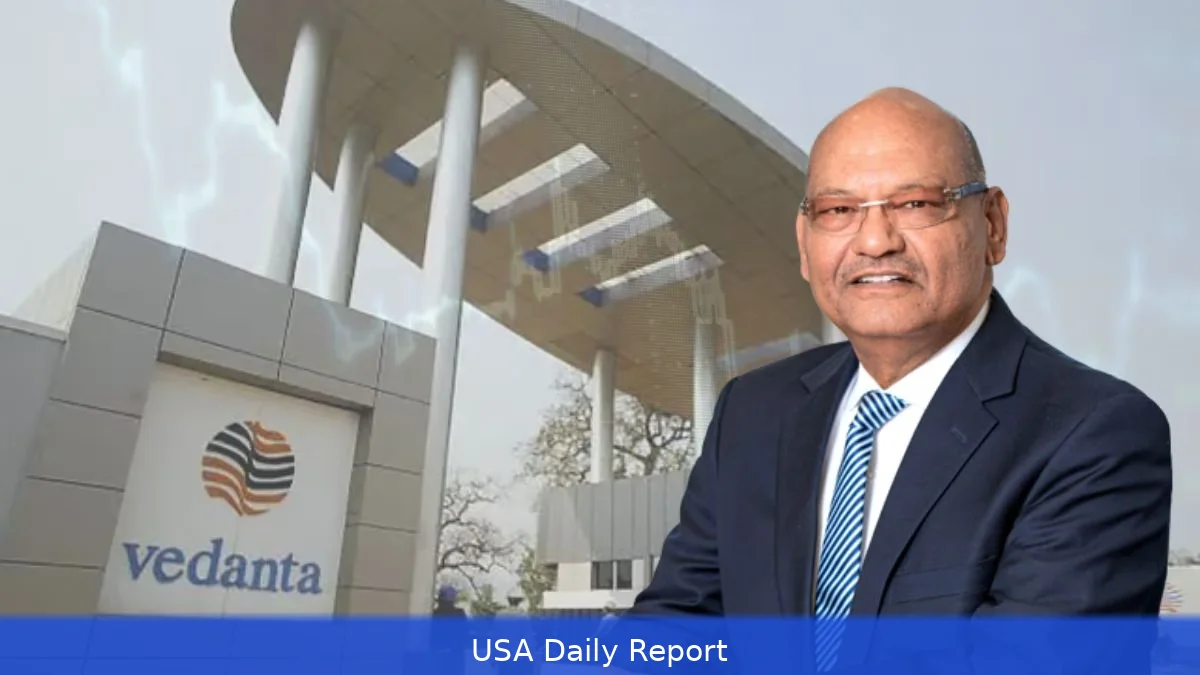
Vedanta Ltd, the Indian metals and mining giant led by Anil Agarwal, is preparing to break itself into five independent units next month. The move comes alongside the company’s announcement of a third interim dividend, signaling major shifts ahead for investors and the market.
Big Dividend Announcement Sparks Investor Buzz
Vedanta recently declared its third interim dividend for the fiscal year 2026 at Rs 11 per share, totaling approximately Rs 4,300 crore. This follows two earlier interim dividends of Rs 7 and Rs 16 per share paid in June and August last year, which together accounted for over Rs 8,600 crore in payouts. The record date for this dividend is set for March 28, meaning shareholders on the books by then will qualify for the payment.
Still, the announcement has triggered a mixed reaction. The company’s shares slipped by about 4% on the day the news broke, adding to a broader decline of over 5% in the past month. Despite this short-term dip, Vedanta’s stock has delivered solid gains over the last year, returning nearly 37%, and over six months, up by 41%. So far in 2026, the stock has risen roughly 7%, showing resilience amid market volatility.
Breaking Up to Build Up: The Five-Way Split
The dividend news isn’t the only big story. Vedanta is moving forward with a plan to demerge its operations into five distinct business verticals. The split will be executed on a 1:5 ratio, meaning each shareholder will receive five shares of the new entities for every one share held in the parent company. This structural overhaul aims to unlock value by giving each segment operational independence, allowing for sharper focus on their respective markets.
Vedanta’s businesses cover a broad spectrum including metals and mining, oil and gas, and power generation. The metal division, particularly aluminum and zinc production, remains a strong performer benefiting from rising global demand.
By spinning off these verticals, the company hopes to attract targeted investor interest and boost liquidity across its shareholdings.
Point is, breaking up could make individual businesses more agile and transparent. Investors often reward such moves, especially when conglomerates have complex structures that can obscure underlying performance. But the process also comes with risks — operational and regulatory hurdles could slow progress or weigh on valuations temporarily.
Shareholding and Market Context
Vedanta’s ownership is dominated by its promoter group, Vedanta Resources, which holds about 56% of shares. Retail investors also have a big presence, with nearly 2 million small shareholders collectively owning 11%. Institutional investors like foreign funds, mutual funds, and the Life Insurance Corporation of India hold meaningful stakes, adding layers of scrutiny and expectations.
Analysts have generally given Vedanta a positive outlook, highlighting its strong cash flows and operational efficiencies, especially in the metals sector. The recent surge in demand and prices for aluminum and zinc globally supports the company’s profitability and underpins its dividend strategy.
However, with the stock under pressure Right now, some investors appear cautious. The demerger plan and dividend announcements come amid a period of market uncertainty, where investors weigh immediate payouts against potential long-term benefits from the restructuring.
What’s Next for Vedanta and Its Investors?
The coming weeks will be crucial. This March 23 board meeting not only confirmed the dividend payout but also set the stage for the demerger’s final steps. Shareholders will watch closely how the company manages the transition and whether it can maintain operational momentum while restructuring.
Vedanta’s strategy to split into five businesses is ambitious. It reflects a broader trend among large conglomerates aiming to simplify structures and unlock hidden value. If successful, each new entity could pursue tailored growth strategies and potentially command higher valuations than the combined group.
But the split raises questions. How smoothly will the transition go? Will the demerged units compete effectively on their own? What will this mean for Vedanta’s ability to invest in new projects or weather market downturns? Investors will be looking for clear answers as the plan unfolds.
Vedanta’s decision to distribute a hefty interim dividend while gearing up for a five-way split marks a turning point. The company is betting that breaking itself apart will generate fresh investor interest and unlock value hidden within its sprawling operations. The next few months will reveal if this bold move pays off.


