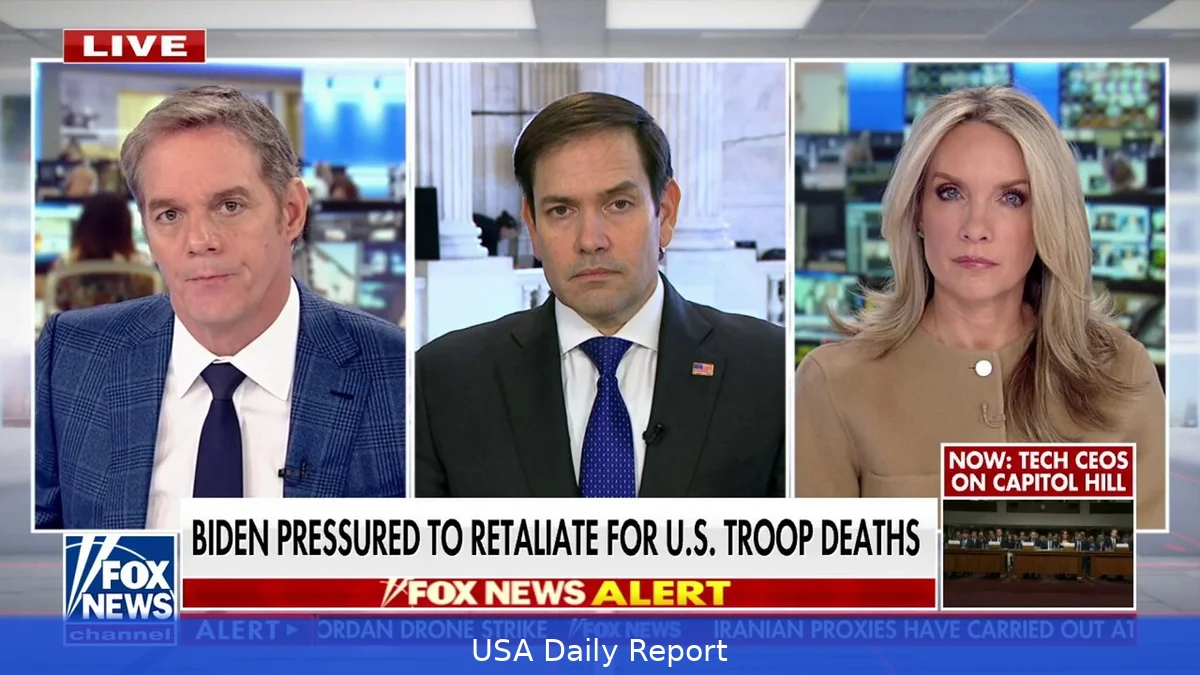
U.S. Secretary of State Marco Rubio acknowledged that weapons initially destined for Ukraine could be redirected to address emerging challenges in the Middle East. The warning comes as the conflict with Iran intensifies and the Pentagon faces pressure on military stockpiles.
Rubio's Candid Warning on Arms Diversion
During a recent meeting with the Group of Seven foreign ministers in France, Rubio made it clear that while no weapons have yet been rerouted from Ukraine to the Middle East, the possibility remains on the table. "If the United States has a military need, whether it's to replenish our stocks or to fulfill some mission in the national interest," Rubio said, "we're always going to come first." His statement shows a practical approach to juggling global priorities.
That admission comes after reports surfaced that the Pentagon is actively considering diverting weapons initially earmarked for Ukraine to counter the escalating conflict involving Iran. The Washington Post cited unnamed sources indicating that the U.S. Military’s inventories are being stretched thin as tensions in the Middle East grow.
Growing Strains on U.S. Military Resources
The conflict with Iran, which has entered its fifth week, has placed unexpected demands on American military resources. U.S. Strikes have targeted key Iranian officials and infrastructure, including missile capabilities, naval assets, and air forces, aiming to curb Tehran’s regional influence without deploying ground troops. Still, the military buildup includes positioning service members in the region to maintain readiness for multiple contingencies.
Given this situation, resource allocation has become a key issue. The U.S. Faces a balancing act: supporting Ukraine’s defense against Russia while responding robustly to the Iran crisis. German Foreign Minister Johann Wadephul voiced concerns that Ukraine’s defense might suffer if support is diluted due to the Middle East conflict. "There must be no compromises when it comes to maintaining Ukraine’s defence capabilities," Wadephul stressed, warning that any weakening would benefit Kremlin leader Vladimir Putin.
Strategic Stakes in the Strait of Hormuz
Rubio also highlighted a looming challenge following the current conflict with Iran. He warned that Tehran might attempt to impose a "tolling system" on the Strait of Hormuz—a vital international waterway through which a big portion of the world’s oil supply passes.
Such a move would be illegal and dangerous, threatening global energy markets and international trade.
Rubio urged the international community to prepare a collective response. While the U.S. Is ready to participate, he emphasized that leadership should come from a coalition that includes countries with high stakes in the strait’s security, spanning Asia, Europe, and beyond.
That concern isn't theoretical. Past tensions in the Strait of Hormuz have led to spikes in oil prices and disrupted global supply chains. Any Iranian attempt to control or tax passage through the waterway could ripple through energy markets, affecting prices and economic stability worldwide.
Implications for U.S. Military and Global Finance
The idea of redirecting weapons from Ukraine to the Middle East raises questions about U.S. military strategy and spending. Military stockpiles aren't unlimited, and replenishing them requires substantial investment, often triggering shifts in defense spending and procurement plans. The Pentagon’s juggling act between two conflicts could impact future U.S. Arms sales, aid packages, and geopolitical influence.
Meanwhile, the financial markets are sensitive to these developments. Uncertainty in the Middle East often triggers volatility in oil prices, which can affect inflation and global economic growth. Investors watch closely for signs that conflicts might disrupt supply chains or escalate into broader wars.
On top of that, any perceived weakening of support for Ukraine could embolden Russia, potentially prolonging the war in Eastern Europe and complicating global diplomatic efforts. The U.S.’s commitment to its allies and its own strategic interests is under scrutiny as it faces simultaneous challenges.
Still, Rubio’s remarks indicate the U.S. is trying to balance its commitments carefully. Maintaining readiness in the Middle East without abandoning Ukraine’s defense is a tightrope walk, reflecting the complex interplay between military needs and geopolitical realities.
Rubio’s comments show how U.S. foreign policy priorities are changing as it faces several crises. Whether weapons for Ukraine will be redirected remains uncertain, but the Pentagon’s resource constraints and Iran’s aggressive posture mean tough choices lie ahead.


