
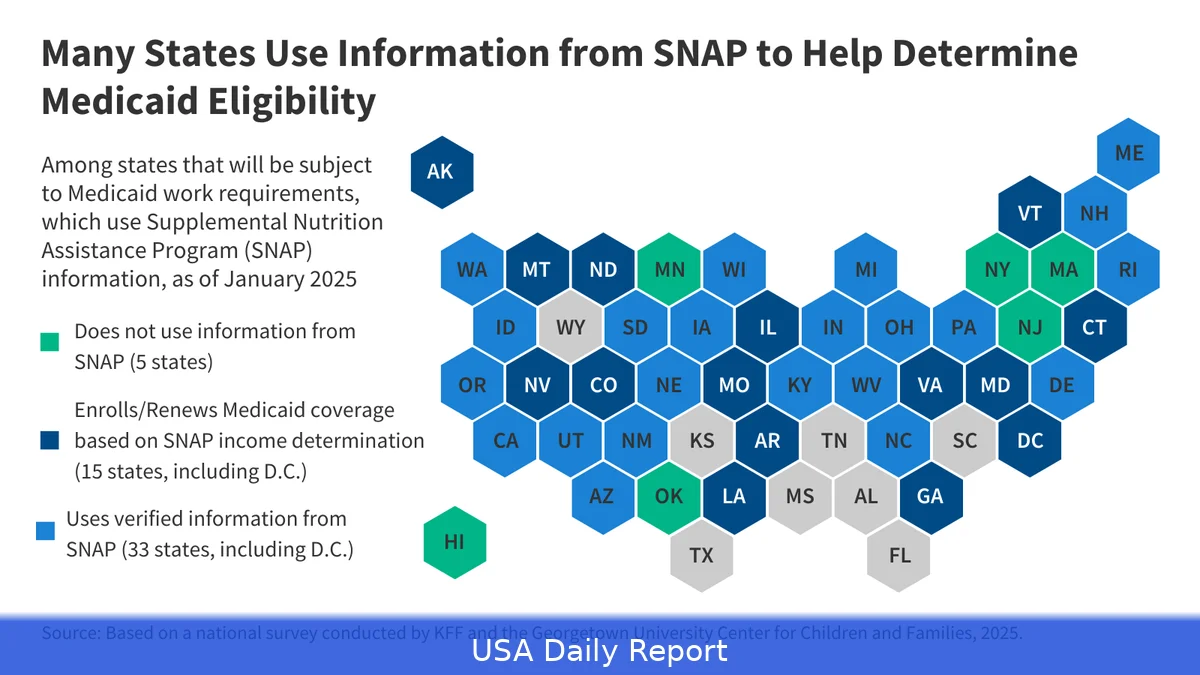
Planning to apply for SNAP or Medicaid in the US in 2026? You need to understand the eligibility rules, benefit amounts, and how to apply. Big changes are coming, especially in some states like Washington, D.C. And Indiana, which will affect work requirements and verification steps. Here’s what you need to know to apply and secure the benefits you’re eligible for.
Quick Overview: SNAP and Medicaid Changes for 2026
- Washington, D.C. Introduces a new work requirement for SNAP starting May 1, 2026, targeting Able-Bodied Adults Without Dependents (ABAWDs). These individuals must complete at least 80 hours of approved work activities monthly to remain eligible.
- Indiana is proposing tighter eligibility and verification rules for both SNAP and Medicaid, pending final state approval expected by early 2026. These changes include stricter income and asset verification processes and expanded immigration status documentation requirements.
- The federal law HR-1, signed into effect in July 2025, increases work requirements across welfare programs, including SNAP. It also reduces federal spending on welfare by approximately 10% over the next five years, aiming to encourage employment among recipients.
- Work activities qualifying for SNAP in 2026 include paid employment, job training programs, and volunteering. Recipients must engage in at least 80 hours of these activities per month, which equates to about 20 hours per week.
- States have some flexibility to implement exemptions and additional rules, so always check with your local SNAP or Medicaid office for state-specific details.
Who Can Claim SNAP and Medicaid in 2026?
Eligibility for SNAP and Medicaid depends on several factors, including income, household size, age, disability status, and in some cases, immigration status. The programs are jointly funded by the federal government and states but administered at the state level, so rules can vary.
- SNAP: Generally, low-income households qualify, including seniors, disabled individuals, and families with children. Able-Bodied Adults Without Dependents (ABAWDs) aged 18-64 in Washington, D.C. Must meet the new work or approved activity requirements starting May 1, 2026, or risk losing benefits. This group represents roughly 7% of all SNAP recipients nationally but faces stricter rules in D.C.
- Medicaid: Covers low-income individuals, families, children, seniors, pregnant women, and people with disabilities. Indiana's planned changes will increase scrutiny on income and asset verification and expand checks on immigration status, potentially affecting eligibility for some applicants. Expect additional documentation requirements for 2026 applications.
Remember, some groups don’t have to meet work requirements—like people with disabilities, medical issues, or caregiving duties. States can also grant waivers in areas with high unemployment. Make sure to check your state’s specific exemptions.
How Much Will You Get from SNAP in 2026?
SNAP benefit amounts depend on household size, income, and allowable expenses. Washington, D.C. Uses a benefit structure with standard allowances plus adjustments for housing and childcare costs. Here are key figures for 2026:
- Standard allowance for a single adult aged 25 or older is $368.74 per month.
- For a couple where both partners are aged 25 or older, the standard allowance is $578.82 per month.
- The child element adds $288.18 for the first child in the household, with additional amounts for more children.
- Housing and childcare costs are considered up to certain limits. Childcare costs are covered up to 85%, with a cap of $1,014 per month for two children. Housing costs are capped depending on local rent averages, typically up to $800 per month.
As household income goes up, benefits decrease, and even small income changes might impact eligibility. For example, a household earning over 130% of the federal poverty level (about $1,677 per month for a single person in 2026) may lose SNAP eligibility unless they qualify for specific deductions.
Remember, these amounts are estimates and can vary by state. Always check your local SNAP office or the official SNAP website for precise benefit calculations.
How to Apply for SNAP and Medicaid Step-by-Step in 2026
Applying for SNAP and Medicaid takes a few steps. Follow these to make the process easier:
- Check Eligibility: Use online pre-screening tools available on your state’s Department of Health or Social Services website. For example, the official SNAP pre-screening tool is at Www.fns.usda.gov/snap/eligibility. For Medicaid, visit your state’s Medicaid site or Www.medicaid.gov.
- Gather Documents: Collect proof of income (pay stubs, tax returns), identification (driver’s license, birth certificate), proof of residency (utility bills, lease agreements), and any medical or disability documents if applicable. Meanwhile for Indiana applicants, be prepared for expanded immigration status verification.
- Complete the Application: Most states offer online, phone, or in-person application options. For Washington, D.C., apply online via Dhs.dc.gov/service/snap. Indiana applications can be started online at In.gov/fssa/dfr/snap/.
- Submit Your Application: Submit completed forms along with all required documentation. Keep copies for your records.
- Interview: You’ll usually be scheduled for an interview (phone or in-person) within 30 days of application. Be ready to answer questions about your income, household, and work activities. For SNAP work requirements in D.C., be prepared to discuss your current work or training plans.
- Wait for Approval: The state agency will review your application and notify you within 30 to 45 days. Emergency SNAP benefits may be available within 7 days if you meet certain criteria.
- Receive Benefits: If approved, you’ll get an Electronic Benefits Transfer (EBT) card to access monthly SNAP benefits. Medicaid coverage typically starts the first day of the month after approval.
Tips to Keep Your SNAP and Medicaid Benefits in 2026
- Stay on top of work or training requirements if you’re subject to them. Track your hours carefully and keep documentation.
- Report any changes in income, household size, or address promptly to avoid overpayments or loss of benefits.
- Renew your application on time each year. Renewal deadlines vary by state but typically occur every 12 months.
- Use official state websites and hotlines for updates, especially since rules are changing in 2026.
- Consider consulting a local social worker or legal aid if you have trouble with the application or appeals process.
Common Mistakes to Avoid When Applying for SNAP and Medicaid
- Failing to provide complete documentation. Missing pay stubs or ID copies can delay or deny your application.
- Ignoring work requirements. In Washington, D.C., not meeting the 80-hour monthly work or activity rule can cause SNAP benefits to be cut off after May 2026.
- Waiting too long to apply. Benefits aren't retroactive, so apply as soon as you believe you’re eligible.
- Not reporting changes. If your income or household changes, failing to update your case can lead to penalties or loss of benefits.
- Assuming rules are the same everywhere. State-by-state differences matter. Always check your local agency’s requirements.
Applying for SNAP and Medicaid in 2026 means staying on top of new work rules and verification steps, especially in places like Washington, D.C. And Indiana. Follow the steps carefully, keep your documents organized, and check your state’s specific rules. That way, you’ll have the best shot at getting the help you need.
This article was created with AI assistance.


