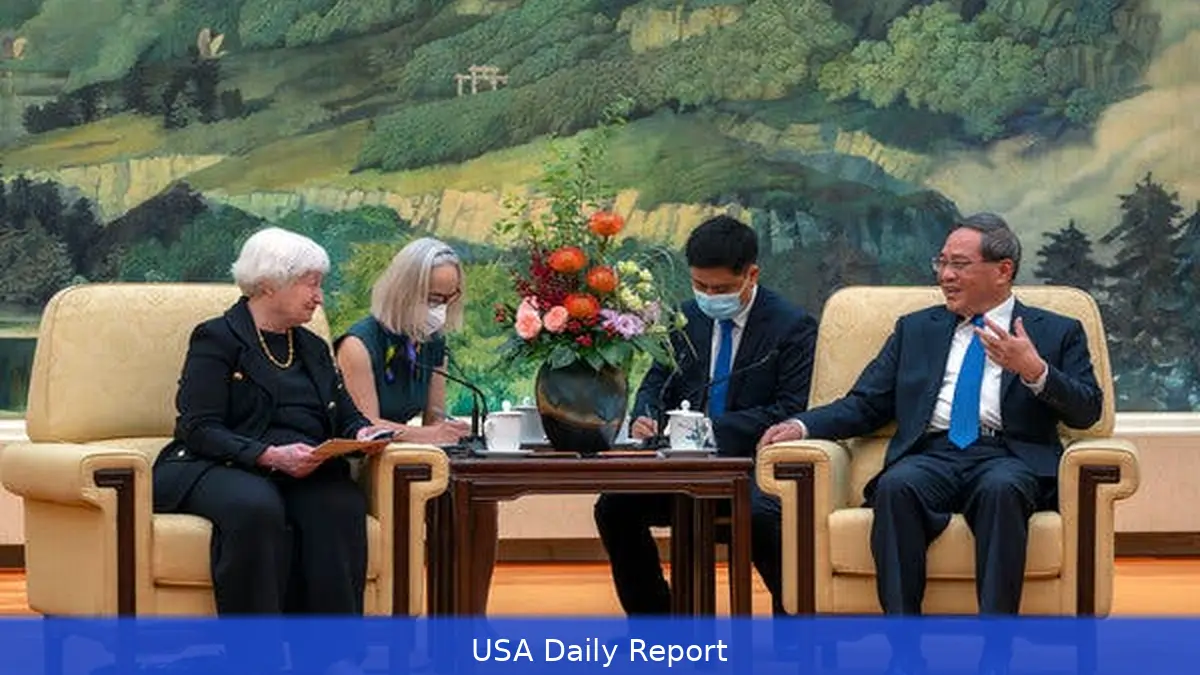
China is stepping up as a major lender to foreign countries, even while conflicts flare near Central Asia. This challenges the common Western narrative about ‘debt traps’ and highlights a move toward strategic investments and industrial growth.
Shifting Perceptions of Chinese Lending
For years, Western analysts have warned about China using loans to trap countries in debt. The narrative painted Beijing as a predator, lending recklessly to extract resources and political leverage. But that story doesn’t hold up in Central Asia, where China’s economic footprint is growing in a more balanced and strategic way.
Rather than reckless lending, China is focusing more on foreign direct investment, industrial development, and cautious sovereign borrowing. China’s support now goes beyond raw materials; it’s helping build local industries and infrastructure for lasting growth.
China’s Growing Financial Footprint in Central Asia
By mid-2025, China’s total FDI in Central Asia hit nearly $36 billion, almost double what it was ten years earlier. That’s even as global FDI flows shrunk by 11% in 2024, according to UN data. The region’s political and economic stability, despite nearby conflicts in Iran and Afghanistan, has made it a safer bet for Chinese investors.
Take Uzbekistan, for example. Chinese FDI jumped from just $300 million in 2016 to $10.7 billion in 2025 — a massive 35-fold increase.
If this trend continues, Uzbekistan could overtake Kazakhstan as the leading spot for Chinese investment.
From Resource Extraction to Industrialization
China’s investment mix has changed dramatically. A decade ago, 68% of its funds went to raw materials. Now, that’s dropped to 54%, even though commodity investments have grown in absolute terms.
Manufacturing now makes up 22% of Chinese FDI, translating to about $14.5 billion, while energy projects, including renewables, account for 12%.
Chinese companies have launched car plants, textile centers, chemical factories, and electrical equipment lines. Brands like BYD, Chery, and Geely have established manufacturing bases, turning Central Asia into a hub for supply chains and value-added production. It’s not just buying resources anymore; it’s exporting industrial capacity.
Loans and Sovereign Debt: A More Nuanced Picture
China’s lending to Central Asian governments and state-owned enterprises is often lumped into the ‘debt trap’ narrative, but the reality is more complex. Loans are now more disciplined and tied to projects that strengthen the region’s industrial base. The approach reduces the risk of default and creates mutual benefits, rather than one-sided dependency.
At the same time, the ongoing conflicts in nearby Iran and Afghanistan make China’s investments a signal of confidence in the area’s long-term prospects. Despite the turmoil, China is betting on Central Asia’s political and economic stability, using debt and investment to deepen ties and build infrastructure.
Implications for Global Finance and Geopolitics
China’s expanding role as a debt-funding hub comes as Western investors pull back from emerging markets amid global uncertainty. The drop in global FDI hasn’t slowed Chinese money flowing into Central Asia, showing Beijing’s commitment to the region’s development.
This change carries broader implications. It challenges the Western view of China as a reckless lender and suggests a new model of economic engagement based on interdependence rather than control. At the same time, it makes people wonder about how other countries might follow China’s lead in using debt strategically to foster industrial growth.
But risks are still there. Political instability in neighboring countries, shifting global trade patterns, and the challenge of managing rising debt levels could complicate China’s ambitions. But for now, its investments paint a picture of growth and partnership, not exploitation.
China’s changing debt and investment approach shows Central Asia is turning into a new economic hub despite global uncertainty. It’s unclear if this model will spread beyond Central Asia or how it might reshape global finance.


