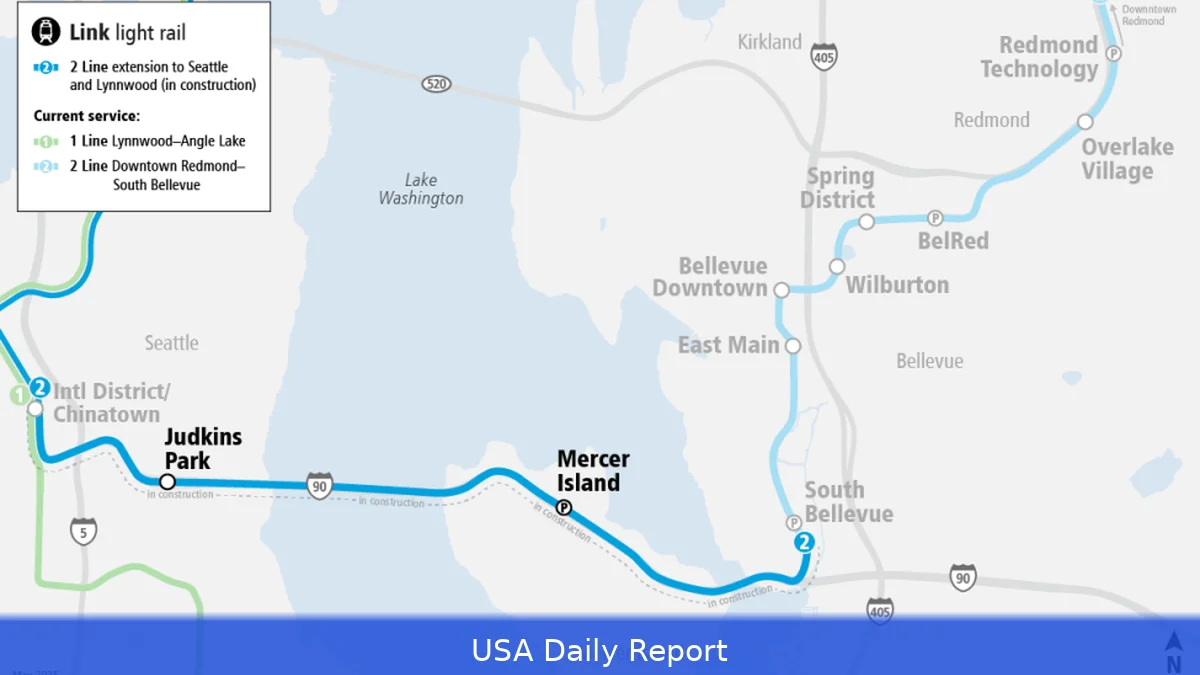
Seattle's transit landscape changed dramatically on March 28, 2026, as Sound Transit officially opened the 2 Line Crosslake Connection. This new link finally unites Seattle and the Eastside with frequent, direct light rail service, promising faster, traffic-free commutes across Lake Washington.
A New Era for Seattle and Eastside Transit
The 2 Line has been running in Bellevue and Redmond since early 2024, but until now, riders crossing Lake Washington had to switch lines or modes. The Crosslake Connection closes that gap, connecting the 2 Line to the 1 Line at Seattle’s Chinatown-International District station. Now, passengers can travel between Lynnwood and Redmond with just one train, arriving every 10 minutes for most of the day.
This extension does more than just improve convenience; it expands the region’s transit network significantly. By linking these two major lines, Sound Transit adds capacity to some of the system’s busiest stations, especially downtown Seattle and the University District. Eastside residents gain direct access to key destinations without transfers, which could shift commuting patterns and ease congestion on major roadways.
Engineering Marvel: The Floating Bridge Rail Link
A key highlight of the Crosslake Connection is that the 2 Line runs over the Interstate 90 floating bridge, making it the first light rail line in the world to do so. The views are stunning, with Mount Rainier towering in the background, framed by the lake and city skyline. For transit enthusiasts and everyday riders alike, this is a game changer.
Sound Transit began simulated service over this segment in February 2026, running test trains every four to five minutes between Lynnwood City Center and International District/Chinatown. This phase ensured the system could handle the technical challenges involved and allowed crews to fine-tune the service before officially opening. During testing, 2 Line trains ran shorter two-car sets, while 1 Line trains continued with four cars to help riders distinguish between lines.
Economic Implications and Regional Impact
Extending the 2 Line across Lake Washington isn’t just a transit milestone; it could boost the local economy. By cutting commute times and providing reliable transit alternatives, the connection could spur growth in job markets on both sides of the lake.
Businesses in Bellevue, Redmond, Seattle, and Lynnwood may find it easier to attract talent without requiring employees to endure long drives or multiple transit transfers.
Also, the extra transit capacity helps Seattle work toward cutting carbon emissions and easing traffic jams. Traffic back-ups on bridges and highways are a familiar pain point for commuters. The 2 Line’s frequent trains, running every 10 minutes, mean fewer cars on the road and a stronger push toward sustainable travel.
Community and Celebration
Sound Transit marked the launch with festivities starting at 9 a.m. Near Judkins Park, adjacent to the new station. Officials from across the region celebrated what they called a long-awaited moment of transit unity. The first official train crossing the lake carried transit fans and dignitaries, symbolizing a new chapter for the metropolitan region.
Stations along the route—from Mercer Island to South Bellevue and Chinatown-International District—hosted events with live music, food trucks, and games. Riders who visited four key stations could enter a lottery for prizes like Alaska Airlines tickets and Seattle Symphony passes. The Urbanist, a local transit publication, hosted a meetup at Overlake Village station, drawing transit enthusiasts eager to experience the new service firsthand.
Looking Ahead: What’s Next for Sound Transit?
While this expansion marks a milestone, Sound Transit’s ambitions stretch further. The West Seattle Link Extension and Ballard projects are underway, though they face budget reviews due to rising costs. These future lines will add to the growing network, connecting more neighborhoods and expanding access.
Meanwhile, the operational changes introduced with the Crosslake Connection have led to schedule adjustments. For example, some 1 Line trains now end at the airport or Federal Way, while 2 Line trains stop at International District/Chinatown. Riders must pay attention to train length and digital signage to ensure they board the correct service.
Service hours on the Eastside have also expanded, with 2 Line trains running until midnight between Downtown Redmond and South Bellevue. Increased frequency during peak times—trains as often as every four to five minutes—reflects demand and Sound Transit’s commitment to reliable service.
Still, challenges remain. The system had to carefully coordinate operations to handle trains going out of service at key stations, and testing phases included the possibility of temporary suspensions of simulated service if delays became too long. But Sound Transit prepared for these contingencies to make sure the launch was smooth.
Final Thoughts
The Crosslake Connection changes more than just train routes; it reshapes how Seattle’s metro area travels, develops, and links up. With this new link, Sound Transit offers a glimpse of a future where commuting is faster, cleaner, and less stressful. For residents and businesses alike, that future is finally here.
The 2 Line Crosslake Connection officially opened on March 28, 2026, closing a critical gap in Seattle’s light rail network and setting the stage for more expansions. As the region adjusts to this new transit reality, questions remain: How quickly will ridership grow? Will the system ease traffic woes as promised? The next months will reveal the true impact of this major investment.


