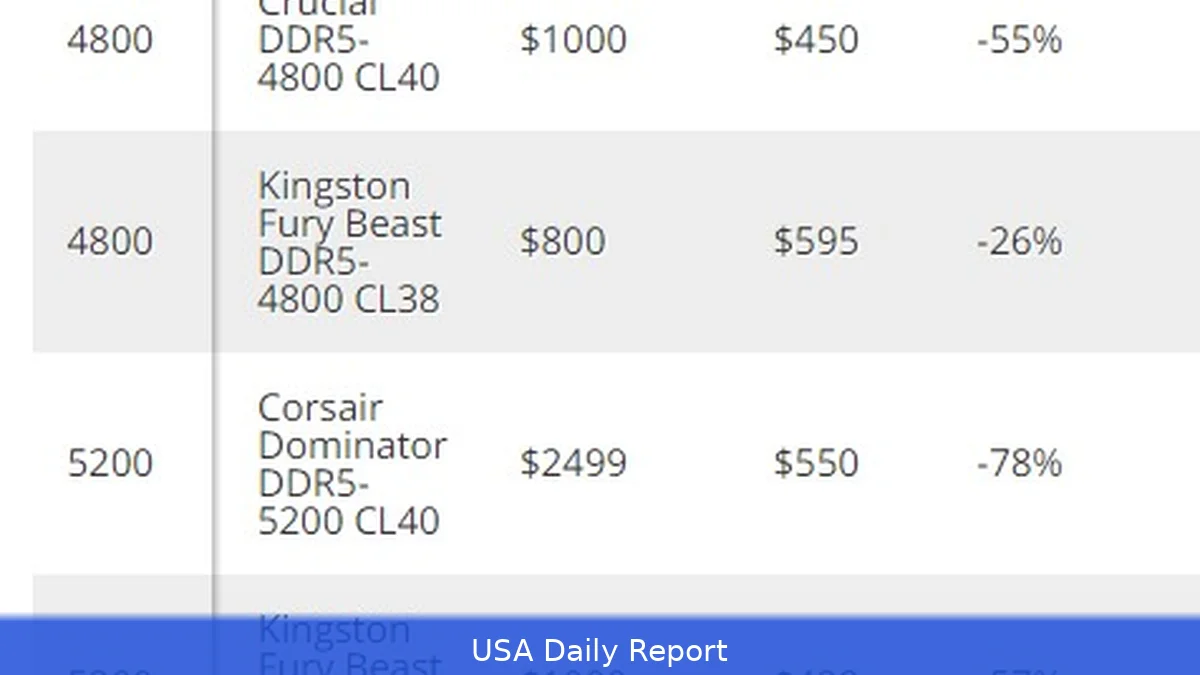
DDR5 memory prices just took a noticeable dip after months of relentless increases. The sudden shift caught many off guard, with Google’s TurboQuant technology possibly playing a surprising role in cooling down the heated RAM market.
Memory Market Strained by AI Demand
Memory prices have been climbing steadily, pushed up by a booming demand from AI data centers. These massive operations gobble up memory chips, tightening supply and sending prices through the roof. In fact, analysts predicted DDR5 prices could double by next year if current trends held.
But the recent price drop bucks that trend. It’s the first significant relief buyers have seen in months. The question is why.
Google recently introduced TurboQuant, which is designed to help data centers use memory more efficiently. This could be easing some of the demand pressure. By squeezing more efficiency out of existing memory stocks, TurboQuant could be slowing the rate at which new RAM is gobbled up.
That effect is now rippling into the consumer market.
DDR5 vs DDR4: The Upgrade Dilemma
For PC builders, the memory price swings add a fresh layer of complexity to the DDR4 versus DDR5 debate. DDR5 offers faster speeds—starting at 3200 MT/s and climbing to 9600 MT/s with new kits—but it comes at a cost.
DDR4, while slower, remains cheaper and more plentiful.
Chipmakers have pushed DDR5’s capacity well beyond DDR4’s limits. Meanwhile dDR5 modules can now reach up to 64GB per stick for consumers, and theoretically up to 128GB, with server-grade modules even higher. DDR4 maxes out around 16GB per chip, topping out at 16GB per stick for mainstream users. That means DDR5 can support more cores and heavier workloads in modern systems.
Still, with DDR5 prices having been high and even rising further this year, many builders have stuck with DDR4. The recent price drop could tilt the scales, but the memory shortage and demand from AI centers remain big factors.
Old Tech Making a Comeback in China
While DDR5 prices have been volatile, DDR3 motherboards are seeing a surprising surge in the Chinese DIY market.
Sales have nearly tripled recently, as buyers turn to older hardware to dodge the skyrocketing RAM costs. Bundles featuring 6th to 9th generation Intel CPUs paired with DDR3 have gained traction. It’s a stark reminder that not everyone is chasing the latest and greatest.
DDR4 memory prices also aren’t stable. They jumped nearly 10% in just one week recently, showing that the whole memory market remains unsettled. That’s partly due to suppliers holding back stock amid a tight supply chain and the run-up to the Lunar New Year factory shutdowns.
Plans to phase out DDR4 have slowed as demand unexpectedly flared up. For many gamers and casual users, DDR4 still offers plenty of performance. It’s better than waiting indefinitely for DDR5 prices to fall.
What This Means for Buyers
If you’re building or upgrading a PC, the situation is tricky. DDR5 offers future-proofing, higher capacities, and faster speeds, but at a premium. DDR4 is more affordable and still delivers solid gaming performance, especially on mid-range CPUs.
The recent DDR5 price drop might tempt some buyers to switch, but the memory shortage isn’t over. AI data centers still soak up large chunks of production, keeping supply tight.
Meanwhile, the DDR3 comeback in certain markets shows that older tech can still fill gaps when newer options get too expensive. This shows that choosing the right upgrade really depends on what you need and how much you want to spend.
TurboQuant may not grab as much attention as a new CPU, but it could still change how efficiently memory is used. It could be the first sign of easing pressure on a market that’s been on edge for a long time.
The DDR5 memory market is seeing some surprising changes lately. With Google's TurboQuant improving memory efficiency and older memory standards gaining renewed interest, the tight grip on RAM prices might finally be loosening. How long this trend sticks around will depend on AI demand and supply chain issues in the coming months.


