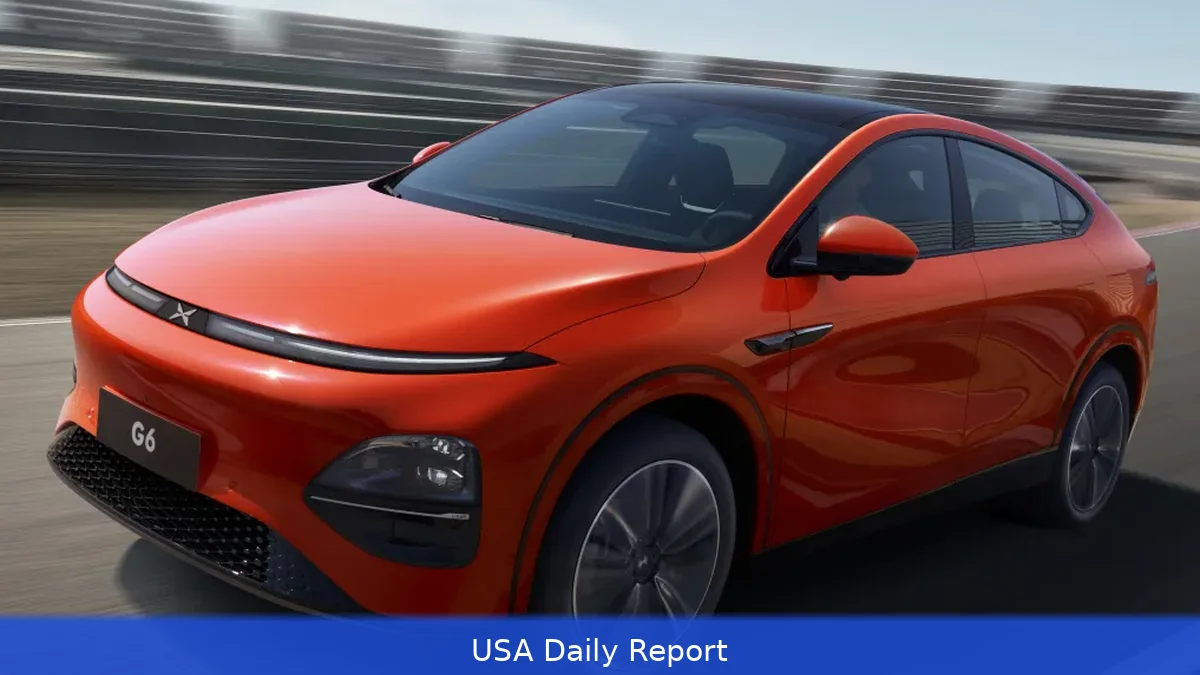
Volkswagen has begun mass production of a new electric SUV developed together with Chinese EV maker Xpeng. This move highlights the growing influence of Chinese technology in the global auto industry and the challenges it poses to Western car manufacturers.
Volkswagen’s China Challenge
Volkswagen Group has long counted China as its biggest market. But the German automaker’s grip has slipped as homegrown Chinese brands like BYD and Geely speed ahead with electric vehicles packed with advanced software. Volkswagen’s usual methods have lagged behind these quick-moving competitors, who produce software-focused vehicles designed for local buyers and offered at competitive prices.
Last year, Geely overtook Volkswagen in China sales, pushing the German giant down to third place behind BYD and Geely. That marked a major shift after Volkswagen’s decade-long dominance. Losing ground in China means Volkswagen has to rethink its strategy fast.
The Xpeng Partnership: A New Play
To catch up, Volkswagen teamed up with Xpeng, one of China’s most innovative EV makers. Their first joint model, the ID. UNYX 08, is a full-size electric SUV that just entered mass production at Volkswagen’s plant in Hefei, near Shanghai. The plant has a capacity of 350,000 vehicles annually and also builds the Cupra Tavascan SUV for export.
This SUV isn’t just another model; it’s central to Volkswagen’s largest effort so far to expand new energy vehicles (NEVs) in China. The company plans to launch over 20 new NEVs in China this year alone and aims to bring 50 to market by 2030. Volkswagen says its new China-based development process speeds vehicle design and production by about 30%. The ID.
UNYX 08 took just 24 months from concept to production, a rapid pace compared to past projects.
Volkswagen isn’t only using Xpeng’s technology; the Chinese company supplies autonomous driving software and Turing AI chips built into the new SUV. These features reflect what local buyers now demand—vehicles that are as much about cutting-edge software as hardware.
Why China’s EV Tech Matters
Chinese EV manufacturers have become skilled at combining software and AI in their cars, making vehicles that seem smarter and better connected. Western automakers have been slower to adopt The approach, partly because their legacy systems and supply chains are geared toward traditional car manufacturing.
That’s a big reason Volkswagen and others are racing to forge partnerships with innovative tech firms—both inside and outside China. Volkswagen’s deal with Rivian in the U.S. Is another example. Still, Xpeng’s local expertise is crucial for cracking the world’s largest EV market.
The impact goes beyond China’s borders. Xpeng itself has global ambitions and is expanding.
If it succeeds, it could compete head-on with Western brands not only at home but internationally. Volkswagen’s collaboration is a way to tap into that innovation while defending its turf.
Looking Ahead
A second joint Xpeng-Volkswagen EV will probably hit the market later this year. Volkswagen’s commitment to local development and faster turnaround times shows how seriously it’s taking the challenge.
But the road won’t be easy. Tariffs, fierce competition, and rapid tech advancements make China a battleground for automakers.
For Volkswagen, the stakes couldn’t be higher. It needs to leverage new partnerships and rethink its approach or risk falling further behind.
Volkswagen’s collaboration with Xpeng shows a big change: Chinese tech companies aren’t just closing the gap—they’re leading new advances in EV innovation. How Western automakers respond could determine their future in the world’s largest car market.


