
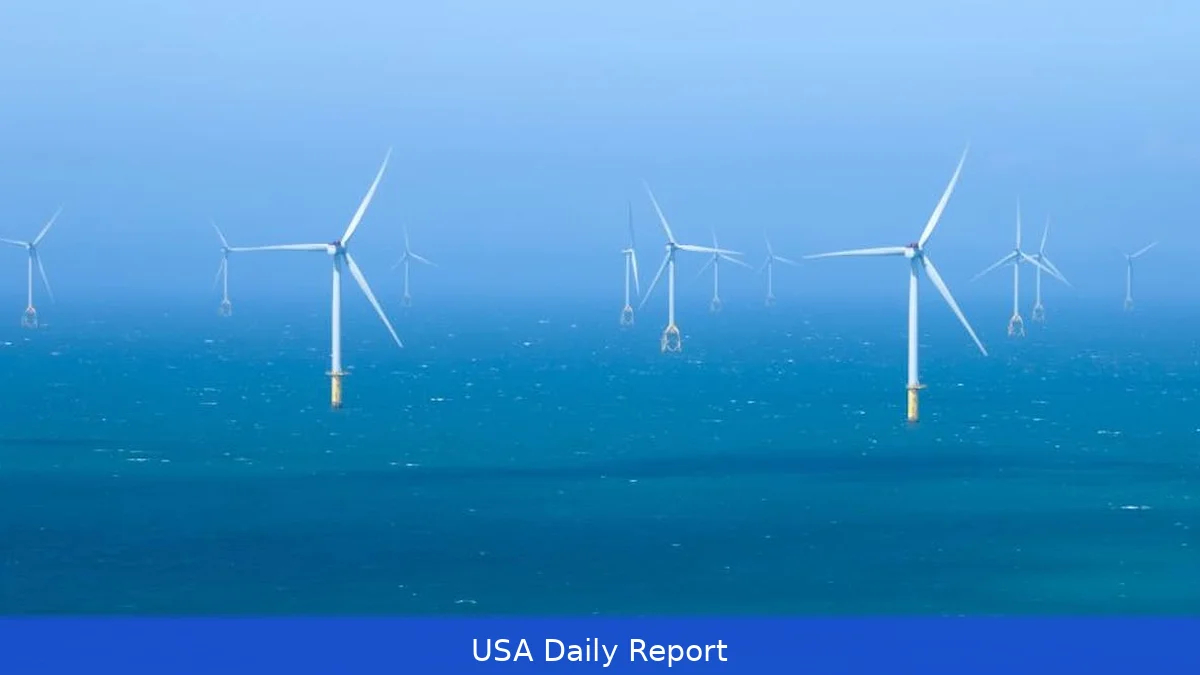
TotalEnergies is set to reclaim nearly $1 billion it paid for offshore wind leases in the U.S., but only after agreeing to shift its investments into oil and gas. Trump's move might affect infrastructure spending well beyond just energy.
A Deal That Shifts Energy Priorities
The Trump administration struck a deal this week with French energy giant TotalEnergies, agreeing to return almost $1 billion the company and its partners had paid for offshore wind leases off the coasts of North Carolina and New York. In exchange, TotalEnergies pledged to halt new offshore wind projects in the U.S. And redirect an equivalent amount into oil and gas development, including a liquefied natural gas facility in Texas.
At an energy conference in Houston, TotalEnergies CEO Patrick Pouyanné described the agreement as a "win-win," arguing that offshore wind projects in the U.S. Are more expensive than their European counterparts and could hurt power affordability for American consumers. The company had already paused its offshore wind efforts shortly after Trump's re-election.
Legal and Financial Questions Loom
There are big legal questions about whether the Interior Department can actually return money from offshore wind lease auctions. These auctions have generated billions for the Treasury, with leases granted to more than three dozen developers through competitive bidding. TotalEnergies alone paid $795 million for a large lease in the New York Bight and over $133 million for one in Carolina Long Bay.
Once auction proceeds enter the Treasury, they become part of the federal budget and are spent. The Bureau of Ocean Energy Management (BOEM), which manages these leases, operates with an annual budget near $200 million—far less than the nearly $1 billion being refunded to TotalEnergies.

Experts like Elizabeth Klein, a former BOEM director, say the funds no longer belong to the company and question the authority for such reimbursements.
Despite Pouyanné’s claim that the money being returned is his own, Klein notes that past lease surrenders—for example, Royal Dutch Shell’s $2.1 billion write-off in Alaska—have resulted in losses for the companies, not refunds from the government. The Interior Department hasn't clarified how it will finance the repayment, leaving open the possibility of similar deals with other offshore wind leaseholders.
Impact on Infrastructure and Energy Policy
Some industry experts say this unusual move might scare off investments not just in offshore wind but in other infrastructure areas too. Timothy Fox of ClearView Energy Partners calls it a new playbook for presidential influence over energy policy, one that constrains resources the administration opposes.
Leslie Abrahams from the Center for Strategic and International Studies warns that uncertainty created by such political maneuvers slows infrastructure projects and drives up costs. The offshore wind industry, already facing challenges, could see further setbacks as investors grow wary of shifting policy landscapes.
Evan Vaughan, executive director of the Mid-Atlantic Renewable Energy Coalition, expressed disappointment at the deal, emphasizing the need for all available energy sources to meet rising power demand and maintain affordability and reliability for American consumers.
Broader Economic Concerns
Trump's push for fossil fuels over renewables might have lasting impacts beyond just energy markets. Infrastructure spending touches many facets of the economy, from construction to manufacturing to technology development. If the government steps in like this, companies might hold back on investing, worried about sudden policy changes.
That hesitation could slow down not only energy projects but infrastructure improvements across the board, impacting jobs and economic growth. With demand for reliable and affordable energy growing faster than it has in decades, limiting offshore wind development could hamper efforts to diversify and modernize the nation’s energy portfolio.
Related Articles
- Fed signals patience, projects one cut in 2026
- UAE Leaves OPEC — Saudi Arabia Picks Up the Slack
- Three risks that could push the Fed to pause
As the Trump administration doubles down on fossil fuels, the ripple effects of this deal with TotalEnergies raise serious questions about the future of U.S. Infrastructure investment and energy policy.
This article was created with AI assistance.


