
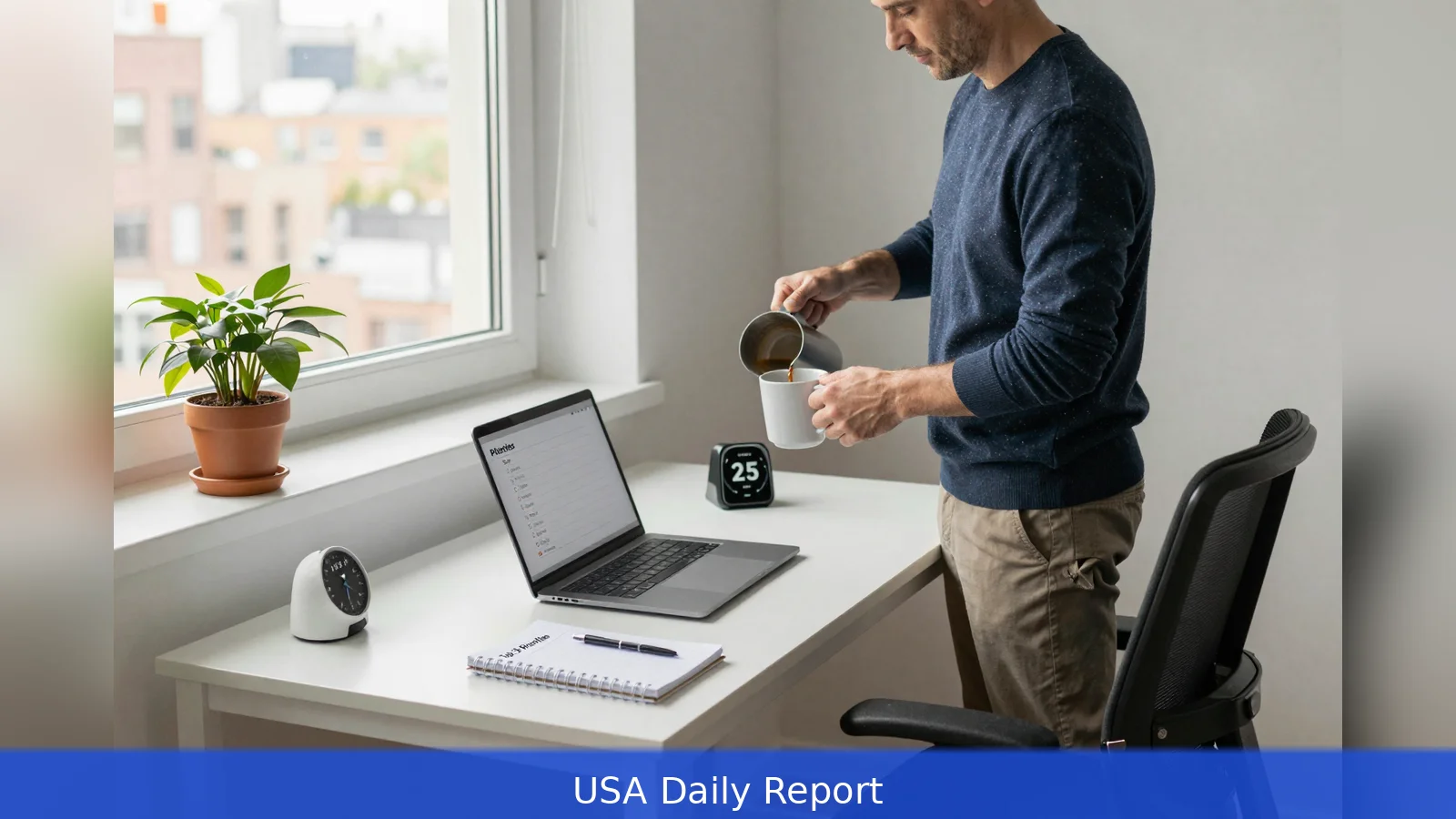
Pick one start-of-day ritual and one dedicated workspace. That single change delivers most of remote work's productivity upside. Seventy-seven percent of remote workers report higher output than office peers, but those gains only stick when you pair environmental design, time management, deliberate communication and basic health habits. The 10 tips below turn those categories into a numbered daily routine you can try immediately, from a start-of-day ritual to a single timeboxed experiment. Start with one change today and add another practice each week.
77% of remote workers reported higher productivity compared with traditional office settings.
1. Create a clear beginning and end to the working day
Start-of-day rituals and end-of-day rituals are the psychological switches that separate work from home. Practical start rituals can be as simple as making coffee, sitting at your workspace, and reviewing a short priorities list for the day. End rituals should include writing down what you completed and listing the top priorities for tomorrow. Those small rituals provide closure, reduce the urge to keep working past your planned stop time, and make it easier to switch out of work mode without guilt.
Dedicated workspace matters. Ergonomics guidance in workplace materials shows that a consistent desk area, proper lighting, an ergonomic chair, and correct monitor positioning reduce musculoskeletal strain compared with ad hoc dining-table or bed setups. If you have limited space, pick a single corner or table and use it consistently rather than roaming between locations. Visual boundaries, a door, or even a divider signal to household members that you are in work mode, and they help you treat the space as a place for focused work.
Time-blocking structures the day into focused sessions. Implementations vary: some people prefer 25-minute Pomodoro cycles, others choose 90-minute deep-work periods. The common practice is to start each day by selecting three top priorities and, if helpful, a secondary list of lower-priority tasks. Treat that short priorities list as the metric of success for the day, not total hours logged. Group similar tasks together to reduce context switching and preserve flow.
Uni-tasking beats multitasking. Close unrelated browser tabs, mute nonessential notifications, and consolidate apps so you don't waste time switching between tools. Remote workers often switch apps many times per day, and those interruptions degrade sustained attention. When you need deep focus, tell colleagues you will be unreachable for a set block and offer clear windows when you are available for questions. That disciplined signal reduces interruption and protects your most productive time.
Structured breaks sustain concentration. Pomodoro-style cycles pair intense work with short restorative breaks; recommended break lengths vary, but the pattern is consistent: work intensively, then step away. For eye health, follow the 20-20-20 rule: every 20 minutes look at something 20 feet away for 20 seconds. Add micro-breaks where you stand, stretch, or take a brief walk between blocks. Those resets reduce physical strain and keep attention from collapsing over a long afternoon.

Deliberate communication prevents misunderstandings when teams are distributed. Use synchronous video for relationship-building or complex discussions, email for formal records, and instant messaging for quick clarifications. Schedule regular one-on-ones with managers or direct reports so visibility and alignment don't fade. If you plan to be offline for deep work, announce the hours you will be offline and when you will respond. That transparency keeps expectations realistic and preserves team rhythm.
Work-life boundaries are a practical defense against boundary erosion. Set explicit working hours and establish physical cues like closing a door. Turn off work notifications after hours and explain your schedule to household members. End-of-day rituals help your brain switch out of work mode and protect personal time. Those simple rules stop work from creeping into evenings and weekends.
Digital organization reduces friction. Standardize project-management systems, adopt consistent file-naming conventions, and create templates for recurring tasks. Consolidating communication channels reduces context switching and prevents fragmenting your workflow across multiple specialized apps. When choosing tools, pick ones that reduce routine collaboration friction rather than multiplying options that require extra coordination.
Health practices are nonnegotiable productivity tools. Prioritize sleep, movement, and hydration. Don't work from bed; reserve the bedroom for sleep to protect sleep quality. Schedule short exercise or stretching breaks and consider simple meal planning for workdays to cut decision fatigue. These habits support sustained cognitive performance over the workweek, and they make deep-focus sessions easier to execute.
Visibility and learning prevent remote work from shrinking career opportunities. Regular check-ins, documented progress updates, and dedicated time for skill development keep you visible to leadership and on track professionally. Carve out periodic learning blocks to refresh or expand skills relevant to your role. For managers, building consistent internal communication platforms and expectations helps teams collaborate and preserves culture when employees are dispersed.
2. Putting the 10 tips into a short experiment
The next concrete step recommended across the guidance is an immediate, timeboxed experiment. Choose one start-of-day ritual, designate a single consistent workspace, and commit to a single focused time block today, for example a 25- to 90-minute session depending on the task. Track whether those one-day changes increase perceived focus, then add one more practice from the list the following week. That small, iterative approach turns general advice into repeatable habits.
Several recurring data points frame why these practices matter. One workplace guide cited that 77% of remote workers reported higher productivity compared with traditional office settings. The same review projected roughly 22% of the American workforce would be remote by 2025. Other surveys show many remote workers prefer some form of remote arrangement, and they report both productivity gains and challenges such as reduced visibility and risk of burnout. Use those figures as framing, not as prescriptive rules: they show remote work is widespread and the practical steps above address common pain points remote employees report.
Pick the change that removes your biggest daily friction. If you lose time to interruptions, try time-blocking plus a visible offline signal. If you feel physically drained, upgrade your chair, lighting, and monitor positioning or commit to micro-breaks and the 20-20-20 rule. And if you struggle to stop working, adopt a start-of-day ritual and a strict end-of-day checklist. One clear decision splits most readers: do you need to fix your environment first, or the way you schedule attention? Answer that and begin there.
In Short
First, pick one start-of-day ritual and a single workspace to use consistently. Second, choose a time-blocking pattern that fits your tasks, from 25 minutes to 90 minutes. Third, reduce app switching: close tabs, mute nonessential notifications, and consolidate tools. Fourth, protect boundaries with clear offline hours and an end-of-day checklist.
Related Articles
- Medicare food allowance: $25 to $200 via Medicare Advantage
- Create a planetary market calendar in 9 clear steps
- Best VPN Routers 2026: 3 Paths, One Verdict
Start a timeboxed experiment today: pick one start-of-day ritual, claim a single dedicated workspace, and commit to one focused 25- to 90-minute block. Track whether it improves your focus, then add one more practice next week. That simple loop, experiment, measure, repeat, is the fastest route to sustainable remote productivity.
This article was created with AI assistance.


