
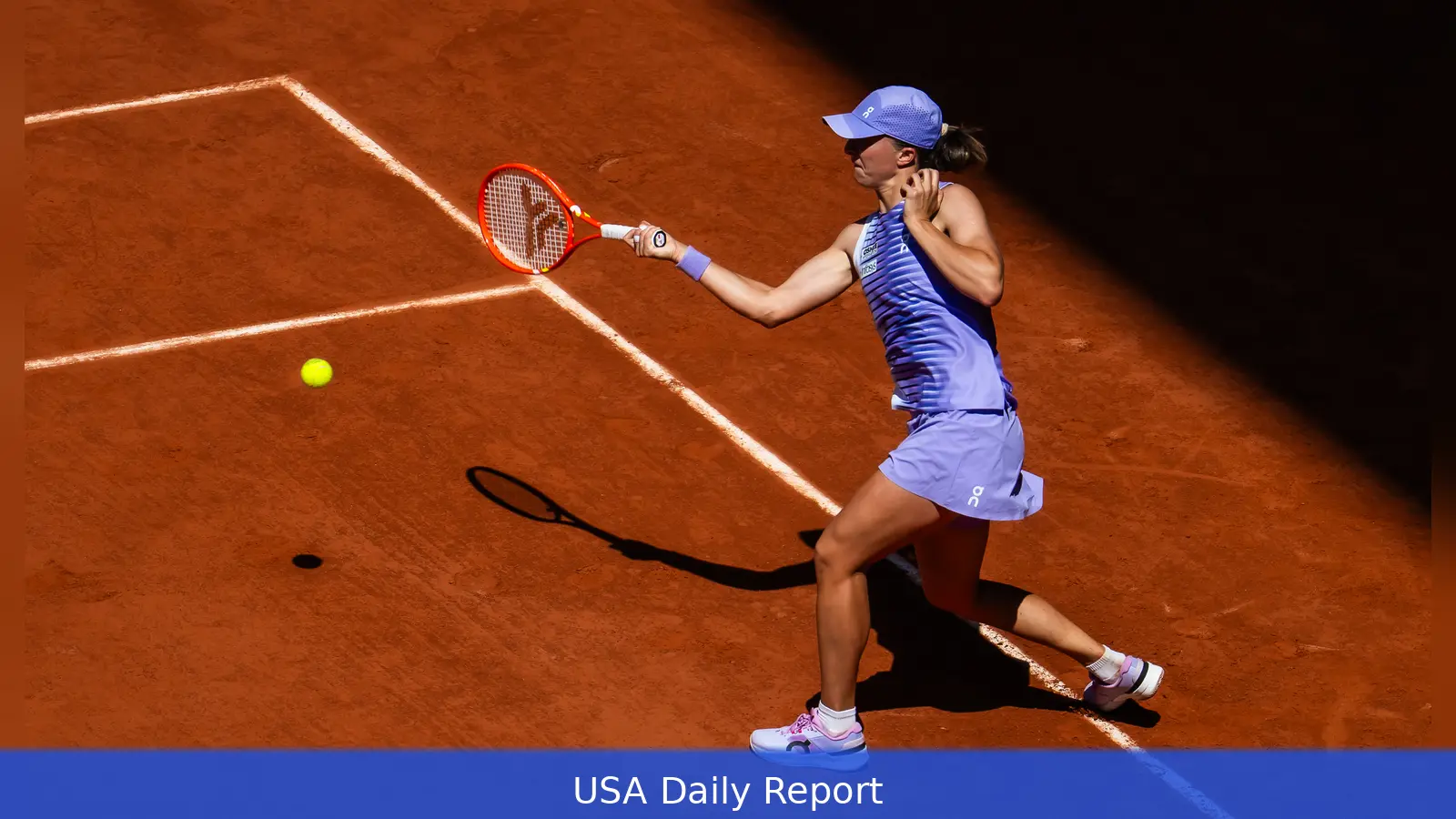
6-0. If you follow tennis closely and are weighing whether to cheer for spectacle or sportsmanship this season, Jeļena Ostapenko's recent headlines give you a clear choice. She arrives at Roland Garros carrying that 6-0 head-to-head edge over Iga Świątek and the memory of a clay win at the 2025 Porsche Tennis Grand Prix. Beyond the shots, a string of confrontational moments, most recently a heated U.S. Open handshake with Taylor Townsend, has kept attention on how Ostapenko's temperament shapes her matches.
A charged clash could become one of Roland Garros's flashpoints, because Ostapenko comes in not only with a spotless 6-0 record against Świątek but with a recent clay-court victory that showed her ability to push the world No. 3.
Rivalry on paper and on clay
The matchup reads like a classical split between form and narrative. On paper Ostapenko has dominated Świątek, six wins and no losses, a ledger that forces any analyst to stop and ask how much history matters on a given day. Their most recent meeting on clay came at the 2025 Porsche Tennis Grand Prix, a three-setter that ended 6-3, 3-6, 6-2 in Ostapenko's favor. That win reinforces the idea that Ostapenko's aggressive, take-the-ball-early style can trouble Świątek on slower surfaces when she is dialed in.
The current French Open draw places Świątek on a path that could produce a third-round meeting with Ostapenko if both navigate their early matches. Świątek is scheduled to open against Emerson Jones, and if she advances her second-round opponent could be Sloane Stephens or Sára Bejlek before the potential Ostapenko clash. On the other side of the bracket picture, the winner of an Ostapenko-Świątek match could next face Marta Kostyuk, the Madrid Open champion, in the fourth round and might later run into Elina Svitolina, the Italian Open champion, deeper in the event, depending on how subsequent matches fall.
For fans who prize pure tennis, that sequence promises several high-level clay-court tests: heavy baseline exchanges, tactical positioning, and extended rallies that reward court craft. For others, the interest will hinge on the history between the two, and whether past results predict a repeat under Paris lights.

Temperament and fallout
Ostapenko's recent headlines have been as much about behavior as about baseline power. The U.S. Open episode with Taylor Townsend produced an on-court exchange that drew gasps and boos from the crowd.
Townsend described in an on-court interview that Ostapenko told her, "She told me I have no class, I have no education and to see what happens when we get outside the U.S." Those words, broadcast immediately after the match, were amplified by live reaction and social media.
Right now, ostapenko responded through Instagram Story posts, saying she was upset about a net-cord point Townsend didn't acknowledge and about what she described as improper warm-up behavior. She wrote that players are "supposed to start warm up on the baseline" and said she had received messages accusing her of racism, which she flatly denied. "I was NEVER racist in my life and I respect all nations of people in the world," Ostapenko wrote, framing her complaint as enforcement of unwritten tennis rules rather than a personal attack.
The exchange produced immediate, visible reactions in the stands. Spectators booed during the on-court confrontation. One fan turned the moment into viral theater at Flushing Meadows by making and holding a sign that read, "Will haunt Ostapenko’s dreams for a free ticket," and used it to secure a last-minute ticket for her mother when a couple handed over an extra pass. The couple, identified by name in accounts of the scene, told the fan they found the sign funny and gave her a ticket that otherwise would have cost hundreds of dollars. A man who gave his spare ticket called the post-match argument "a shame" and said he had watched Ostapenko for years and expected smarter conduct.
Observers point to earlier episodes as context for the U.S. Open flashpoint. Reports note a prior confrontation at the Qatar Open when Ostapenko refused to shake hands with Victoria Azarenka. Those events form a pattern that makes even small interactions prone to becoming larger storylines. A blunt social-media reply didn't help de-escalate: Ostapenko reportedly responded "Yesss" to a message urging her to beat Świątek. Some commentators saved and circulated that exchange as a provocation, while other fans urged Świątek to respond on court. The digital echo chamber intensified the on-court tension.
The result is a player whose tennis is impossible to ignore and whose on-court persona forces fans and peers to decide what they value more: unfiltered intensity, or steadier sportsmanship. For tournament organizers and broadcasters the dynamic is useful television. For players it's a logistical headache and a potential distraction during an event that rewards narrow focus.
Related Articles
- Fidelity settles data breach for $2.5 million
- AMAs 2026: BTS, KATSEYE and Breakouts Sweep
- Chipotle raises prices 2% and tests crispy chicken
Monitor the Roland Garros order of play when the tournament schedule is released to see whether the projected third-round Ostapenko-Świątek meeting is confirmed, because that's the match most likely to combine high-level clay-court tennis with a charged personal history. Originally reported by sports.yahoo.com.
This article was created with AI assistance.


