
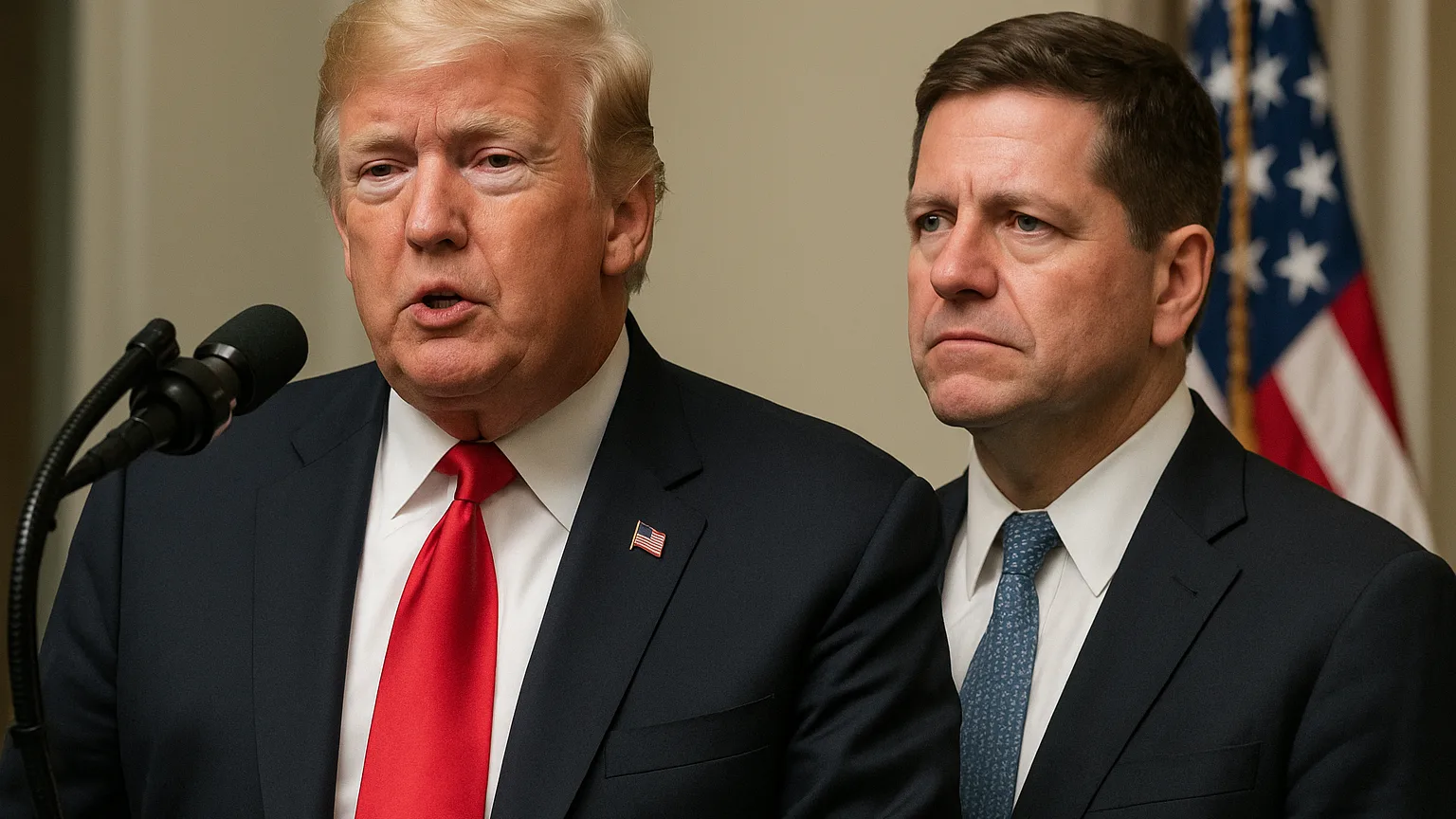
President Trump has named Director of National Intelligence Jay Clayton to head a newly created federal AI team the White House describes as a coordination body to engage companies, communities and critical infrastructure, but the announcement does not itself create new powers or concrete rules.
Trump puts intelligence chief in charge of AI task force
Putting Jay Clayton, the director of national intelligence, in charge signals the White House will center national-security priorities in its approach to artificial intelligence. The move does not, by itself, create new legal authorities, funding or binding safety rules.
The Associated Press reported that President Trump named Clayton to lead a new federal task force he has called that and said it will coordinate the government’s engagement on what the administration now calls “super intelligence” with consumers, companies, public-interest and religious organizations and critical infrastructure providers (apnews.com).
The announcement, made in a Truth Social post and in public remarks this week, frames the body as a coordination mechanism. The administration says its aims are to preserve American leadership and manage risks, but the statement does not create statutory authorities, funding or binding safety requirements.
Who will serve, and what the task force is meant to do
The White House has named three vice chairs (Undersecretary of Defense for Research and Engineering Emil Michael, Office of Personnel Management Director Scott Kupor and Federal Trade Commission Chair Andrew Ferguson) and the group will include senior officials such as the vice president and the defense secretary alongside outside advisors including David Sacks and Condoleezza Rice, Nextgov reported. The task force will report to President Trump and White House Chief of Staff Susie Wiles, that outlet said.
Nextgov also reported that the task force’s charter gives it 120 days to analyze and report on the risks and opportunities of AI and to lay out a plan for how the federal government should address them; the administration has described responsibilities that include planning for AI-enabled threats, streamlining breach notifications and improving government response capacities while aiming to avoid what it calls overregulation (www.nextgov.com).
The choice in the context of Trump’s AI approach
The appointment fits with a Trump White House preference for a lighter-touch approach to AI regulation. The BBC reported that Mr. Trump has rejected laws to control AI and has pushed companies to assume responsibility for safety, and the administration has promoted rebranding AI as “super intelligence” after an executive order urging federal agencies to use the new term. The BBC also noted a voluntary industry pact signed at a White House meeting last week in which executives pledged to take on safety responsibilities (www.bbc.com).
Other outlets described the choice as a middle path (placing a national-security official at the center of domestic AI policy while keeping regulatory intervention limited) and emphasized the administration’s public framing of competition with China and protection of U.S. leadership in advanced systems.
What remains unclear
Nextgov reported that some lawmakers and national-security figures have welcomed renewed attention to AI but warned the announcement leaves open key questions about authority and strategy. Sen. Mark Warner said the new role “lacks a coherent strategy” and that it is not yet clear “what authority this new role will have” or whether it will include setting safety standards or reviewing the most advanced models.
The White House statement and the task force charter describe aims and coordination roles but do not, by themselves, establish the team’s legal powers, budget, enforcement mechanisms or specific policy decisions. Watch whether the task force publishes its 120-day assessment on schedule and whether Congress or agencies move to give it statutory authority, funding or binding rulemaking power.
This article was created with AI assistance.


