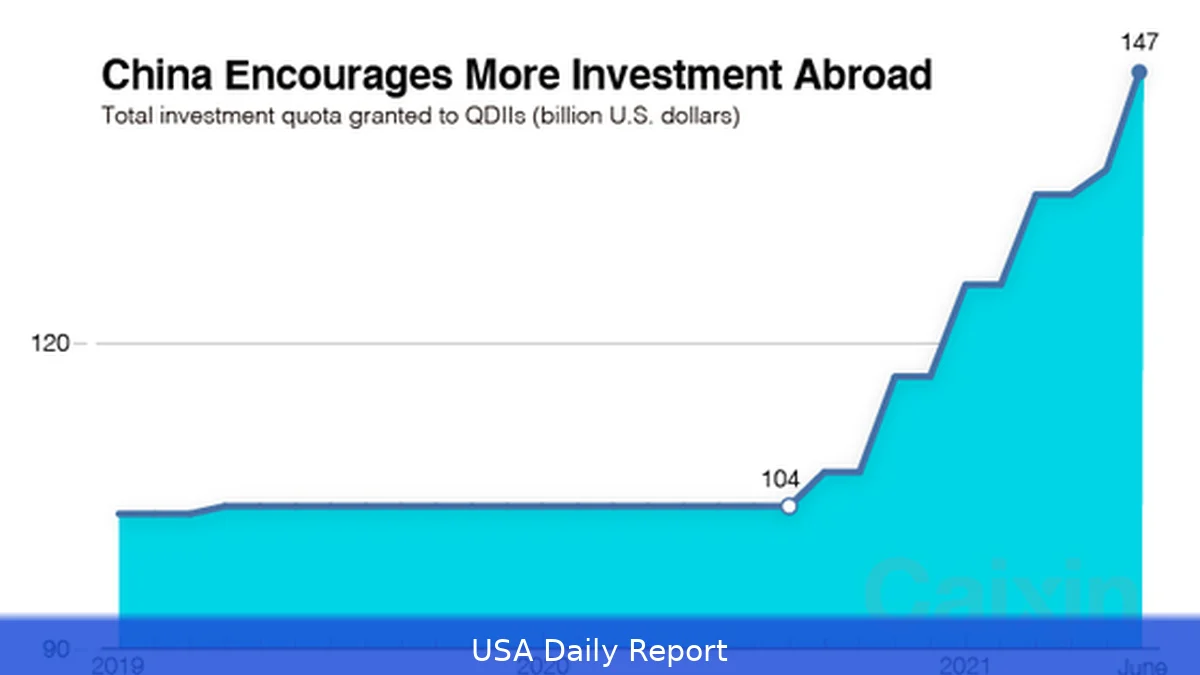
China’s latest move to raise its overseas investment quota marks the largest increase since 2021. The step comes amid mixed signals from the manufacturing sector and mounting trade tensions with the U.S. And Europe.
China’s Overseas Investment Quota Expansion
China’s government recently raised the overseas investment quota, marking its largest increase since 2021. The move aims to support exporters and smaller manufacturers who have shown surprising resilience despite a broader economic slowdown. Export-oriented companies, particularly smaller firms, have been the bright spot amid flagging domestic demand and escalating trade frictions.
This higher investment quota may allow Chinese manufacturers to grow internationally, especially while dealing with new tariffs and import limits from key trade partners. It also reflects Beijing’s desire to bolster foreign revenue streams to compensate for weakness at home.
Mixed Manufacturing Signals
The manufacturing sector’s performance in China has been uneven. The Caixin/S&P Global manufacturing PMI rose slightly to 51.8 in June, the fastest pace since May 2021. This index mainly reflects smaller, export-driven firms, which have benefited from overseas orders. Yet, an official broader manufacturing PMI tells a different story, showing a contraction in overall industrial activity for the second month running.
Demand for consumer and intermediate goods has been stronger than for investment goods. Still, rising material and freight costs have squeezed profit margins, with prices for steel, copper, and aluminum hitting multi-year highs. Business confidence has weakened, reaching its lowest point since November 2019 as firms wrestle with competition and uncertainty over the economic outlook.
Trade Tensions and Tariff Pressures
Trade disputes are putting pressure on China’s efforts to boost exports. Recent tariff announcements by the U.S. And the European Union have raised concerns. The EU plans to impose preliminary tariffs on Chinese electric vehicles starting July 4, adding to existing challenges. The U.S.
Has maintained tariffs on numerous Chinese goods, including technology products, which complicates supply chains and raises costs.
Tariffs act as extra taxes on imports — when a product arrives at a U.S. Port, importers pay fees that can boost prices for American consumers. This renewed emphasis on tariffs reflects broader geopolitical tensions and efforts by Washington and Brussels to protect domestic industries from what they call unfair competition.
Global Supply Chains and Strategic Investments
China’s push to increase overseas investment capacity aligns with a broader strategy to secure supply chains and raw materials. Southeast Asia, especially Indonesia, has become a critical player in this effort. Indonesia has rapidly expanded its nickel production and processing capacity, now accounting for about half of the world’s mined nickel. The Indonesian nickel sector has grown dramatically since 2016, thanks in part to Chinese investment joint ventures like the Morowali Industrial Park on Sulawesi Island.
Nickel is vital for electric vehicle batteries and other green technologies, making Indonesia’s dominance a strategic asset. China’s involvement in Indonesia’s nickel industry helps secure a steady supply of this critical metal amid tightening global competition and export restrictions.
However, Indonesia’s export restrictions on raw nickel ore have stirred trade disputes, with the EU challenging the policies at the World Trade Organization over concerns about protectionism. The contest over nickel highlights the broader tensions between countries seeking to control strategic resources and those demanding open trade.
By raising its overseas investment quota, China seems to be shifting strategy to back export-focused companies and lock in global resources. But growing trade barriers and faltering domestic demand may limit the impact, raising questions about how sustainable China’s recovery will be in the months ahead.


