
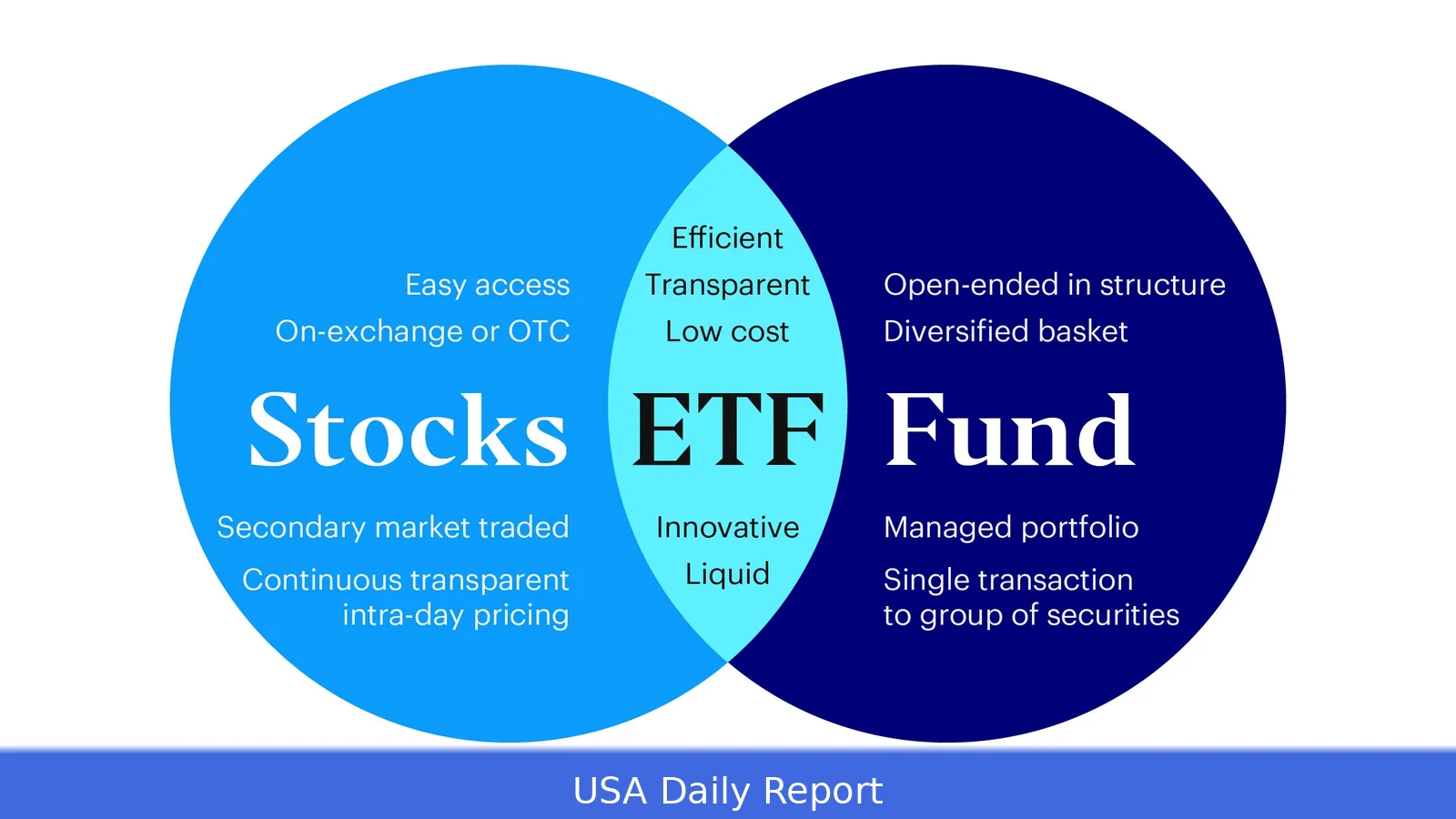
They trade like stocks but behave like funds: ETFs are core building blocks of many portfolios, yet they vary widely in structure, cost, liquidity and tax treatment. This primer outlines the practical concepts investors should know — fund structure, fees, liquidity, tracking error and tax treatment — so you can spot gaps before investing.
Why an ETF quiz matters Exchange-traded funds have become a core building block for many portfolios. Investors use ETFs for broad market exposure, sector bets, fixed-income allocation and to access niche strategies that would otherwise be hard to trade. But ETFs aren't all the same — they vary by structure, cost, liquidity and tax treatment. A short, focused quiz highlights common knowledge gaps and reinforces the differences that matter. Many investors treat ETFs like simple stocks. That's a risky shortcut. ETFs trade on an exchange like a stock, but their performance depends on the fund's design and the mechanics behind creation and redemption. Some ETFs track a total market index; others slice the market by sector, factor, geography or leverage. Knowing those differences is exactly what the primer and subsequent quiz target. What the quiz covers - How ETFs price during the trading day and the difference between market price and NAV - The role of authorized participants and the creation/redemption mechanism - Tracking error: what it is and how it affects investor returns - Tax basics: why ETFs are generally tax-efficient compared with many mutual funds - Liquidity considerations: ETF trading volume versus liquidity of underlying holdings - Index construction, active vs. passive ETFs, and risks specific to leveraged and inverse funds - Practical scenarios: what to check before buying, how to judge intraday pricing, and when to prefer an ETF over an index mutual fund Key ETF concepts to know - NAV (net asset value): the per-share value of the fund's holdings calculated after market close. - Market price vs. NAV: market price is what buyers and sellers pay during the trading day; differences create premiums or discounts. - Creation and redemption: authorized participants exchange baskets of securities for ETF shares (and vice versa), which helps keep market price and NAV aligned through arbitrage. - Expense ratio: the annual fee charged by the fund, expressed as a percentage of assets; it reduces returns automatically over time. - Tracking error: measures how closely an ETF follows its benchmark; higher tracking error means returns will diverge more from the index. - Strategy-specific risks: leveraged and inverse ETFs target daily multiples or inverses of index moves and can produce results that diverge significantly from a simple multiple of cumulative benchmark returns over longer periods. Common mistakes investors make - Equating ETF liquidity solely with the ETF's trading volume. The liquidity of underlying securities matters most during market stress. - Overlooking underlying-market liquidity: an ETF with heavy trading volume can still hold thinly traded bonds or small-cap stocks, which can widen bid-ask spreads and raise execution costs. - Ignoring expense ratios and tracking error, both of which compound into meaningful differences in long-term outcomes. - Treating leveraged or inverse ETFs as long-term substitutes for unleveraged exposures without understanding daily compounding effects. - Failing to review tax treatment and structure before buying (e.g., differences between in-kind creation/redemption and cash-based mechanisms).Related Articles
- Jersey Mike's Files Confidential IPO
- Tilman Fertitta Extends Exclusivity in $18 Billion Caesars Talks
- Social Security Benefits 2026: COLA, FRA & Claiming Strategies
Before buying an ETF, review its structure, fees, liquidity and tax treatment — these checks will help you avoid common pitfalls and choose the right fund for your goals.
This article was created with AI assistance.


