
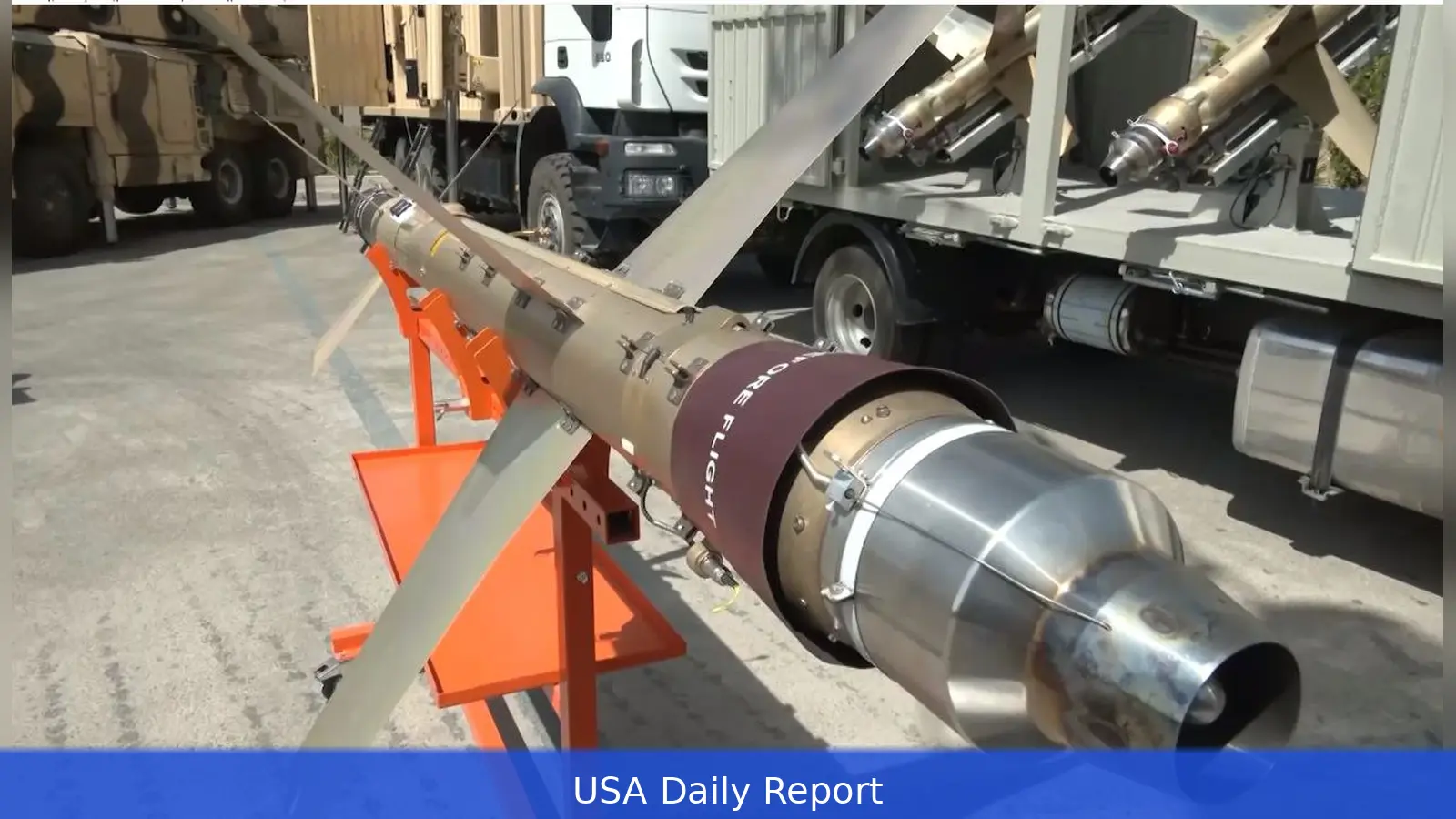
Cheap Iranian loitering munitions are getting attention from militaries, and some planners are questioning how they balance cost and capability. They have been linked to strikes on U.S.-made drones like the MQ-9 Reaper, prompting fresh budget questions in Washington and Beijing.
Cost asymmetry: small weapons, big bills
For years, planners balanced two options: spend on a few high-end platforms or field lots of lower-cost systems, and that old debate is back under the microscope. The recent attention on Iran's 358 loitering munition — and its reported success against high-value, U.S.-built unmanned aerial vehicles — is shifting that calculus.
The 358, also called the SA-67, is a compact interceptor that weighs about 50 kilograms and uses a micro-turbojet plus a solid-rocket booster. It cruises at roughly Mach 0.6 and can travel an estimated 100–150 kilometres while using an infrared seeker to home in on targets. Given its size and propulsion, the 358 should be cheaper to build and deploy than large, jet-powered interceptors or heavy SAMs, though published cost comparisons aren't provided in the sources.
Cost matters: if cheap weapons can knock out costly platforms, procurement teams will have to weigh buying more protection or changing force structure—choices that affect budgets and operations. The arithmetic on the battlefield has consequences for defence budgets, procurement cycles and how contractors pitch their wares to ministries of defence.
Why finance teams are paying attention
Defence spending shapes budgets and industrial policy, not just battlefield plans, and lawmakers often treat procurement as both an economic and strategic decision.
If adversaries can field cheap weapons that degrade the effectiveness of high-cost platforms, the return on investment for those platforms falls.
Procurement officials will now have to test the resilience of high-value assets under a wider array of threats. That often means additional spending on protection systems, redundancy and upgraded sensors. Those add-ons increase lifecycle costs and shrink the operational advantage that expensive platforms were supposed to deliver.
Contractors will likely pitch upgrades and counter-drone kits more aggressively, since customers could prefer add-on protection over buying entirely new platforms. Companies that can sell affordable counter-drone solutions or retrofit kits stand to gain. Those that rely solely on selling expensive platforms will face tougher value arguments in budget reviews.
What China is watching
Chinese state media and military commentators have noted the 358's apparent successes. Zhang Xuefeng, a military commentator cited in reporting on the weapon, highlighted unique advantages the system offers against unmanned aircraft. His commentary reflects a wider interest inside Beijing: cheap, exportable systems can alter power balances without requiring large industrial bases.
Carter Malkasian, associate professor of strategy and policy at the National War College, has written about what the conflict offers China in strategic lessons. His work draws attention to how lower-cost weapons and asymmetric tactics can complicate conventional superiority. That analysis resonates for defence planners in Beijing, where leaders balance goals for advanced high-end platforms with investments in massed, affordable systems.

Chinese analysts will probably look at the 358 technically—whether they can build or export a comparable interceptor—and doctrinally—whether to field more distributed, low-cost systems instead of concentrating on a handful of expensive assets.
Budget implications for the United States
U.S. Defence spending already funds a mix of high-end aircraft, missiles and growing numbers of unmanned systems. The threat posed by cheap interceptors shifts the debate within budget offices. If protected platforms require layered defences or persistent escorts, operational costs rise and deployment plans change.
Those shifts could sway Congressional choices: lawmakers consider acquisition, sustainment and logistics, so new threat profiles often change funding priorities. The perceived vulnerability of high-value assets could push appropriators toward programs that promise survivability at lower cost — like electronic warfare suites, scalable air-defence cells or mass-produced interceptors.
Contractors will adjust their pitches to match that buyer interest. Expect proposals that highlight rapid fielding, modular protection packages and cost-per-engagement metrics. Those arguments may carry more weight in hearings and inside budget committees than raw capability alone.
Market winners and losers
Markets react to shifts in buyer priorities. Companies that produce low-cost counter-drone systems, sensors and affordable interceptors should see stronger demand. Firms providing retrofits and defensive upgrades to existing platforms also stand to gain because buyers often prefer upgrading current fleets rather than buying wholly new systems.
By contrast, companies whose revenues depend on selling single, high-ticket platforms could face pressure. Their financial models assume replacement cycles and steady procurement budgets. When buyers demand layered defences and lower-cost complementary systems, that assumption is tested. Share prices and contract forecasts may wobble until firms prove they can adapt.
Export markets matter too. Nations with tighter budgets will look for affordable ways to protect critical assets. A low-cost offensive weapon that can degrade an opponent's high-end advantage makes inexpensive countermeasures a more attractive export. Defence manufacturers in allied countries will be competing for those contracts.
Policy trade-offs and industrial strategy
Buying more low-cost systems isn't a simple solution. Cheaper weapons require different logistics, training and command structures. Nations must decide whether to accept higher volumes of lower-capability systems or stick to fewer, highly capable platforms and invest in their protection.
Industrial strategy also comes into play. States that invest in producing low-cost interceptors could export them and gain geopolitical influence. They could also pressure competitors economically by increasing supply and driving down prices for these systems. That would tighten competition for firms that supply traditional air-defence hardware.
Chinese planners watching the Iran conflict must weigh domestic defence-industrial goals against export ambitions. Producing and selling inexpensive weapons can be lucrative, but it alters global supply dynamics. Those shifts will ripple into defence trade relationships and the competition for market share among state-backed manufacturers and private firms.
Long-term budget consequences
What happens next will be part technical, part political. Defence budgets respond to perceived risk. If the 358's profile proves repeatable in other theatres, expect governments to reallocate funding toward active defence, rapid-procurement of countermeasures and investments in sensors and electronic warfare.
That reallocation will affect firms, jobs and regional suppliers. Contractors that move quickly to offer cost-effective solutions could win multi-year contracts and steady revenue streams. Those that don't adapt may face shrinking order books and harder sales cycles.
The key for finance teams is to model not only acquisition costs but engagement costs. What's the price per intercept? How many interceptors are needed to sustain a mission? Those variables will inform budget debates and stock valuations in the sector.
Related Articles
The 358 — about 50kg, cruising near Mach 0.6 for 100–150km and steered by an infrared seeker — is reshaping how buyers price protection versus capability.
This article was created with AI assistance.


