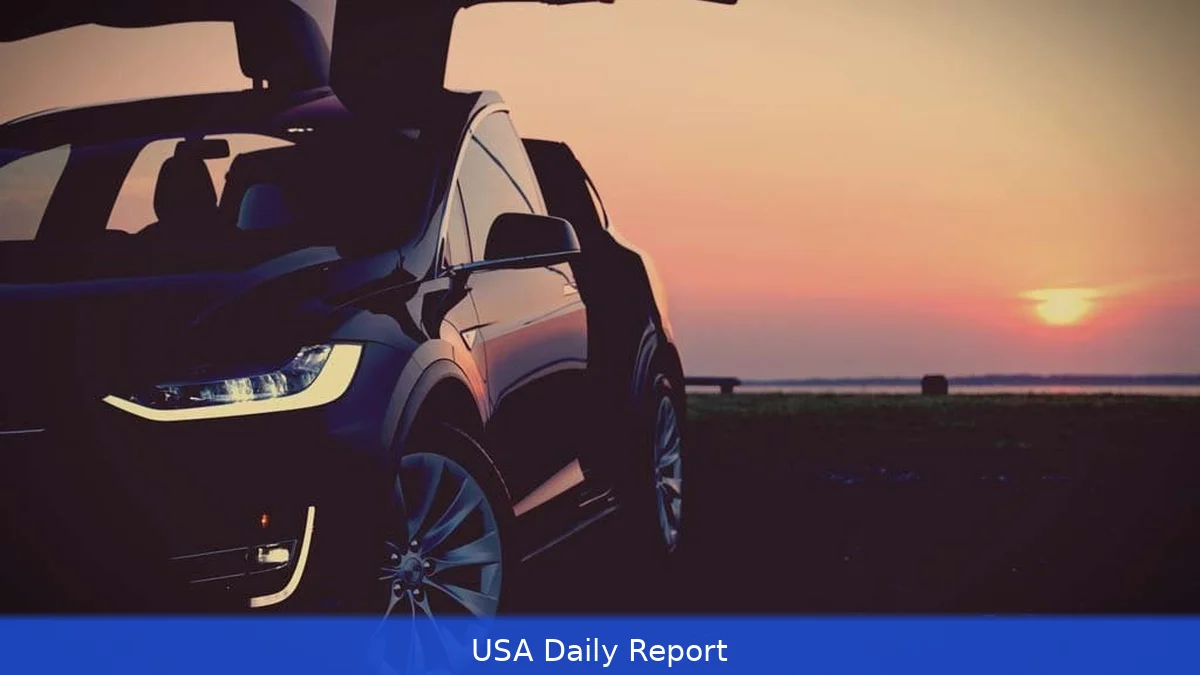
Tesla delivered 358,023 vehicles in the first quarter of 2026, falling short of Wall Street’s expectations by roughly 10,000 units. The miss adds to signs that Tesla’s electric vehicle sales are slowing, but the company’s pivot toward robotaxis and humanoid robots is reshaping how investors view its future.
Delivery Numbers Slip as EV Sales Cool
Tesla’s Q1 vehicle deliveries missed the consensus estimate, which ranged from about 365,600 to 372,100 units. The company’s 358,023 deliveries represent a decline from previous quarters and mark the second straight quarter where Tesla fell short of expectations. U.S. Sales were especially weak, dropping 12.5% from the prior quarter to 119,900 vehicles, with March marking the sixth month in a row of year-over-year declines.
That’s a sharp reversal for a company once synonymous with electric vehicle growth. Full-year deliveries in 2025 declined 9% compared to 2024, while Q4 2025 deliveries fell 16% year over year. The trend suggests Tesla is hitting a rough patch in the traditional EV market, even as gas prices remain high — a factor that usually boosts EV demand.
Inventory Builds Despite Delivery Miss
Adding to concerns, Tesla produced about 50,000 more cars than it delivered in Q1. That pushed the company’s inventory to its highest level in recent years, surpassing previous records set just last year. It’s a sign Tesla may be misjudging demand as the EV tax credit expires and competition heats up.
Investors and analysts note that the inventory build likely reflects both the loss of the EV tax credit and the need for lower interest rates to encourage new car purchases. “High gas prices might nudge more people toward EVs, but that effect takes time to surface in delivery numbers,” said Tesla investor Shawn Campbell.
Robotaxis and Humanoid Robots: Tesla’s New Frontier
The delivery shortfall is only part of the story.
Tesla is actively shifting its focus from traditional vehicle sales to more ambitious ventures like robotaxis and humanoid robots. The company has committed about $20 billion toward these technologies, which could redefine its business model.
Yet skepticism remains about Tesla’s driverless ambitions. This week, the company revealed that human operators can remotely control its robotaxis at speeds up to 10 mph to handle situations where the autonomous system struggles.
That makes people wonder about how scalable fully driverless robotaxis really are.
Market sentiment reflects these doubts. Prediction markets show only about 14.5% believe Tesla will launch robotaxis in California by mid-2026, underscoring widespread uncertainty about the timeline and feasibility.
Investor Sentiment and Stock Performance
Tesla’s shares dropped roughly 3% following the delivery report, sliding from $381 to about $369 in early trading. The stock has fallen over 15% year to date amid these delivery misses and broader market pressures.
Some analysts argue that Tesla’s current delivery numbers don’t fully capture where the company is headed. “A few thousand cars either way won’t move valuation much,” said Matt Britzman, a senior equity analyst. “The real investment case depends on what’s coming next rather than today’s auto business.”
Still, critics see Tesla’s stock as a meme propped up by loyalists rather than fundamentals. GLJ Research recently reiterated a Sell rating with a price target under $25, calling Tesla’s expected delivery growth more about subsidies than genuine demand.
Tesla’s delivery miss highlights the challenges in its core vehicle business, but the company’s bet on robotaxis and robotics could reshape its future — if those technologies can scale as promised.


