
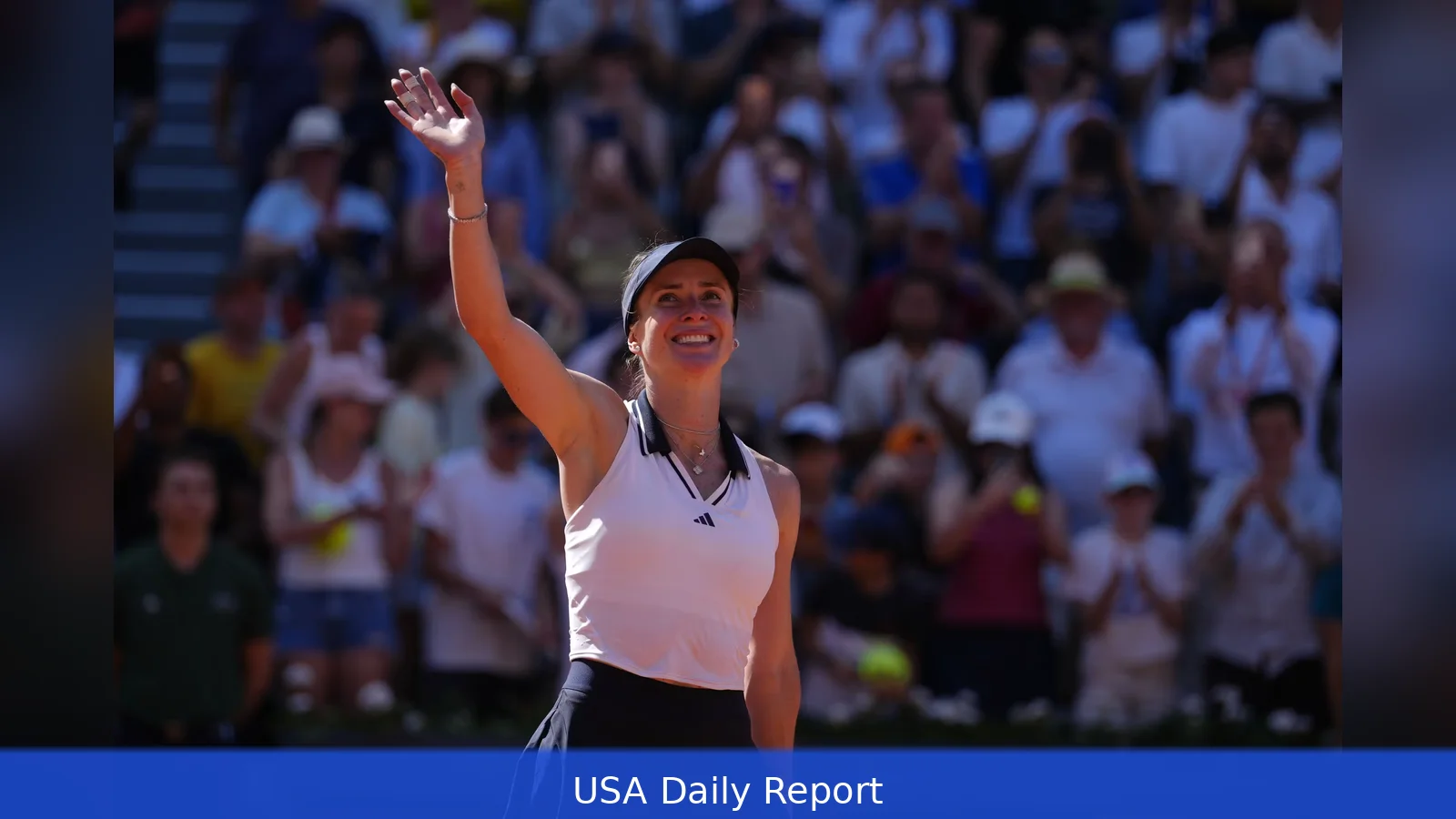
2 hours 26 minutes. That's how long Elina Svitolina's dramatic opener at Roland-Garros lasted as she edged Anna Bondar 3-6, 6-1, 7-6[10-3] on Court Suzanne-Lenglen. The seventh seed and World No. 7 on the WTA list needed the tournament's first 10-point match tiebreak to close out a match that swung wildly and put new pressure on questions about her temperament in big moments. The win keeps her in the draw but also frames her clay Slam as a test of whether the form she found in Rome can translate into deeper Grand Slam runs.
The win keeps Svitolina in the tournament while deepening questions about how she handles pressure on the biggest stages.
How the match turned
The scoreboard read 3-6, 6-1, 7-6[10-3], but the match was far messier than that line suggests. Bondar took the opening set and then, in the third, built a 3-1 lead before a torrid stretch that saw her win 12 of 13 points to surge to 6-5, a run the WTA described as the pivotal swing. Svitolina steadied, holding serve at love to force the 10-point match tiebreak, and then ran away with the breaker 10-3.
Those momentum shifts underlined how tight the match became when two players know each other's patterns. The WTA noted this pairing has become unusually frequent: five meetings in the past 12 months and three first-round Grand Slam clashes at recent majors. Familiarity has produced tactical, tense matches rather than blowouts, and Tuesday's contest fit that pattern.
Sure, svitolina herself framed the day as an emotional furnace. Speaking to WTA staff after the match she called the afternoon "overwhelming" and ranked the match among the top three toughest of her career.
She said she had to bring the confidence earned in Rome to "step up my game and keep fighting," language that pointed to both physical effort and a mental reset midmatch.

Physically she matched Bondar's spikes of intensity. When Svitolina was at her best she combined rugged defense with opportunistic aggression, converting small openings and insisting on longer points until error crept in on the other side. WTA analysis emphasized how those small details decided points, and Svitolina credited freshness in body and mind as decisive in the tight finish.
The Paris scare arrived on the heels of a career-reshaping week. A week before Roland-Garros Svitolina won the Internazionali BNL d'Italia, her first WTA 1000 title in eight years, a run that Tennis.com highlighted featured victories over Elena Rybakina, Iga Swiatek, and Coco Gauff. That Rome triumph reset expectations for her clay Slam and helps explain why her opener in Paris felt weighty: a recent big title had put a Grand Slam-level target on her back.
That recent run also sits inside a longer story of comeback and resilience. Reuters recorded that her 2023 Strasbourg title was the first she won as a mother after a year away from the tour, a hiatus that sent her ranking down to No. 508 while she gave birth to her daughter, Skai. Since returning she has threaded highs and lows, rebuilding her place among the tour's top players but also carrying the added scrutiny that comes with motherhood and public attention.
Public scrutiny hasn't always been abstract. Reuters reported that in August 2025 she condemned online abuse after a loss at the Canadian Open, sharing messages she received that included threats and hateful slurs. That episode showed how social media pressure can pile onto the physical demands of the tour and the personal responsibilities players juggle off court.
On form alone, the Rome title explains why observers are asking whether Svitolina can carry that momentum through a two-week major. On temperament, Tuesday's tight finish raised the same question many fans and analysts pose after dramatic early wins: does surviving a scare leave a player battle-hardened or emotionally spent?
For the immediate future the path is clear. Svitolina is scheduled to face qualifier Kaitlin Quevedo in the second round. Quevedo is a Grand Slam main-draw debutant, and the WTA match listings and the Roland-Garros schedule will post the confirmed court assignment and start time in the tournament's order of play updates. If the Paris match demanded physical resilience and tactical nuance, the Quevedo match will be a different kind of test: fending off the energy of a debutant while managing expectations that now sit a notch higher after Rome.
For fans deciding whether to tune in, the practical step is to follow the WTA match center or Roland-Garros live scoring for the precise timing. For Svitolina, the practical challenge is quieter and more personal: translate the fitness and match sharpness that saw her through Rome and a brutal opener into steadier, cleaner days on the clay.
Related Articles
- Emma Navarro chases third WTA title vs Mboko in Strasbourg
- 6-0 edge sets up Ostapenko-Świątek clash at Roland Garros
- Fidelity settles data breach for $2.5 million
She faces qualifier Kaitlin Quevedo in round two.
This article was created with AI assistance.


