
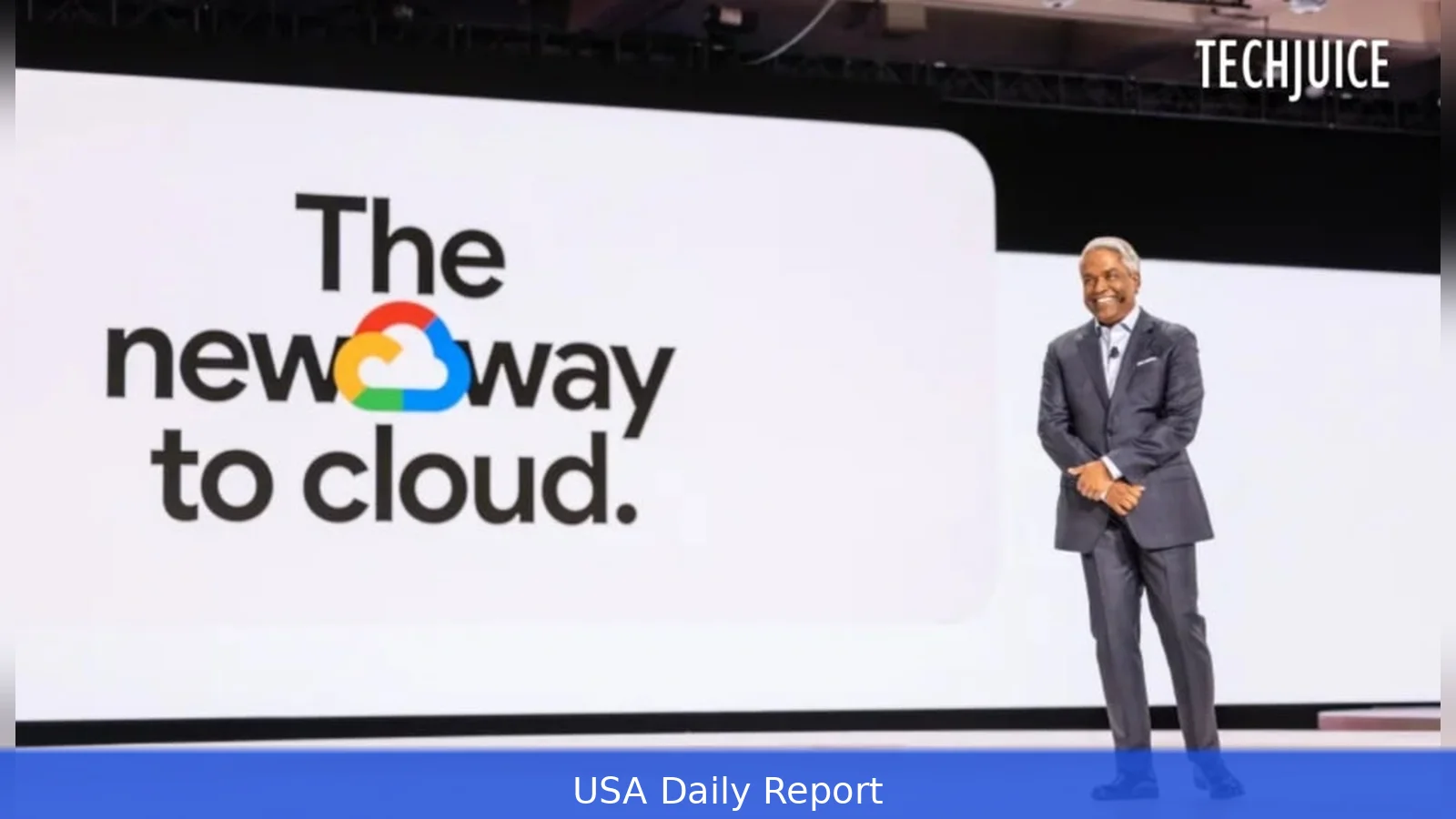
Google pledged $750 million at Cloud Next in Las Vegas to accelerate enterprise AI agents built on Gemini. The fund will offset proof-of-concept compute and integration costs, pay for forward-deployed Google engineers, and offer cloud credits and deployment rebates to partners ranging from startups to large consultancies. Several companies onstage — from Lovable’s coding agent to Notion’s Gemini-powered features and Gamma’s use of Google’s Nano Banana 2 image model — illustrated how vendors are building industry-specific agents on Google Cloud.
Big bet: $750 million to fuel AI agents Google’s headline announcement at Cloud Next was blunt: the company has earmarked $750 million to accelerate sales of AI agents built on Google Cloud. The money is meant to lower the upfront friction for enterprise deals — funding proof-of-concept projects that leverage Gemini, paying for access to Google engineers on customer projects, and offering cloud credits and rebates tied to deployment. That approach is aimed at the sales cycle. Enterprises often want working demos, performance proof and hands-on help before they commit to production. By covering those costs, Google hopes partners can show faster time-to-value and close larger deals. The fund is available to many partners. Startups can use it to offset the expense of model compute and integration work. Larger systems integrators and consultancies can tap it to scale deployments across big customers. That mix matters: it gives Google leverage both at the cutting edge and across enterprise IT teams that make buying decisions. Which startups got the spotlight Cloud Next’s sessions and showroom floor highlighted a set of startups that are already building on Google’s stack: - Lovable: Expanded its relationship with Google Cloud and launched a coding agent in Google’s enterprise app marketplace. - Notion: Showcased deeper use of Google’s models to power text and image features inside its collaboration app. - Gamma: An AI-native presentation tool using Google’s Nano Banana 2 image model and Cloud services for image and layout generation at scale. - Inferact: Founded by creators of the open-source inference project vLLM, running on Google Cloud’s GPU fleet for low-latency model serving and orchestration. - ComfyUI: An open-source multimedia tool showing integrations with Nano Banana 2, enabling hybrid workflows that link on-premise tooling to cloud-hosted models. Smaller bets with sector focus Beyond headline names, Google highlighted a parade of specialist startups using its platform for industry-specific AI tasks: - ChorusView: AI-powered smart tags to track goods in real time. - ExaCare AI: Software for post-acute medical care facilities. - Optii: AI to optimize hotel housekeeping and staffing operations. - Insilica: Automated, regulatory-compliant chemical safety reports. - Parallel AI: Web search and research APIs tuned for AI agents. - Proximal Health: AI-driven healthcare software. These companies show how vendors are taking the same foundational pieces — large models, image generators, GPUs and cloud orchestration — and applying them to industry-specific workflows.Related Articles
- Google expands Gemini in Chrome to seven Asia‑Pacific countries
- Hardware Chief John Ternus Inherits Apple’s AI Problem
- UK Launches $675M Sovereign AI Fund
Google says the $750 million will cover Gemini proof-of-concepts, forward-deployed engineers, cloud credits and deployment rebates — a package meant to lower upfront friction and help partners close larger enterprise deals.
This article was created with AI assistance.


