
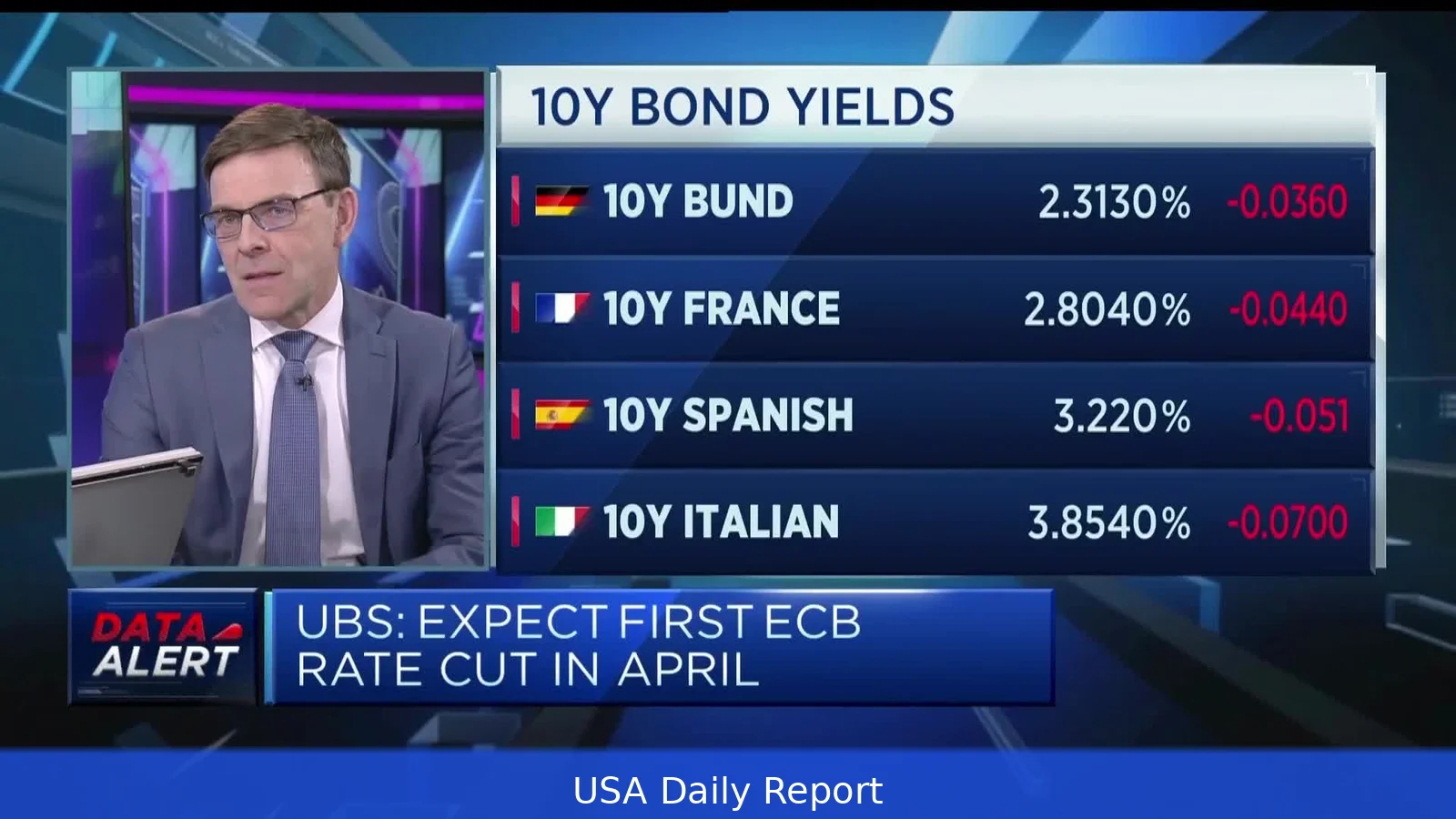
Oil-price swings have left the ECB "between our baseline and our adverse scenario," Bundesbank chief Joachim Nagel said, urging policymakers to wait for fresh data before any further rate hikes. With the ECB's April 29-30 policy meeting two weeks away, other Governing Council members — including Christodoulos Patsalides of Cyprus — echoed a meeting-by-meeting approach and said they need clearer signs that headline inflation is spilling into core prices.
Policymakers call for patience
- Several Governing Council members argued recent shocks have clouded the outlook and that decisions should be data-driven rather than calendar-driven.
- Joachim Nagel (Bundesbank) told CNBC at the IMF Spring Meetings that oil-price volatility places the ECB "between our baseline and our adverse scenario," and stressed the importance of waiting for up-to-date information before deciding.
- Christodoulos Patsalides (Central Bank of Cyprus) told Reuters he would not "rush into any decision" absent evidence that higher headline inflation is spilling into core prices, saying "wisdom comes with more information."
- Other Council members have echoed a meeting-by-meeting stance, urging incoming data to guide policy rather than pre-commitments.
Markets price caution, analysts hedge bets
- Markets currently signal a likely hold at the April meeting, with some traders assigning a higher chance to a June move; different instruments and metrics show divergent odds that shift with headlines.
- Analysts vary in their end-of-year projections, with some modelling the ECB's key rate around 2.5% or higher depending on whether energy-driven shocks feed through to wages and services.
Drivers of uncertainty cited by officials
- Officials highlighted concrete sources of volatility: oil-price swings and tensions around the Strait of Hormuz, which could quickly alter the inflation path and influence policy choices.
- Patsalides reiterated that headline inflation can be volatile and policymakers are watching for signs of spillovers into underlying price pressures.
Why this matters: how the ECB reads volatile energy prices will help determine whether the bank pauses its tightening cycle or resumes hikes. That judgment will shape borrowing costs across the euro area and ripple through global markets and investor positioning.
Related Articles
- Dollar Gives Back Iran War Premium as Traders Pull Back
- PMI's Smoke-Free Push Lifts Q3 Profit, Raises EPS Guidance
- Emerging Markets Rally Pauses as Oil Risk Recedes
Officials stuck to a meeting-by-meeting approach and said they'll wait for fresh data — with the ECB's April 29-30 policy meeting the next formal test.
This article was created with AI assistance.


