
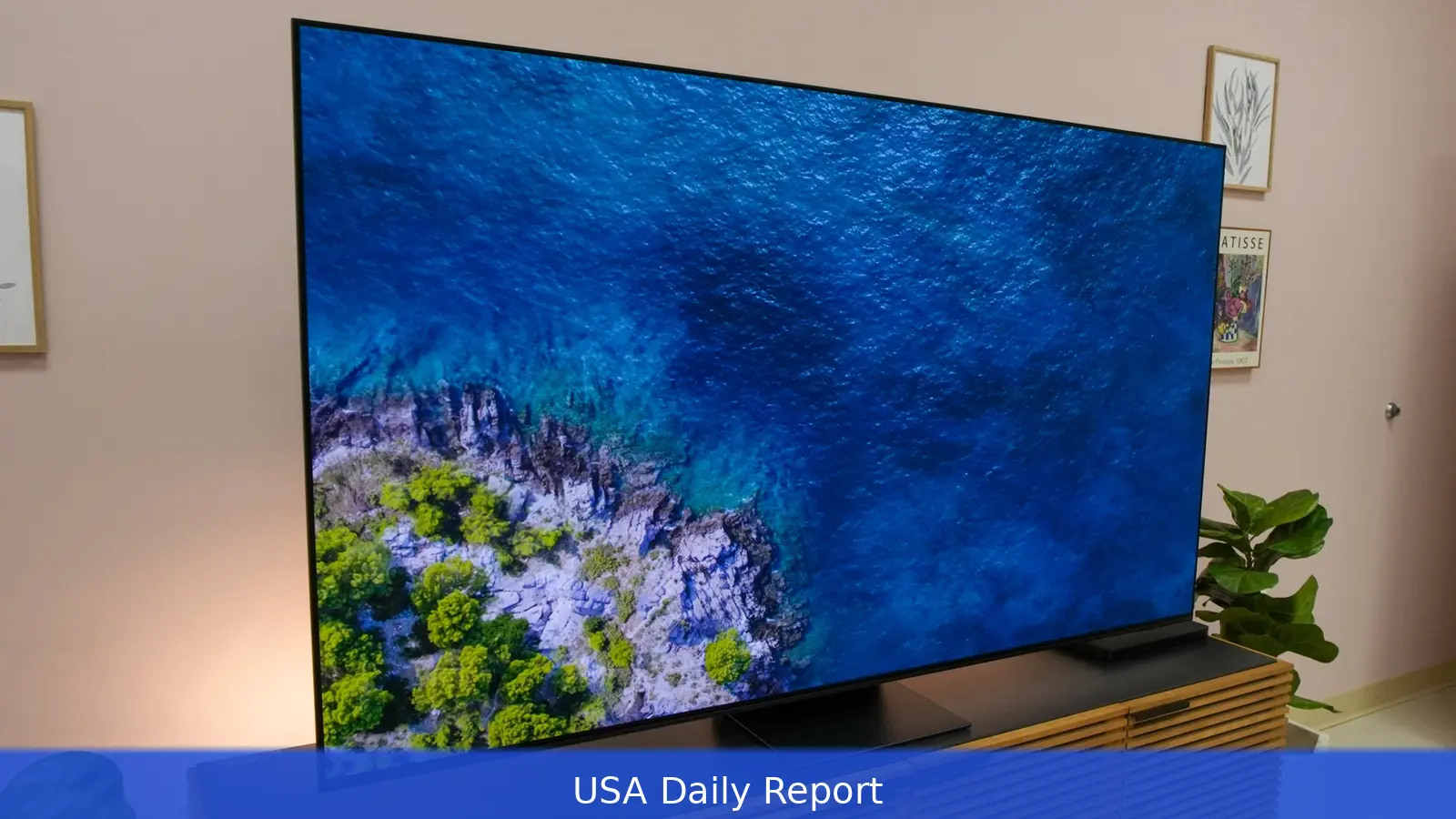
Two popular 65-inch 4K OLEDs — LG's Evo C5 and Samsung's S90F — have dropped to $1,299.99 with free delivery this week, matching one of the lowest retail prices for these 2025 models.
The deal Two of the most popular 4K OLED sets — LG's 65-inch Evo C5 and Samsung's 65-inch S90F — are on sale for $1,299.99 with free delivery. Retailers are offering both models at the same price, making them an easy comparison for buyers who want OLED picture quality without flagship costs. The timing is notable: spring sports and the NBA playoffs are boosting TV demand, and manufacturers often trim prices ahead of summer model pushes after CES. What the panels deliver Both use OLED panels that deliver the deep blacks and contrast OLEDs are known for. The C5 employs LG's Evo panel, engineered to push brightness higher than standard white OLEDs and expand color range. Samsung's S90F uses a QD-OLED stack, mixing quantum-dot color enhancement with OLED's per-pixel light control to boost saturation and peak luminance. On paper, QD-OLED tends to show a wider color volume at high brightness while Evo-style OLEDs improve light efficiency; in everyday viewing both produce excellent HDR tone and color for streaming services, Blu-rays, and modern games. Gaming and connectivity Both TVs target gamers and include features useful for modern consoles and PCs: - Native 120Hz panels with an overdrive option to 144Hz for non-4K sources. - HDMI 2.1 inputs to support 4K/120fps where titles and hardware allow. - Low input lag and fast pixel response times suitable for competitive or fast-action gaming. Note on consoles: PlayStation 5 and high-end gaming PCs can take full advantage of 4K at 120fps with compatible titles. Nintendo's Switch 2 can't output 4K at 120fps and is limited to 60fps at 4K, so it won't use the TVs' higher refresh headroom in 4K. PC gamers can use the 144Hz overdrive at lower resolutions for higher-frame competitive play. Beyond refresh rates, HDMI 2.1 enables features that matter for future-proofing: variable refresh rate (VRR), auto low-latency mode (ALLM), and high bandwidth for uncompressed audio and video. Those inputs are especially useful when hooking up a PS5, Xbox Series X, or a high-end GPU-equipped PC. Both TVs support these standards, though available features and naming vary between LG's webOS and Samsung's Tizen-based interface. Picture processing and smart features Each brand uses its own processing tech to upscale content, improve motion handling, and tweak color and contrast in real time. Samsung ships the S90F with a Q-series processor that handles upscaling and dynamic picture optimization. LG pairs its Evo hardware with chipsets tuned for low-latency gaming and wide color mapping. Both companies also offer voice assistants, smart home integrations, and app ecosystems that cover the major streaming services.Related Articles
- Remote Work Tax Rules 2026: State Nexus, Deductions, Filing
- Intel's non‑Ultra Core chips get new Wildcat Lake silicon
- UK Launches $675M Sovereign AI Fund
At $1,299, either the LG C5 or Samsung S90F is a smart pick for buyers who want OLED picture quality without flagship pricing.
This article was created with AI assistance.


