
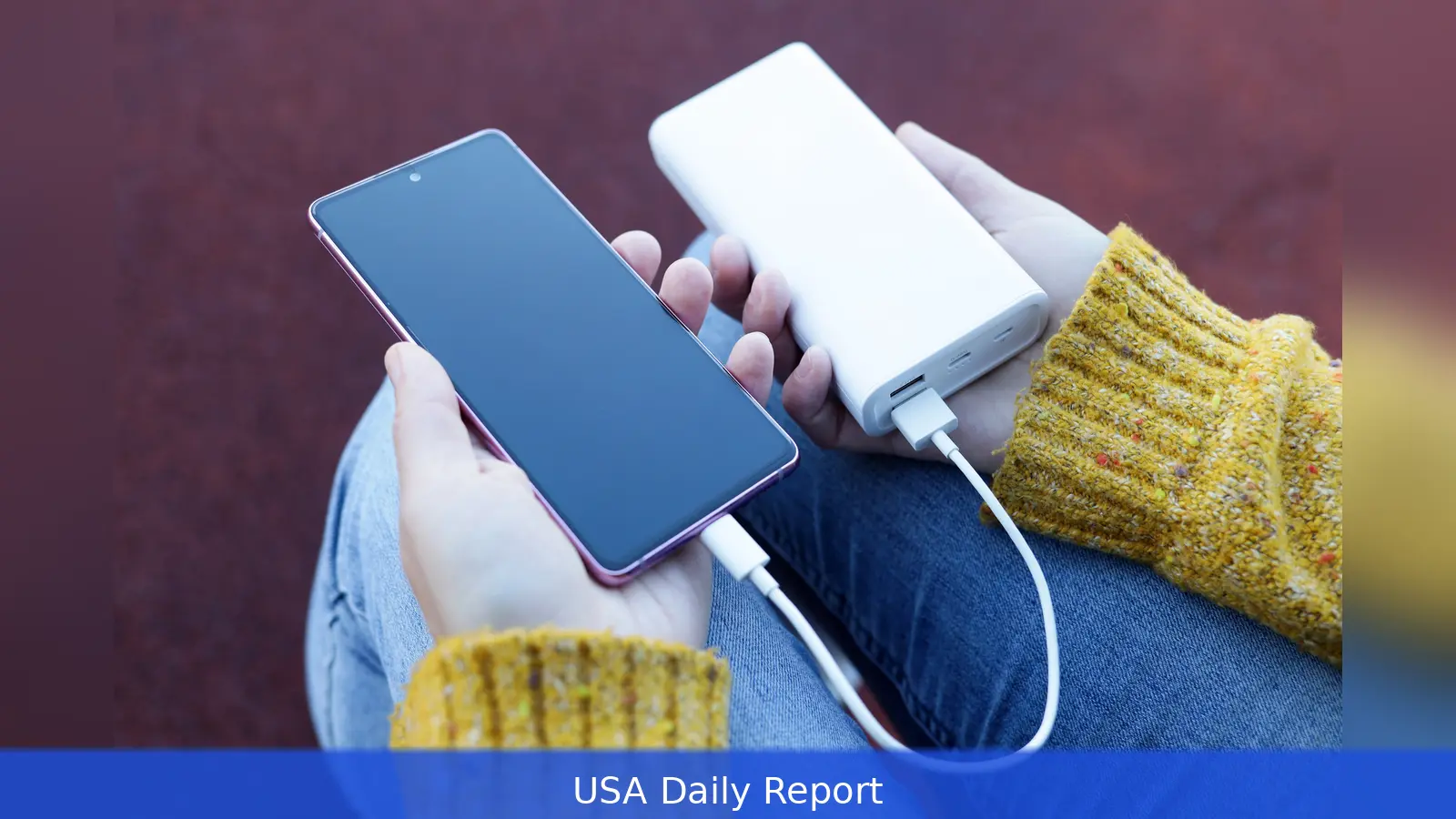
Casely reannounced a power-bank recall today. The U.S. Consumer Product Safety Commission said the move follows a deadly explosion and new overheating reports.
What was recalled
Casely has reissued a recall for its Power Pods wireless power banks, the company and the U.S. Consumer Product Safety Commission (CPSC) said. The recall covers the Casely-branded Power Pods bearing model number E33A sold online. The units were offered through Casely's website, Amazon and other online retailers between March 2022 and September 2024, priced between $30 and $70.
The CPSC's restatement follows an earlier recall announced in April 2025. At that time Casely recalled more than 429,000 units after 51 reports that batteries overheated, expanded or caught fire, and six people suffered minor burns. The agency said 28 additional incidents prompted the reannouncement, including a serious event on an airplane and an explosion that left a 75-year-old New Jersey woman with second- and third-degree burns; she later died from complications tied to her injuries.
How the recall works
Casely is offering free replacement devices through a claim process on its website. Consumers requesting replacements must submit a photograph showing the device's model number and a second photo that includes the date written next to the word "recalled" on the power bank, the company said. The CPSC warned owners to stop using the recalled units immediately and to avoid disposing of them in household trash, recycling bins or drop boxes at electronics stores because of the fire and explosion risk.
The recall notice instructs consumers to use local hazardous-waste facilities that accept lithium-ion batteries so the devices can be handled safely. The CPSC singled out the plane incident when warning owners not to bring recalled units aboard aircraft in ways that could put passengers or crew at risk.
Financial exposure and liabilities
Recalls of this scale carry multiple cost lines for a consumer-electronics seller. Casely faces expenses tied to replacements — sending or manufacturing replacement units, logistics for receiving defective items when applicable, and customer-service operations to process claims.
The company also will incur costs linked to safe disposal or recycling programs and any specialized handling required for damaged lithium-ion cells.
A fatality raises the legal stakes. The CPSC's involvement and the death reported by the agency increase the likelihood of liability claims by consumers or families, which can add legal fees and settlement or judgment payments. Lawsuits and settlements can be drawn out and expensive, and they can require companies to set aside reserves, tightening working-capital availability.
Insurance can offset some recall and liability costs. But insurers often push back on coverage for product defects that lead to bodily injury, and premiums can rise after a large payout. The company may also face demands from payment processors, banks, or lenders for additional financial disclosures depending on contract terms and the size of claims.

Revenue and reputational impact
Sales of phone and accessory makers can be especially sensitive to safety concerns. Consumers often equate product safety with overall brand trust. For a direct-to-consumer brand that relied on online marketplaces such as Amazon in addition to its own storefront, negative headlines about fires and a death can slow new-customer acquisition and reduce repeat purchases.
Retail partners may adjust inventory practices. Amazon and other platforms typically allow returns and may offer refunds, but they also manage risk by suspending listings or requiring proof of compliance with safety standards. That can lead to lost placement in search results or temporary removal from marketplaces — both of which affect short-term sales volume and traffic.
Operational and supply-chain consequences
Handling a recall of hundreds of thousands of units disrupts normal operations. Casely will need to coordinate with suppliers, contract manufacturers and logistics partners to track remaining inventory and identify units in transit. The firm must identify whether the defective cells originated from a specific supplier batch or multiple sources, and then work to quarantine any at-risk inventory.
Manufacturers also must decide whether to redesign the battery assembly or change suppliers for future production runs. Those decisions take time and money. They can delay new product launches or force the company to source more expensive components while quality-control procedures are tightened.
Regulatory scrutiny and market signals
The CPSC's reannouncement places Casely squarely under federal scrutiny. The agency's public warnings are designed to protect consumers, but they also provide a roadmap for attorneys and state regulators tracking potential safety violations. Companies subject to high-profile recalls often face extended oversight until corrective measures are complete and verified.
Investors and creditors watch recall notices for signs of deeper operational or governance problems. Even privately held companies can suffer from reduced access to credit or tougher loan covenants after a costly recall. For consumer-electronics brands that depend on strong online reputations and predictable inventory turn, a major recall can squeeze margins and slow growth.
What to watch next
Key items for markets and counterparties include the pace and cost of Casely's replacement program, any legal filings that arise from injuries or the death, and whether retailers change handling or listing policies. Observers will also look for technical reports detailing why the lithium-ion cells overheated — whether a manufacturing defect, design flaw or other failure in quality control.
Another metric is return and claim rates. If a large share of owners submit claims, the logistical burden and expense grow. Conversely, low claim rates might limit immediate cash outflows but could leave liabilities unaddressed if defective units remain in circulation.
For consumers and trading partners, disposal infrastructure will matter. The CPSC emphasized safe disposal via local hazardous-waste facilities; how quickly municipalities and retailers can provide or expand such options will affect the risk that defective units remain in unsafe environments.
Retailer and consumer protections
Retailers that sold the Power Pods will need to coordinate with Casely to process refunds or exchanges and to handle returned inventory in a way that meets hazardous-waste rules. The CPSC's instructions aim to limit further injury and transportation incidents, particularly after the aircraft event cited in the agency's notice.
Consumers holding these devices should follow the CPSC's guidance: stop using the power bank, don't place it in household trash or recycling, and seek out local facilities that accept lithium-ion batteries for safe disposal. The replacement process on Casely's site requires photographic proof of the model number and a dated photo marked "recalled," a step designed to reduce fraud but one that may slow the pace of claims processing.
Related Articles
- Pied-à-terre tax targets NYC super-rich
- Decades-Old Legal Question Roils Fed Chair Fight
- Wealthy Rework Tactics to Cut 2026 Taxes
Casely sold the recalled Power Pods from March 2022 through September 2024 for $30 to $70 and labeled the devices with model number E33A.
This article was created with AI assistance.


