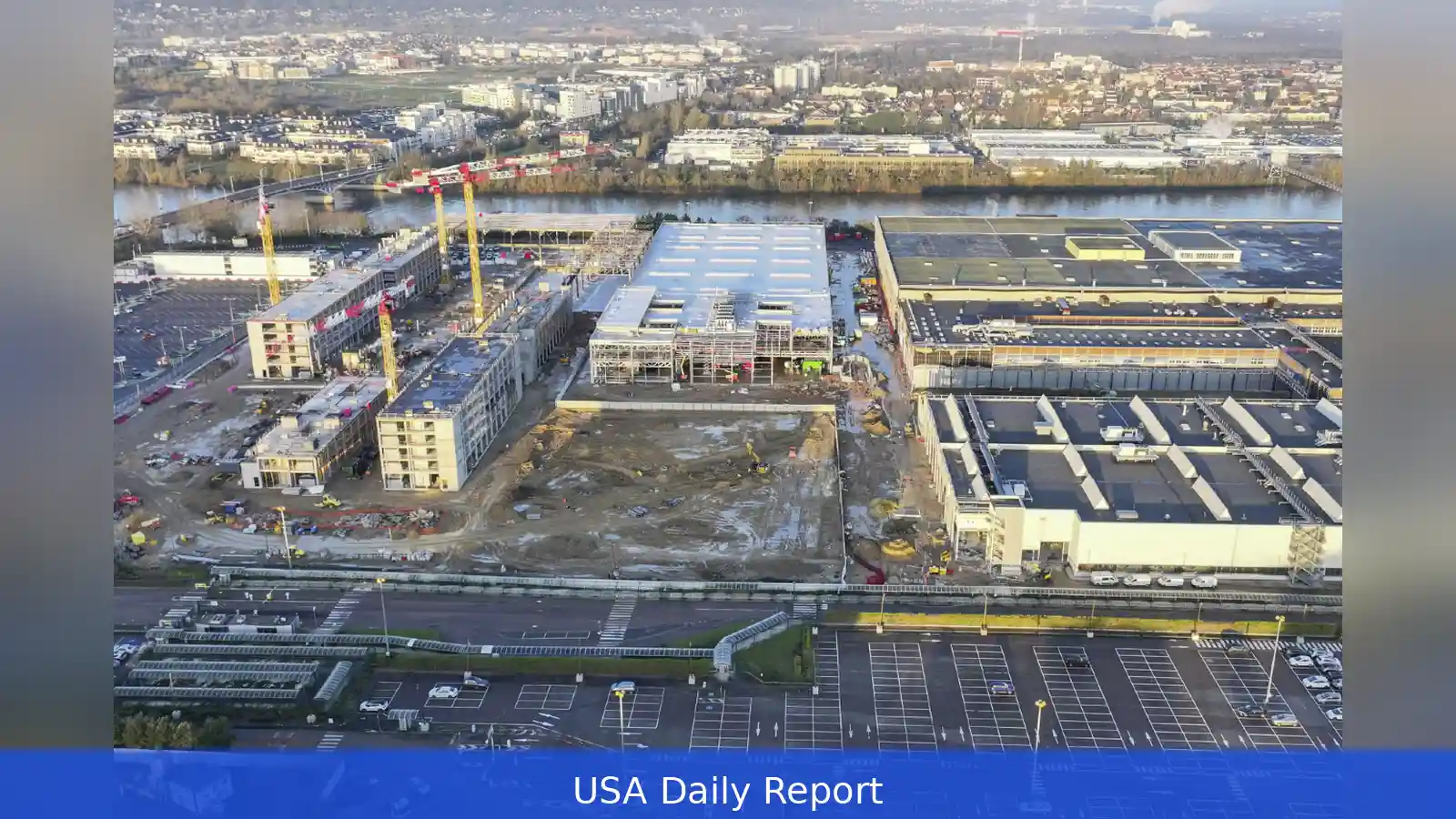
Stellantis is investing €20 million at its Poissy plant near Paris.
Money and jobs, not promises
The investment is important. Stellantis confirmed a €20 million budget to upgrade stamping lines at the Poissy site, a move the company says locks in industrial activity and keeps the factory running with its current workforce.
The investment follows an extraordinary meeting of the plant's Social and Economic Committee (CSE), where management presented details meant to end months of speculation about a potential closure. The company told the CSE it won't launch a social plan or redundancy scheme tied to the site's operations, preserving roughly 2,000 jobs that depend on the plant.
What the upgrade buys
The money will be targeted at the plant's stamping operations — the heavy presses that shape body panels and other metal components. Upgrades there tend to raise quality, cut downtime and lower scrap rates. Those are practical gains that make a factory more competitive.
Stellantis has framed the work as long-term: management said the modernization allows for a production commitment that stretches beyond two decades. That’s a formal signal to suppliers and the workforce that Poissy isn’t being mothballed; it’s being prepared for sustained output.
Keeping production local
Poissy is a unique factory. It’s the last car assembly plant in Île-de-France and, for the region, a rare industrial anchor. The site currently produces the DS 3 and the Opel Mokka, models that feed both domestic and export demand.
Maintaining assembly here keeps a segment of the automotive supply chain concentrated near Paris — a tangible regional economic benefit.
For many suppliers and service firms in the area, the decision cuts uncertainty. Local vendors that feed the stamping lines and assembly halls can plan capacity and investment with a clearer horizon. That reduces one of the quieter but costly risks in automotive manufacturing: sudden, hard-to-absorb demand swings that ripple through small firms.
Diversifying activity: circular economy and spare parts
Stellantis told the CSE it will broaden what Poissy does beyond final assembly. Management outlined plans to develop circular-economy functions and to boost after-sales parts manufacturing at the site. Practically, that could mean refurbishing used vehicles, reclaiming parts for repair networks, and producing components that extend vehicle lifecycles.
These initiatives achieve several goals simultaneously. They create new, less volume-sensitive revenue streams while leaning into a growing global market for remanufactured parts and repairs. They also align with policy and market trends in Europe that push toward reuse, recycling and lower lifecycle emissions.
Why the timing matters
The announcement comes after months of pressure on regional carmaking. Stellantis cited declining volumes and the auto industry's energy transition as background for earlier uncertainty at Poissy. Upgrading stamping equipment now is a bet that the plant can adapt to changing model mixes and quality demands as vehicle architectures shift — notably toward electrified platforms.
However, €20 million is a relatively small amount compared to the budgets of global automakers. For Stellantis, the figure looks tactical: focused, specific, and meant to shore up production capability rather than to finance a full-scale retooling for electric-vehicle-only assembly.
What it means for workers and unions
At the CSE meeting, plant management’s pledge not to launch a redundancy plan was central. That verbal commitment gives immediate relief to the 2,000-strong workforce and to local union officers who’ve been negotiating and pressing for clarity. It also buys time for social dialogue — the formal consultations and planning that shape transitions in European manufacturing.
Wider labor implications depend on how the circular economy projects and parts manufacturing are scaled. Those activities can create stable jobs, but they also require different skills than traditional assembly.
Training and redeployment will be key, and they’ll require follow-through from both the company and public employment services.
Corporate strategy and the bigger picture
Stellantis is playing a balancing game that many legacy automakers face: manage the near-term economics of existing plants while steering toward new powertrains and business models. In Poissy’s case, the group chose to invest in proven manufacturing steps and to add complementary operations instead of issuing a closure notice.
This strategy maintains manufacturing expertise in northern France and retains capacity flexibility. It also signals to other European sites and suppliers that targeted investments — not wholesale shutdowns — are still a tool in the firm's playbook.
Implications for the region and supply chain
For the Île-de-France economy, the decision reduces near-term unemployment risk and protects a cluster of small firms that provide tooling, logistics and other services. For the national supply chain, keeping stamping capability in France helps maintain some upstream industrial depth that’s otherwise thinning across Europe as OEMs reconfigure production for EVs and centralized platforms.
There’s also a reputational element: keeping the last regional assembly plant running preserves a political and symbolic presence for manufacturing inside the Paris area. That can matter when local and national officials debate incentives, training programs, and industrial policy.
Questions that remain
The announcement answered the most immediate question — closure — but left others open. Management hasn't publicly spelled out the full timetable for the stamping upgrades, nor has it released detailed projections for jobs tied to the circular-economy plans. The product mix beyond 2028 also remains to be defined.
And while the company framed the investment as securing a production commitment for decades, markets and regulations are shifting fast. Carmakers will still need to align plant tooling, supplier contracts and workforce skills with the evolving demands of electrified and software-rich vehicles.
Related Articles
- Investors Push Dollar-Hedge Ratio to Two-Year High
- Abu Dhabi, Jordan Ink $2.3B Aqaba Rail Deal
- Stock futures little changed after record S&P
Stellantis allocated €20 million to modernize Poissy’s stamping lines, pledged no redundancy plan, and said the site will continue producing the DS 3 and Opel Mokka while adding circular-economy and aftermarket parts activity.


