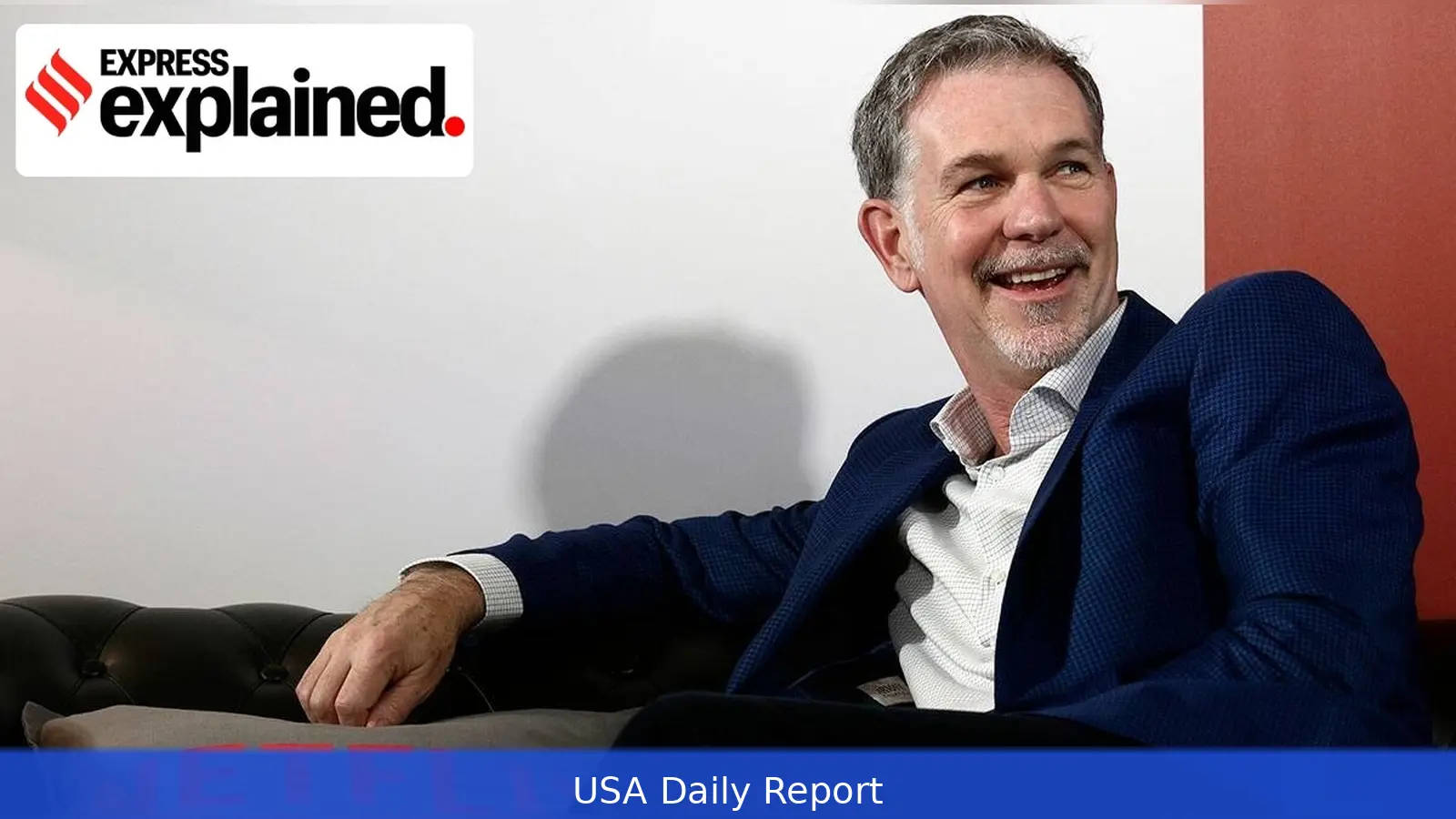
Netflix shares plunged after the company warned of weaker-than-expected Q2 earnings; the stock fell more than 9% in after-hours trading.
Revenue Growth Overshadows Forecast Miss
Netflix reported first-quarter revenue of $12.3 billion, a 16% increase from the previous year and slightly above the $12.2 billion analysts expected. The company posted earnings per share of $1.23, well ahead of the 76 cents projected by Wall Street. Even though Netflix beat Q1 revenue and EPS estimates, investors were disappointed by the Q2 forecast.
Netflix forecast second-quarter earnings per share of 78 cents, falling short of the 84 cents analysts had predicted. The Q2 forecast miss sent the stock down over 9% in after-hours trading — market reaction focused on the outlook, not the quarter's results.
Reed Hastings Steps Away After Nearly Three Decades
In a major leadership change, Reed Hastings, Netflix's co-founder and longtime chairman, announced he is stepping down from the company's board of directors. Hastings has been a central figure at Netflix for 29 years, guiding the company from a DVD rental startup to a global streaming powerhouse.
In a statement, Hastings said he plans to focus on philanthropy and personal interests going forward. Hastings' exit ends a 29-year run at Netflix and raises questions about leadership as the company faces tougher streaming competition; Hastings served as chairman and co-founder for 29 years.
Strategic Shifts and Market Challenges
Netflix has pushed price increases and ramped up content investment to hold subscriber growth and protect margins; it raised the standard, ad-free plan to $20 in March.
In March, the company raised prices across its subscription plans, including a $2 increase for its ad-free standard tier, now priced at $20 per month. The hike aims to boost revenue as subscriber growth slows in mature markets.
Earlier this year, Netflix withdrew from a high-profile bid to acquire Warner Bros. Discovery, walking away from a deal that had sparked investor concerns about escalating debt.
The decision followed a drawn-out contest with Paramount Skydance Corp., highlighting Netflix’s cautious approach to expansion through acquisitions.
Investors are now closely watching how Netflix will sustain subscriber engagement and growth amid these challenges. The streaming market has become crowded, with competition from established players and new entrants alike. Netflix’s success in retaining customers and innovating its content offerings will be critical to its future performance.
Balancing Growth with Profitability
Netflix’s focus on revenue growth without sacrificing profitability has shaped its recent strategy. The company’s ability to raise prices without triggering significant subscriber losses will be a key metric going forward. The price increase in March is a test of subscriber loyalty, especially as economic uncertainty influences consumer spending habits.
Netflix’s strong first-quarter earnings demonstrate resilience, but the cautious forecast signals that management expects headwinds ahead. This streaming giant must balance investment in original content and technology against maintaining margins in a competitive market.
Analysts are watching whether Netflix can keep funding originals while cutting expenses; management forecast 78 cents EPS for Q2. The departure of Hastings adds another variable, as the company adjusts to new leadership dynamics and strategic priorities.
Related Articles
- TSMC posts record profit on AI demand
- Japan Pledges $10B to Help Asia Weather Oil Shock
- Abu Dhabi, Jordan Ink $2.3B Aqaba Rail Deal
Netflix’s forecast miss and Reed Hastings’ board exit highlight a turning point for the company amid stiff streaming competition and shifting market expectations.


