
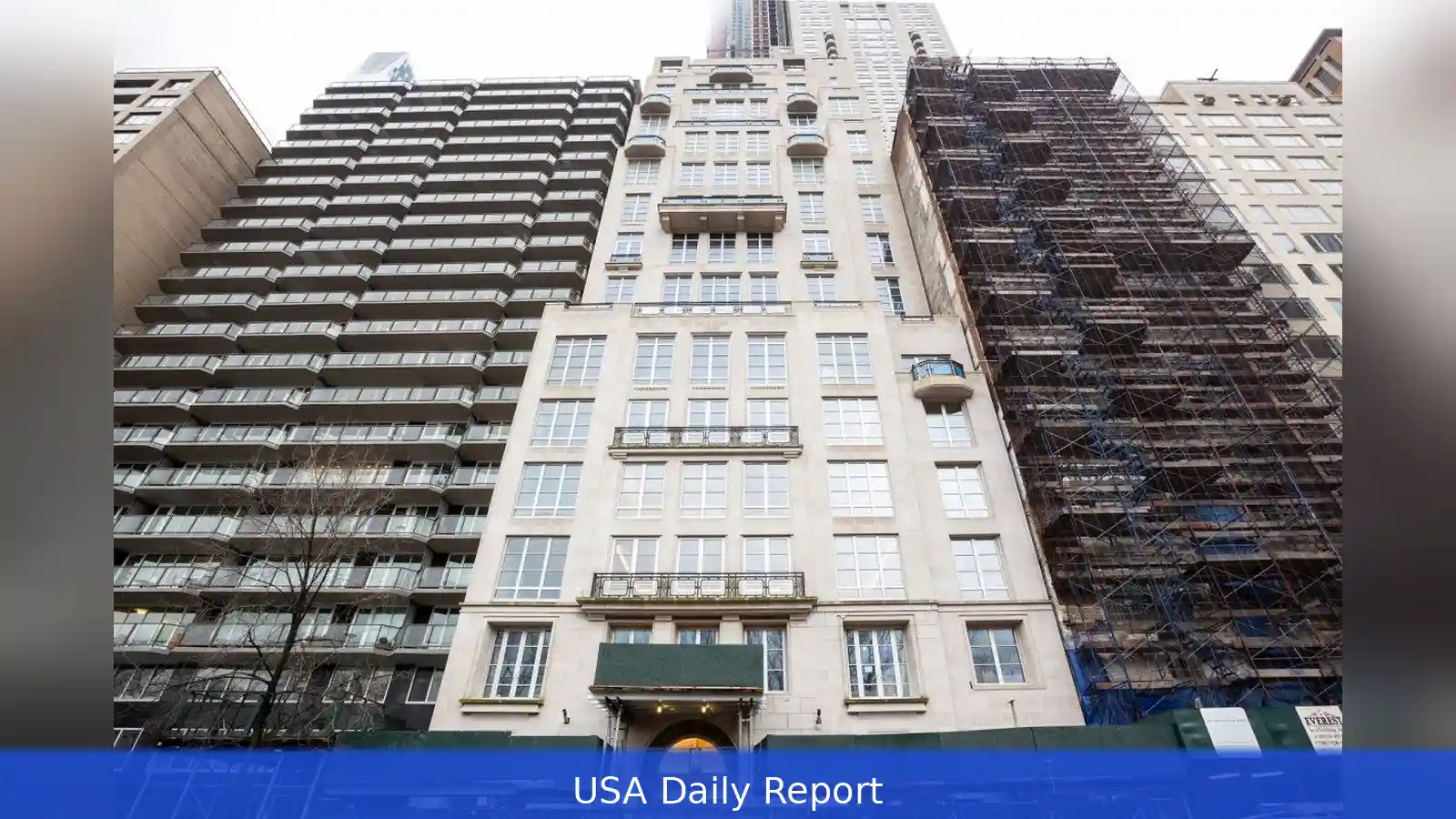
A new pied-à-terre tax targets Manhattan second homes.
What the proposal does
Gov. Kathy Hochul on Wednesday proposed allowing New York City to impose an annual surcharge on secondary residences valued at more than $5 million that are owned by people whose primary home is outside the five boroughs. The proposal targets one- to three-family homes, condos and co-ops worth $5 million or more, city officials say. Hochul's office said the levy could raise about $500 million a year.
The surcharge would apply only to nonresident owners — people who don't list New York City as their primary address. Owners can escape the surcharge by moving into the place as their primary residence or by renting it to someone who actually lists it as their main New York City address.
Hochul said she will include the measure in the state budget package now being negotiated in Albany. Hochul says the surcharge will help shore up the city's budget without hiking income or corporate taxes — taxes she has repeatedly opposed, and she's putting it into the state budget negotiations now.
How city leaders sold the idea
Mayor Zohran Mamdani, who ran on a platform of taxing the wealthy to fund expanded services, welcomed the governor's proposal as a partial victory.
"We are one step closer to balancing our budget by taxing the ultra-wealthy and global elites with a pied-à-terre tax — the first of its kind in our state," Mamdani said.
City Council Speaker Julie Menin backed the proposal, saying it would provide needed revenue while sparing working New Yorkers additional burdens. "We've been very clear about the concern we have about the property tax, so I'm very pleased that the governor has done this," Menin said.
Why the tax matters for the city's budget
Mayor Mamdani inherited a large shortfall and has warned of multibillion-dollar gaps.
City officials put the current hole at roughly $5.4 billion. The new pied-à-terre surcharge is aimed at closing part of that gap without tapping residents who live and work in the city.
Hochul's team calculates the levy could bring in roughly $500 million annually — a sum that would cover a slice of the mayor's spending priorities, including expanded childcare and pilot programs such as a city-run grocery store set to open in 2027. Mamdani has pointed to those priorities as examples of what higher-wealth taxation could fund.

The levy is aimed at a tiny corner of the market — buyers who treat pricey New York apartments as investments or weekend pads rather than full-time homes; it applies only to units valued above $5 million. State lawmakers first discussed a pied-à-terre surcharge after several headline-grabbing real estate purchases, including a 2019 sale of a Manhattan apartment for roughly $238 million to Citadel CEO Kenneth Griffin, an example frequently cited by proponents.
Reaction from the wealthy and opponents
Not everyone welcomed the move. Republican critics seized on the proposal as proof that Hochul had abandoned her earlier vow not to raise taxes. "Kathy Hochul’s 'No Tax Hike' promise has expired faster than the families fleeing New York’s affordability crisis," said Bruce Blakeman, a Long Island Republican county executive and Hochul's GOP challenger in the fall election.
Real estate interests and some wealthy homeowners are expected to push back during budget negotiations. They argue the surcharge could depress high-end sales, reduce investor demand and make the city less attractive to global buyers. Developers and brokers have long warned that added levies on luxury units can slow transactions at the top of the market.
Legal and practical questions
The proposal would need approval as part of the statewide budget passed by the Legislature. That timing creates a compressed window for legal and technical details to be worked out — including how assessments will be calculated and how the city will track owner residency status.
Officials will also have to define enforcement mechanisms. City officials still have to decide whether they'll use tax filings, utility bills or other records to prove someone's primary residence — a choice that will determine enforcement.
Will it impose penalties for attempted avoidance? Those are among the open questions officials say they plan to address as the budget moves through Albany.
Hochul has emphasized she isn't pursuing higher income or business taxes. The governor framed the pied-à-terre surcharge as targeted and narrowly tailored. "If you can afford a $5 million second home that sits empty most of the year, you can afford to contribute like every other New Yorker," Gov. Kathy Hochul said, setting the political tone for the proposal.
Market and policy implications
Some analysts expect a few buyers to shift deals outside the city while others say wealthy buyers will absorb the cost; there is no consensus on the overall market impact yet. Some expect wealthy buyers to shift purchases to nearby suburbs or to other global cities with lighter levies. Others predict buyers who use Manhattan real estate primarily as a store of wealth may decide the extra cost is tolerable.
Tax experts note that exemptions for primary residents and carve-outs for certain transactions could blunt the tax's impact on overall valuations. They also point out that high-end properties represent a concentrated slice of total property tax revenue; a surcharge aimed at them raises money from a small number of owners rather than from a broad base.
What matters for the city now is timing and certainty. The mayor needs revenue in the current budget cycle. Developers and buyers respond to clear rules. State lawmakers must weigh political pressure from constituents on both sides — many want services protected, while others fear new levies will drive people and business out of New York.
Politics and the 2026 campaign
Hochul faces a re-election contest in November, and tax policy is already a campaign issue. The governor has tried to balance pressure from progressive voters and city officials who want deeper revenue changes with concerns about driving residents and firms to lower-tax states.
Mamdani, a progressive Democrat who took office Jan. 1, pushed for broader tax increases, including higher personal and corporate levies. Hochul's pied-à-terre proposal represents a compromise — a more limited tax aimed at nonresident owners rather than a sweeping revenue overhaul.
Both sides are staking out political ground. Mamdani and his allies tout the tax as proof that taxing the wealthy can fund services. Opponents frame it as a breach of promises not to raise taxes, and warn of economic side effects. The debate will be central to budget negotiations that lawmakers have already delayed past the April 1 deadline.
Related Articles
"If you can afford a $5 million second home that sits empty most of the year, you can afford to contribute like every other New Yorker," Gov. Kathy Hochul said.
This article was created with AI assistance.


