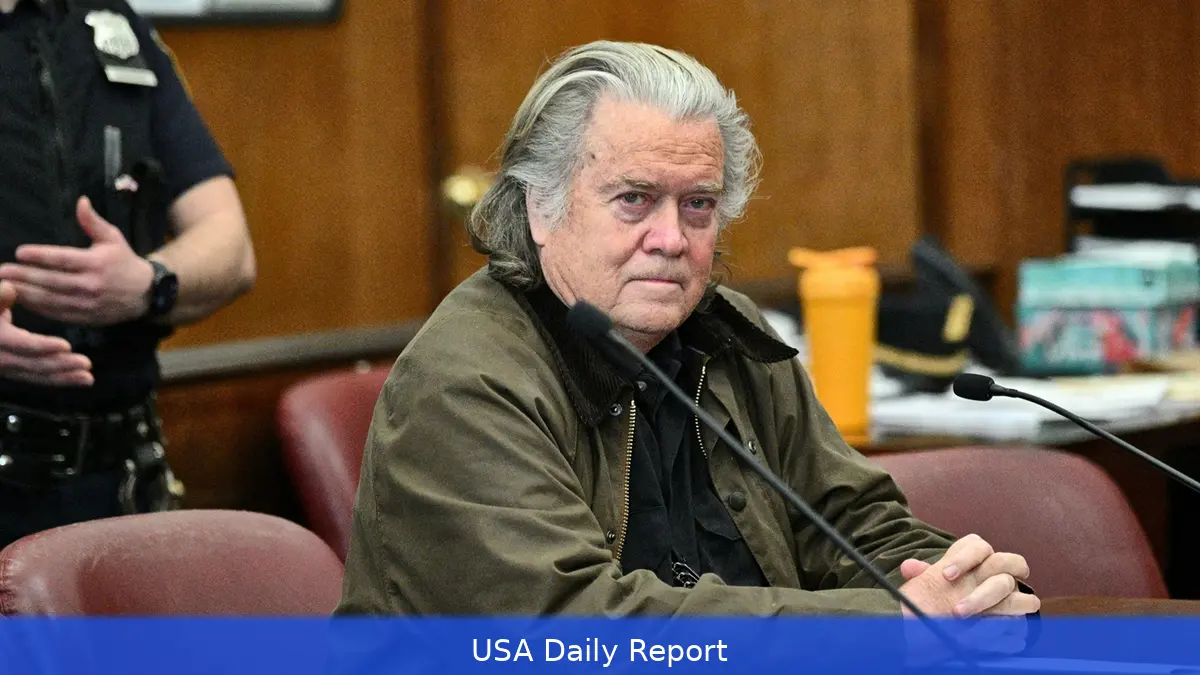
Steve Bannon, the former White House strategist convicted for defying a congressional subpoena, is one step closer to having his criminal case dismissed. On Monday, the Supreme Court made a key procedural move that lets the Trump Justice Department try to dismiss the charges against Bannon.
Supreme Court Moves Open Door for Case Dismissal
The Supreme Court’s latest action doesn’t officially end the criminal case against Steve Bannon, but it sets the stage for dismissal. The court wiped out an earlier appeals court decision that had upheld Bannon’s contempt conviction. Now, the case goes back to the lower courts to reconsider it, taking into account the DOJ’s request to drop the charges.
That motion, filed by the Trump administration’s Department of Justice, follows a reversal from the Biden DOJ, which initially pursued the prosecution. Federal prosecutors under President Joe Biden had indicted Bannon in 2022 after he defied a subpoena from the House committee investigating the January 6, 2021, Capitol riot. Bannon refused to provide testimony and documents, leading to a conviction by a federal jury and a subsequent four-month prison sentence served earlier this year.
But the Trump DOJ now says the government no longer wants to pursue the case. It told the Supreme Court that dismissing the charges is "in the interests of justice." The court granted the request to vacate the appeals court ruling, clearing the way for dismissal proceedings to continue in the trial court.
Bannon’s Argument: Legal Advice and Executive Privilege
At the heart of Bannon’s appeal was his claim that he never willfully ignored the subpoena. Instead, he argued that he had relied on legal counsel advising him not to cooperate until lawmakers addressed claims of executive privilege raised by former President Trump.
His lawyers contended that the trial court improperly barred Bannon from presenting this defense, which called into question the government’s burden of proving "willfulness" in contempt cases. They said Bannon should have been allowed to explain why he didn’t respond, based on his attorneys’ advice and the ongoing executive privilege issues.
The appeals court, however, rejected that defense, saying that acting on counsel’s advice was no excuse for defying a congressional subpoena. The court’s ruling was a blow to Bannon’s legal team and appeared to settle the issue against him.
Still, the Supreme Court’s decision to vacate the appeals court ruling leaves that question unresolved. The justices didn't issue an opinion explaining their reasoning, which is typical in cases handled through routine orders. This matter now returns to the lower courts, where the DOJ’s motion to dismiss will be considered.
Why Did the DOJ Switch Sides?
It’s surprising that the Justice Department changed course since the case started under Biden’s administration with plans to prosecute. Prosecutors argued Bannon gave "total noncompliance" to the subpoena related to the Capitol riot investigation. Yet, under Trump’s second term Justice Department, the government decided to drop the case in a move that aligns with the former president’s broad pardons and legal support for January 6 associates.
Right now, legal observers note that the DOJ didn't explain in detail why it chose to dismiss the charges at this late stage. They simply cited prosecutorial discretion and the interests of justice. The decision follows a pattern where the Trump DOJ has sought to end prosecutions of allies involved in January 6 investigations, even when cases were well underway.
Critics say this move weakens congressional investigations and accountability. Supporters of Bannon and Trump believe it fixes what they call politically motivated prosecutions.
What Happens Next?
While Bannon has already served his sentence, the ongoing legal wrangling has kept the case in the spotlight. The Supreme Court’s action means the appeals court’s ruling is wiped away, and the trial court must Look at the DOJ’s dismissal request. If the lower court grants it, the case will end without further proceedings.
This could end one of the most high-profile prosecutions linked to the January 6 Capitol riot investigations. However, the legal issue about "willfulness" and using legal advice as a defense is still unresolved for future congressional subpoena cases.
For Bannon, the ruling is a victory. His attorney Michael Buschbacher said the case "should never have been brought" and welcomed the vacating of the conviction as proof of that. Still, Bannon has remained a polarizing figure, both politically and legally, as he continues to play a role in conservative media and Trump’s political efforts.
Bannon’s Role in the January 6 Investigation
Steve Bannon was a key figure in the events surrounding the January 6 Capitol attack, serving as a former strategist for President Trump. The House select committee investigating the riot subpoenaed him as part of their effort to understand the planning and coordination behind the attack.
Bannon’s refusal to comply became a centerpiece of the committee’s legal battles. The contempt charge stemmed directly from his ignoring that subpoena and the subsequent conviction sent a message about enforcing congressional subpoenas.
Yet his prison sentence proved short — just four months — and the case’s dismissal now threatens to limit the legal tools available to Congress in holding witnesses accountable.
That said, Bannon’s case is far from the only legal challenge linked to January 6. Many others face charges ranging from trespassing to conspiracy. The DOJ continues to investigate and prosecute several individuals involved.
Broader Implications for Congressional Investigations
The Supreme Court’s move makes people wonder about how far executive privilege and legal advice can shield individuals from congressional subpoenas. Bannon’s case tested the boundaries of these issues, but the lack of a definitive ruling means courts will continue to grapple with them.
Congressional committees rely heavily on subpoenas to gather information, especially in politically sensitive investigations. If people can sidestep subpoenas by claiming reliance on counsel or executive privilege, it could weaken Congress’ oversight power.
Legal experts say the courts will have to balance these competing interests carefully. The final resolution of Bannon’s case will be watched closely for what it signals about the limits of congressional authority.
The Public and Political Fallout
Bannon’s supporters celebrate the Supreme Court’s action as a win against what they view as political persecution. For many conservatives, Bannon remains a hero who stood up to government overreach.
But for critics, the dismissal sends the wrong message about accountability for those involved in the Capitol riot. They worry it emboldens others to ignore legal processes tied to congressional investigations.
In the media, Bannon remains a controversial figure—polarizing but undeniably influential within right-wing circles. His legal saga continues to draw attention as the political battles over January 6 and its fallout show no signs of fading.
One thing's clear: the legal fight over Steve Bannon’s contempt conviction isn't over yet. The next steps in court could set important precedents for how Congress enforces subpoenas and how much protection executive privilege offers witnesses.
For now, Steve Bannon has moved a step closer to clearing his name, but the legal questions his case raised about congressional power and executive privilege will echo in courtrooms for years to come.


