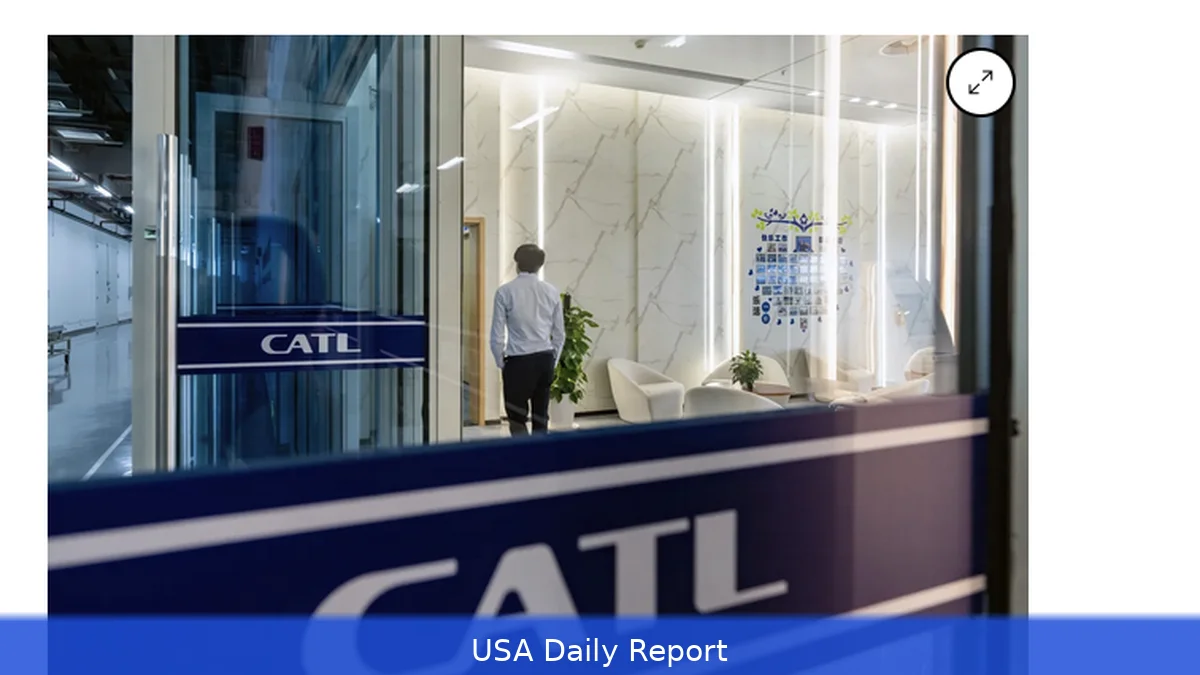
CATL, known for leading electric vehicle battery production, is now looking to expand into maritime markets. The Chinese company, famous for improving battery life and fast charging, is exploring marine uses that might change energy storage in shipping and offshore work.
Battery Innovation Meets the High Seas
CATL has carved a reputation for tackling one of electric vehicle owners’ biggest headaches: battery degradation from quick charging. Their latest cells promise to retain 80 percent capacity even after thousands of charge cycles, a feat that could translate into over a million miles of driving under moderate temperatures. While this breakthrough has already sent ripples through the automotive world, the company is now looking to apply its technology to maritime vessels, where energy demands and durability requirements are just as intense.
Ships and offshore platforms rely heavily on reliable power storage to reduce emissions and improve efficiency. CATL’s advancements—like a denser cathode coating to slow wear, additives that repair micro-cracks, and smart cooling systems targeting hotspots—could extend battery life in harsh marine environments. If it works, this technology might help shipping companies comply with stricter carbon and fuel rules.
Fast Charging’s Double-Edged Sword
Fast charging is a blessing and a curse. While it answers calls for convenience, repeatedly pushing batteries with high-power DC charging typically accelerates wear and shortens lifespan. That’s why many used electric vehicles command higher prices if they avoided frequent fast charges. CATL’s claim that their 5C lithium-ion cells endure rapid charging without significant degradation challenges long-held assumptions about battery limits.
For maritime applications, fast charging could mean quicker turnaround times in ports and less downtime—critical factors in commercial shipping. But it also means batteries must survive extreme conditions without costly replacements. CATL’s new battery management system targets cooling to hotspots, which could make a big difference.
Solid-State Batteries: The Next Frontier
Despite these advances, CATL and others still see solid-state batteries as the ultimate goal. These promise lightning-fast charging, higher energy densities, and better safety profiles. But manufacturing challenges have kept them out of large-scale production.
For now, CATL’s improved lithium-ion batteries are the top choice for industries needing tough, quick-charging power.
CATL’s move into maritime markets also reflects a broader push toward electrification beyond passenger vehicles. Ports, ferries, and offshore energy installations are exploring battery power to cut pollution and improve operational efficiency. If CATL can prove its batteries hold up on the water, it could unlock a massive new market segment.
Challenges and Market Impact
Still, questions remain. CATL hasn't announced timelines or specific production partnerships for marine battery deployment. Real-world testing under demanding sea conditions will be critical to verifying claims. The marine environment poses unique challenges—saltwater corrosion, vibration, and temperature swings—that differ from road vehicles.
But the potential payoff is huge. The International Maritime Organization has set ambitious targets to reduce greenhouse gas emissions from shipping by 50 percent by 2050. Battery power combined with cleaner fuels could help meet those goals. Plus, as battery tech improves, costs are dropping, making electrification more doable for commercial fleets.
Investors and industry experts see CATL’s move as a sign of where energy storage is going. The company’s dominance in EV batteries gives it a strong foundation, but diversifying into maritime and other sectors could fuel long-term growth. Electrifying transport is no longer limited to roads.
As CATL prepares to test its cutting-edge batteries beyond electric cars, the shipping industry—and the planet—could be next in line for an energy revolution.


