
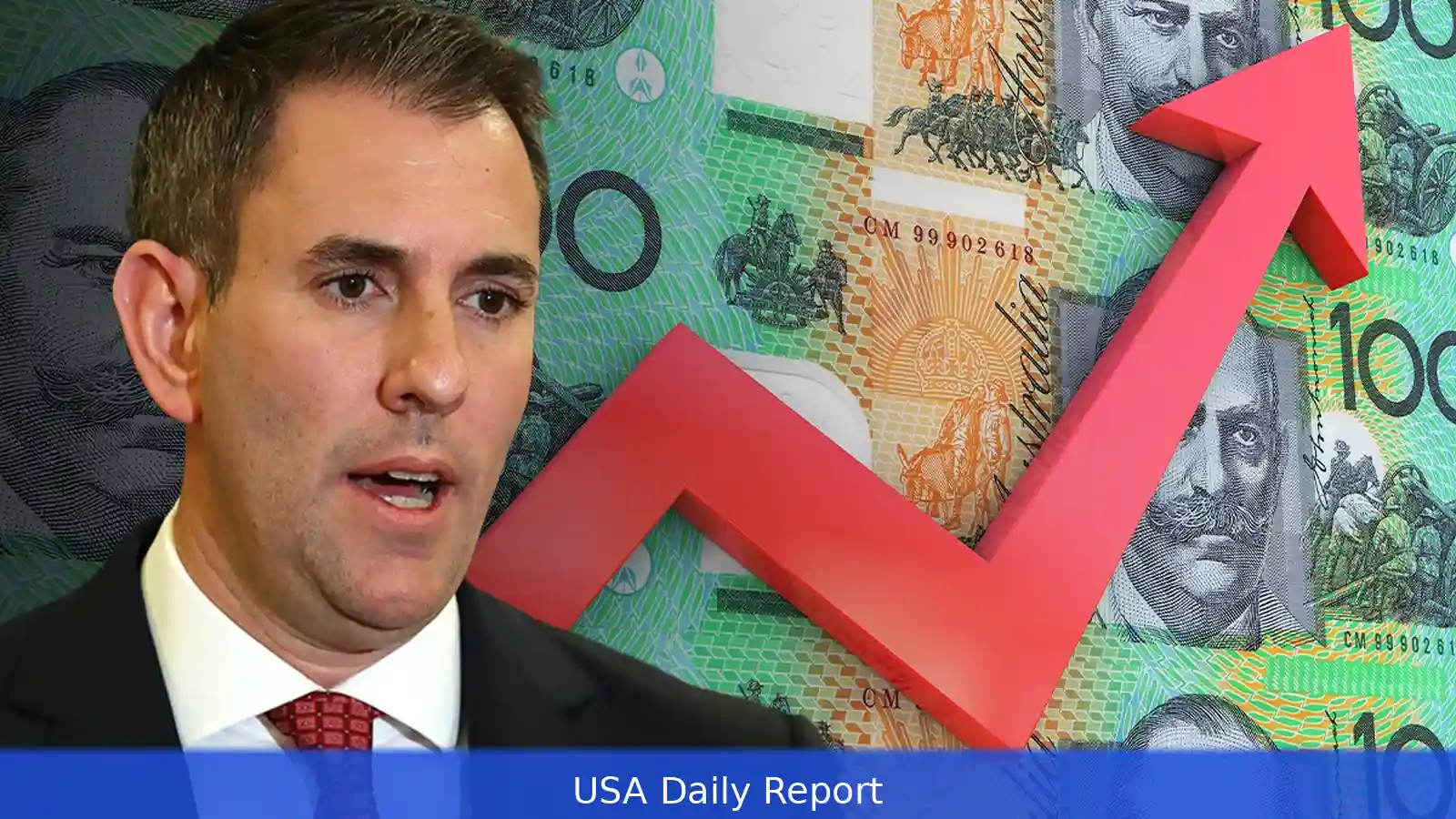
Treasury modelling shows inflation may reach about 5% this year. Treasurer Jim Chalmers delivered the assessment ahead of a national cabinet meeting on fuel.
Treasury scenarios point to higher consumer prices
Treasury has modelled two oil-price scenarios that both lift inflation and trim growth, Treasurer Jim Chalmers said. One scenario assumes oil holds around US$100 a barrel in the first half of the year before easing back. The other pushes oil to US$120 a barrel in the first half and assumes prices take roughly three years to return to earlier levels.
Chalmers said both scenarios could understate the true cost given the current oil price and uncertainty over how long supply shocks may last. "Treasury's latest advice is the war could cut GDP growth by up to 0.2 percentage points across our major trading partners," he said, describing the likely second‑round effects on the Australian economy.
The modelling takes into account higher prices for LNG, coal and fertiliser as well as weaker global growth. Under the short‑duration oil shock, Treasury finds headline inflation would peak about three quarters of a percentage point higher than otherwise.
In the prolonged scenario, the peak would be roughly 1.25 percentage points higher.
That lift is enough, Chalmers said, to make "the prospect of inflation peaking in the high 4s or even higher this year" very real.
Growth hit now; deeper scars if shock persists
The two scenarios show different paths for output. In the shorter case, the immediate hit is modest: output would be about 0.2 percentage point lower around the middle of the year and the gap would largely close as the shock faded. The prolonged case is bleaker.
Under the sustained shock, Treasury estimates the drag on growth would build over time. The modelling shows GDP would be 0.6 percent lower in 2027 than it would have been without the shock, and still below that counterfactual by 2029.
Chalmers attributed roughly half the impact on GDP to higher oil prices, with the other half coming from broader spillovers to trade and costs across the economy. This combined effect, he warned, would leave households facing both higher fuel bills and the fallout of higher borrowing costs.
Policy backdrop: rates and emergency talks on fuel
The warning comes after a recent quarter‑point rise in interest rates. That rate increase adds to pressure on household budgets already hit by rising pump prices, Chalmers noted.

Prime Minister Anthony Albanese convened a national cabinet meeting to focus on the fuel situation and to coordinate a response across the states and territories. The government has asked each jurisdiction to name a point person to liaise with the Commonwealth. Albanese has also moved to appoint a national coordinator‑general to help guide operational responses to the supply shock.
New South Wales Premier Chris Minns told the meeting that diesel shortages are the acute risk for the state. "Diesel keeps trucks moving, farms and construction projects running and goods and food getting around the state," Minns said, calling for a national plan to prioritise supply routes and critical sectors.
Channels that feed inflation and who gets hit
Higher oil lifts headline inflation through fuel prices directly and by pushing up transport and freight costs. That in turn feeds into higher prices for many goods, especially those that travel long distances or require fuel‑intensive inputs.
Fertiliser price increases are another transmission channel flagged by Treasury. Higher fertiliser boosts costs for farmers, which can translate into higher food prices over time. Elevated LNG and coal prices also matter because they alter resource‑sector earnings and exchange‑rate dynamics, with second‑round effects on domestic costs and demand.
Households face a twofold squeeze: the direct hit of higher petrol and diesel bills, and the indirect hit as the central bank raises rates to bring inflation under control. The Treasurer warned that many Australians are feeling that double burden already.
Budget implications ahead of an already tight fiscal year
Chalmers said Treasury will factor the updated modelling into budget planning. The government delivered a budget framework that assumed a certain path for inflation and growth; the new scenarios change that math.
Higher inflation can temporarily lift nominal tax receipts, but it also raises spending pressures on indexed payments and increases the risk that policy settings will need to tighten. That could make the government's fiscal choices as it prepares for its next budget.
Chalmers has said details of the Treasury modelling would be released in a speech in Melbourne. He framed the numbers as a way to test vulnerabilities and inform responses, not as precise forecasts. "While both scenarios could underestimate the cost, given where the oil price is and the uncertain duration of these events, they give us a sense of the second round impacts," he said.
Political stakes and operational responses
The national cabinet meeting is intended to marry analysis with immediate operational action. Albanese asked jurisdictions to share information on fuel stocks, critical freight routes and contingency plans. The aim is to limit supply disruptions to essential services and to smooth distribution to the most exposed sectors.
Minns pushed for a coordinated approach that targets diesel supply to agriculture, freight and construction. He warned that isolated shortages in one region can quickly ripple across the domestic supply chain, raising costs for firms and consumers nationwide.
Federal officials will monitor oil and refined‑product markets closely and co‑ordinate with states on measures such as priority routing, temporary exemptions and targeted relief where warranted. The effectiveness of those measures will depend on how long the price shock lasts and how deeply it affects refined product availability.
What markets and households should watch
Markets will be watching oil prices, global growth signals and how quickly supply conditions change. For households, the immediate signals are pump prices and mortgage costs. For businesses, fuel, freight and input prices will be the key variables driving margins and pricing decisions.
Chalmers framed the modelling as a testing tool for policy. He said it shows both the upside risk to inflation and the downside risk to output. That dual threat, he argued, requires careful calibration of fiscal settings and close co‑operation with monetary authorities to limit the damage to living standards and growth.
Related Articles
"It means the prospect of inflation peaking in the high 4s or even higher this year is very real," said Jim Chalmers, Treasurer.
This article was created with AI assistance.


