
Iran's oil income just got targeted.
Blockade shifts the pressure from bombs to barrels
The US is now trying to choke off Iran's seaborne oil trade — it's become as much a fight over markets as over missiles. For Tehran, oil is the lifeline: crude sales account for more than half of the country's exports and provide a sizable share of government income. Cutting that flow is meant to squeeze Tehran's ability to fund its state functions and push it back toward concessions on nuclear and other diplomatic demands.
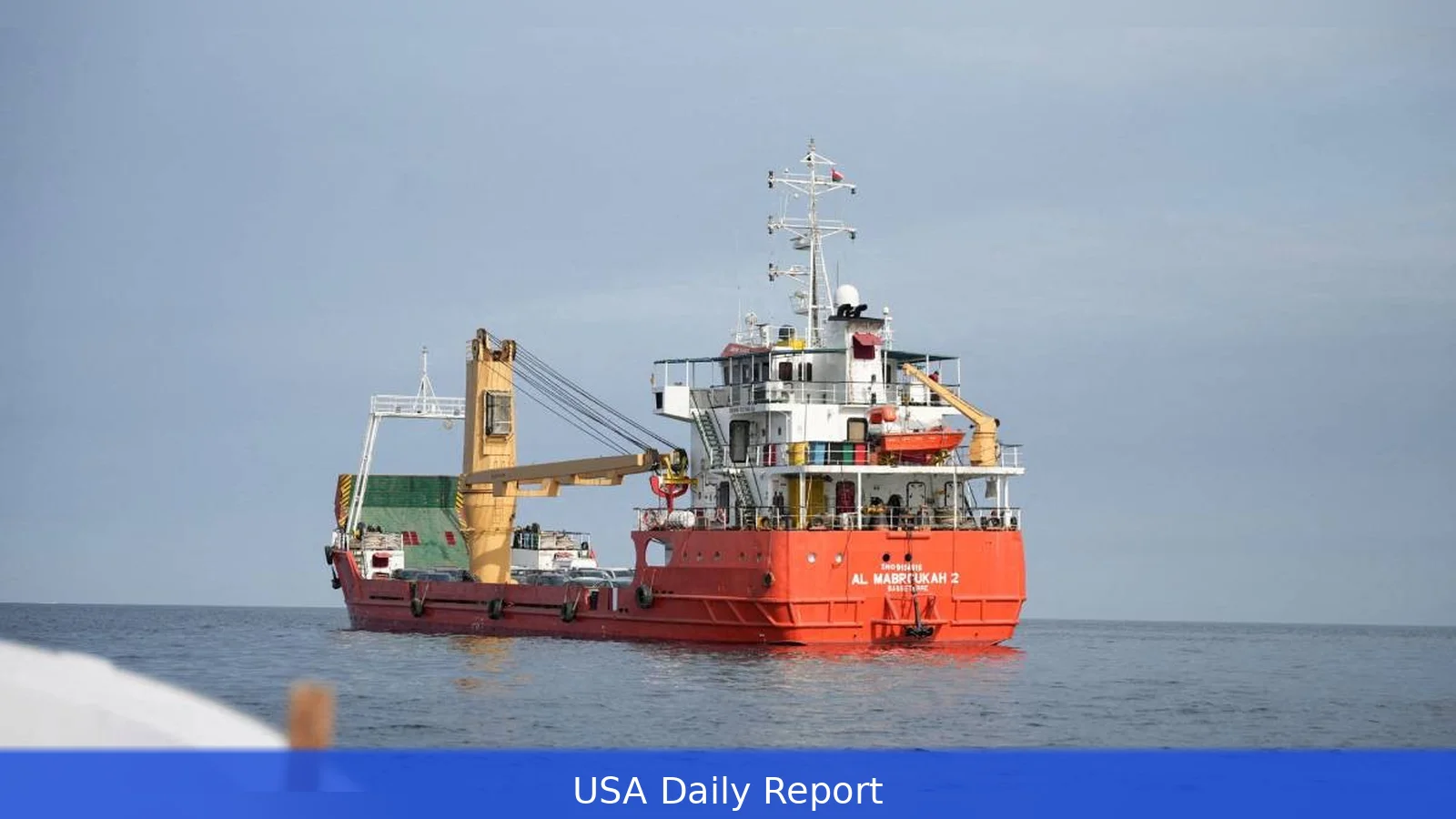
The enforcement model is different from past campaigns. Instead of only air strikes and targeted military raids, Washington is aiming to stop tankers and Iranian-linked shipping from reaching ports. That can be done close to the Strait of Hormuz or from a wider perimeter outside the Persian Gulf. Each choice shifts both the military danger and the economic fallout.
How the blockade could be enforced — and why that's hard
The US has the ships and planes to stop tankers, but every interception makes them more vulnerable to Iranian attacks. The Islamic Revolutionary Guard Corps operates fast attack craft, swarming small boats, drones and shore-based missiles. Those units have continued to harass merchant traffic in the Gulf even after several weeks of strikes degraded some Iranian capabilities.
"If any of these ships come anywhere close to our BLOCKADE, they will be immediately ELIMINATED," then-President Donald Trump wrote on social media after the blockade went into effect. Trump's phrase underscored how risky it is to police tight waterways where Iranian units can strike from the coast.
One alternative is to enforce the blockade from a distance. "They could choose to position themselves outside the Persian Gulf…without physically controlling the Strait [of Hormuz] itself," said Mohammad Farsi, a former Iranian naval officer.
But Farsi cautioned that policing at range creates its own problems: the area to patrol grows, and civilian vessels can try to slip by undetected.
"A blockade at distance would pose quite a big challenge for US forces in the theater, especially as civilian vessels go dark to evade being stopped," said Jeremy Stoehs, a naval expert at the Austrian Center for Intelligence, Propaganda and Security Studies. He noted the US Navy's shortfall of smaller surface combatants such as frigates, which are better suited to close-in interdiction than larger destroyers.
Immediate budgetary shock for Tehran
The idea behind a blockade is blunt: cut off oil money and squeeze Tehran's budget. A factsheet published by the US Congress on March 16 said oil revenue from China alone accounts for about 45 percent of Iran’s government budget. More broadly, oil makes up the majority of export receipts and underpins fiscal planning in Tehran. When shipping is curtailed, export receipts drop quickly and fiscal stress follows.

The government faces fixed obligations: subsidies, public-sector wages, debt service and military spending. A sudden shortfall forces hard choices. It can run reserves, cut spending, print money or rely on short-term barter and barter-like arrangements with friendly buyers. Each option has costs: reserves run down, inflation rises, creditworthiness erodes.
Some of those pressures are already visible in Iran's domestic economy. Even before a full blockade, banks and companies reported disruptions as sanctions and wartime risk sent buyers and insurers away from Iranian cargoes. If the blockade holds, export volumes could decline steeply and revenue estimates would need downward revision across Tehran's budget plans.
Global oil markets feel the squeeze
Stopping Iranian oil tightens global supply. The market reaction can be fast. Energy analysts have warned that prices could climb sharply if Iranian barrels disappear from world trade. Some extreme forecasts put crude as high as $175 a barrel if other suppliers and reserves can't fill the gap.
Higher crude translates into higher pump prices and broader inflation pressures for oil-importing countries. For the United States, a surge in gasoline or diesel costs tends to hit household budgets and political polling quickly. Firms face higher input costs, particularly in transport, logistics and petrochemical sectors.
Markets don't adjust overnight — traders will hunt spare barrels, but that takes time and can push prices up. Traders will look for spare capacity elsewhere — Saudi Arabia, the United Arab Emirates, and other producers could raise output, and strategic petroleum reserves can be tapped to damp a shock. But spare output has limits. If disruptions persist, the price reaction becomes more entrenched and the policy goal of softening Iran via market pressure comes at a direct cost to consumers and companies globally.
Iran's counters and the limits of pressure
Tehran has tools of its own. One lever is to restrict its own exports or to threaten transit through the Strait of Hormuz, the chokepoint through which a large share of Persian Gulf oil passes. That threat is potent — for years, disruptions in the strait have pushed markets higher.
Iran can also try to route cargoes through intermediaries, use ghost fleets, change flags, or sell to buyers willing to accept higher risk and lower transparency. About 90 percent of Iranian oil shipments traditionally flowed to China, which complicates efforts to choke off revenue. Where state-backed or covert purchase arrangements exist, a blockade raises costs but doesn't necessarily stop all flows.
Enforcers face the operational problem of identifying vessels tied to Iran once tankers take evasive measures. Jeremy Stoehs warned that civilian ships can go dark to evade detection, making interdiction at distance costly and uncertain. That gives Iran room to keep some revenues coming even under pressure.
Budget math, politics and the gamble
The blockade is a long gamble. US policymakers are betting that economic pain will force Tehran to change course or that the population will pressure leadership to negotiate. History shows that external economic pressure can take time to produce political shifts, and outcomes are hard to predict.
Meanwhile, the immediate fiscal math is clear. If Iranian crude exports fall sharply, state income will fall as well. That forces Tehran to draw on reserves, seek emergency credit lines, or accept cheaper, riskier buyers. The options reduce fiscal space and raise the probability of inflation and public-service cuts.
At the same time, higher global oil prices can offset some of the loss in volume by raising per-barrel revenue for the barrels that do move. That dynamic makes the blockade's aim: price spikes abroad can blunt Tehran's pain at home by raising receipts for a smaller number of shipments. It also transfers some of the economic pain to oil importers.
Policymakers and markets will be watching trade flows, tanker tracking data, and crude price moves. The operational reality at sea — who controls which lanes, how incidents are managed, and whether insurance markets keep cargoes moving — will shape the fiscal outcome in Tehran more than declarations onshore.
Related Articles
"They don't need to sit inside the Strait," said Mohammad Farsi, a former Iranian naval officer.
This article was created with AI assistance.


