
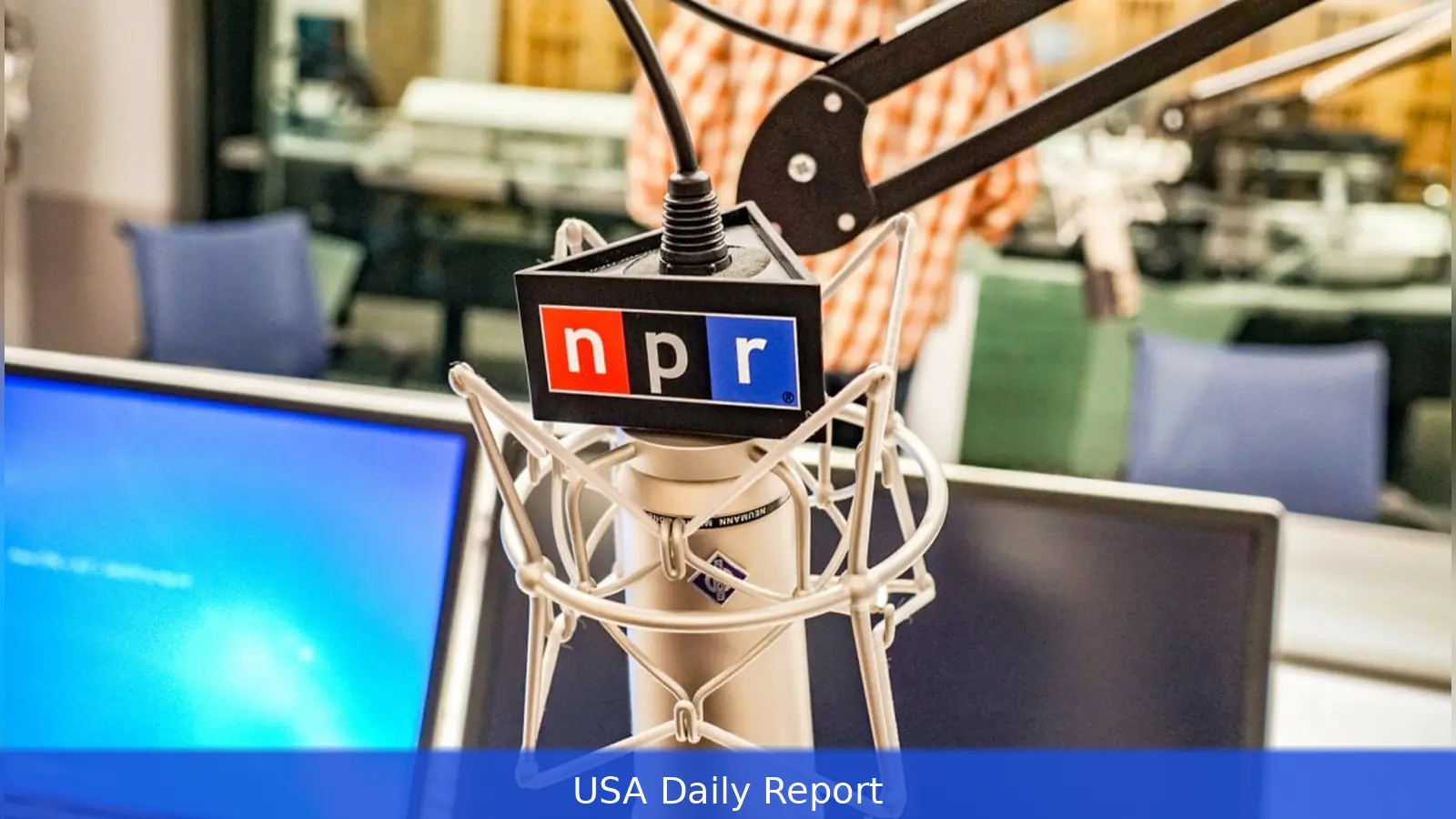
NPR wins $113 million after two donors stepped forward.
Big gifts aim to bankroll a digital overhaul
NPR announced Thursday that it has received two charitable gifts totaling $113 million to accelerate digital tools, deepen audience connections and shore up the public radio network. One donation of $80 million came from philanthropist Connie Ballmer. A separate, $33 million gift was made by a donor who has chosen to remain anonymous.
Katherine Maher, president and chief executive officer of NPR, said the funds will support a long-term shift in how the network and local stations operate and raise money. "Audiences don't just listen in their cars or in their kitchens," Maher said. "They're reading, they're viewing, they're listening on the go."
The gifts follow a period of acute financial stress for public media. Last summer, Congress moved to rescind roughly $1.1 billion in federal funding that had been approved for public media, leaving stations and networks to seek private support for core operations and future investments.
Where the money will go
NPR says the $80 million from Connie Ballmer is targeted specifically at modernizing digital infrastructure and building capabilities that let reporting reach people on whatever platforms they use. That includes investments in technology for content distribution, audience analytics and systems that let stations share resources.
The $33 million anonymous gift is earmarked to build and acquire tools and services that NPR will make available to public media organizations nationwide. That funding is intended to help stations analyze audiences, market themselves and improve fundraising, NPR said.
Maher framed the donations as "catalytic investments" designed to set up the network and its member stations well beyond the legacy radio model that developed after public radio's national infrastructure took shape in 1970. "How do we make sure that we have the infrastructure necessary to be able to deliver the high quality reporting to people in all those places when they want?" she asked.
Donor profiles and philanthropy trends
Connie Ballmer has a history of philanthropy tied to civic and public-interest causes. She formerly served on the NPR Foundation board, and she and her husband, Steve Ballmer, the former chief executive officer of Microsoft, have become prominent donors in recent years. In public comments, Connie Ballmer said she supports NPR because "an informed public is the bedrock of our society, and democracy requires strong, independent journalism."
The $80 million gift is the largest single donation to NPR from a living donor, according to NPR's announcement. The anonymous $33 million contribution, while smaller, is structured to be shared among many public media organizations, rather than directed solely to national programming.

More and more, journalism groups are seeing big donations as their usual funding dries up. Foundations and wealthy individuals are stepping in to finance digital transitions, newsroom expansion and noncommercial outlets' operational shortfalls. For NPR, the two gifts aim to substitute for some of the public funding that was pulled and to accelerate projects that might otherwise have been delayed.
Financial pressure on public radio
Public broadcasting operates through a patchwork of local stations, member dues, corporate underwriting, foundation grants and public funding. The federal rollback left a hole in that patchwork and intensified a scramble for new revenue and efficiencies.
Stations vary widely in financial strength. Some urban stations have diversified revenue streams and sizable endowments. Others, particularly in rural markets, rely more heavily on federal support and community underwriting. NPR says part of the new funding will aid smaller stations by providing shared tools for audience measurement and fundraising.
Maher emphasized collaboration between the national newsroom and member stations. She argued that technology can reduce duplication, let stations pool resources and help local outlets compete for listeners and donors in a crowded media environment.
What the investments could buy
Specific projects NPR listed include audience-analysis platforms, marketing tools and shared services that ease the administrative burden on stations. Those systems can generate subscriber data, measure podcast and streaming performance, and automate donor outreach.
While digital tools need an upfront investment, they often help boost listener engagement and donations when done right. For public media, the key question is whether the tech investments translate into higher membership revenue and more efficient operations for stations that historically lacked the budget or staff to build those systems themselves.
Executives at some stations welcomed the announcement. They said shared tools could help them target fundraising appeals more effectively and compete for listeners who now get news from many digital sources.
Broader implications for journalism funding
These gifts highlight how private donors are stepping in to support public-interest journalism when other funds fall short. This kind of support can help keep things steady when government funding is shaky. Still, depending on big donors brings up tough questions about how much their priorities should influence editorial decisions and how open organizations should be about these gifts.
NPR addressed some of those concerns by describing the Ballmer gift as focused on infrastructure and by noting that one donor opted for anonymity while still directing funds to support the network broadly. Maher said the investments are meant to benefit the entire public media system rather than a single program or partisan agenda.
Industry observers say the success of such gifts will be judged on measurable outcomes: audience growth, increased membership revenue and cost savings from shared services. Donors and outlets alike are watching whether the investment in data and tech pays off for sustainable funding and reach.
Historical context and next steps
Public radio's modern national network dates back to a coalition of community and university-owned stations that organized in 1970. Over decades, stations built local relationships while national programming drew wide audiences. The move to digital distribution, however, has accelerated in the last decade and presents both opportunity and financial strain.
NPR said the funds will be invested over multiple years. The network plans to prioritize projects that produce scalable benefits for member stations, and to offer training and support so smaller stations can adopt new tools.
For now, the gifts provide a cash injection that NPR's leadership says will buy time and momentum as the organization adapts to a media market where listeners access news through apps, podcasts, smart speakers and streaming services as much as through traditional radio.
Related Articles
- Fed signals patience, projects one cut in 2026
- UAE Leaves OPEC — Saudi Arabia Picks Up the Slack
- Three risks that could push the Fed to pause
“Audiences don't just listen in their cars or in their kitchens,” Katherine Maher, president and CEO of NPR, said.
This article was created with AI assistance.


