
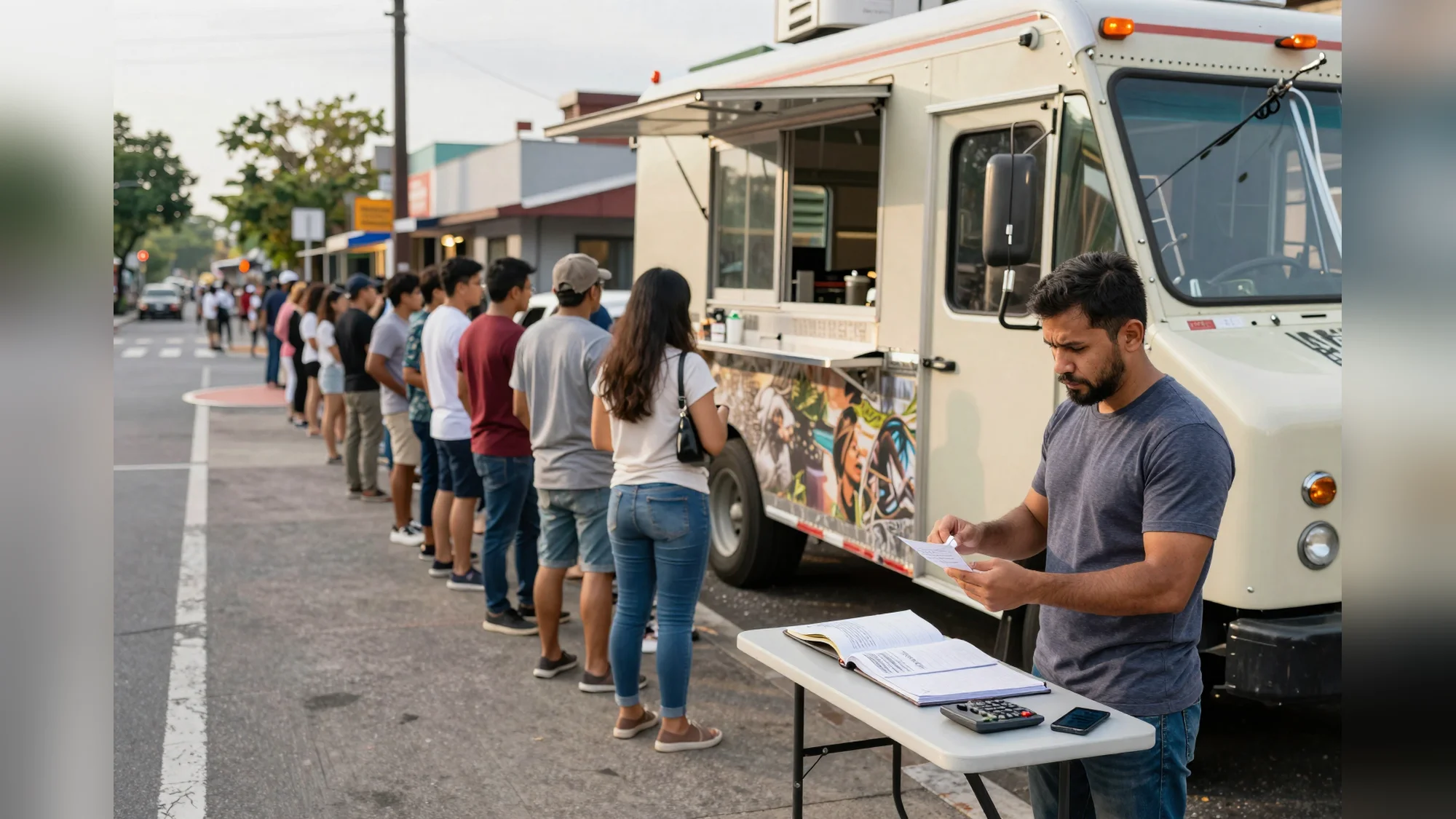
As little as $12 in profit can follow a busy Saturday, because visible sales hide true per-plate economics. An operator writing as @merchantkun on Medium lays out a single-day example where a long line and steady checks still leave negligible net earnings after ingredients, fuel, commissary and staffing are counted. StreetLegal's June 27, 2026 cost study and a 2026 marketing and tech guide from Restolabs both updated guidance for independent operators, warning recurring operating expenses and menu choices compress margins. Operators should build a per-item food-cost sheet and map commissary and permit renewal dates before the next quarter.
Busy feels like success, but it often means little, too, because owners price by comparison or gut instead of true per-serving cost. The Medium essay by an operator using the handle @merchantkun uses a single-day ledger to show how a window full of sales can turn into $12 of profit once real costs are booked.
The arithmetic is blunt. The post walks through a burger that uses four ounces of beef, a bun and two slices of cheese and puts ingredient cost at about $3.50. If a truck targets a 30 percent food cost, common in truck guidance, that $3.50 ingredient bill requires a selling price of roughly $11.67, typically rounded to $12, just to hit the food-cost target before fuel, commissary fees and event charges are added.
Mobile operators are advised to aim for a tighter food-cost range than many sit-down restaurants, roughly 25 to 32 percent, because trucks carry unique fixed and variable overhead. One practical lever is menu mix.
The Medium author shows that pairing a higher-cost main with a low-cost side lowers the blended food-cost percentage: a burger-plus-chips combo can push the overall plate percentage down even when the main item sits near the target percentage.

StreetLegal's June 27, 2026 update separates one-time startup build costs from the recurring annual and monthly items that determine survival after year one. A licensed commissary kitchen is effectively mandatory in most jurisdictions, and its monthly fees are non-negotiable.
StreetLegal also flags add-ons that raise the monthly bill, such as optional overnight parking fees often billed in the low hundreds of dollars per month, dedicated cold storage and priority access to shared equipment. Those recurring lines must be forecast in every business plan rather than discovered after launch.
Capturing margin requires both accounting and operational changes. Restolabs' 2026 playbook recommends practical tactics to convert foot traffic into retained, commission-free revenue: claim and optimize local listings, push direct-order systems, collect email and SMS opt-ins, and run simple loyalty programs. The guide also suggests publishing a weekly location schedule and using QR codes and mobile-first ordering to speed service during peak windows. Faster throughput and fewer third-party commissions both protect gross margin.
Capital choices matter. Industry commentary included in the guidance urges a tight menu built around ingredient overlap and selective spending on reliable refrigeration and core food-contact equipment. Conserving cash by buying used point-of-sale tablets, screens and non-food-contact items can work, but cutting corners on refrigeration risks spoilage, failed inspections and major margin loss.
Originally reported by Medium.
Related Articles
- From Zero to $200 Monthly in AI Affiliate Payouts
- 1099 Filing Guide: $600 Threshold and Key Deadlines
- 32% of Small Firms Have Open Jobs; Hiring Plans Fall
Prepare a per-item food-cost sheet and a calendar of recurring commissary and permit renewals before the next quarter to avoid renewal lapses and surprise expenses. Originally reported by medium.com.
This article was created with AI assistance.


