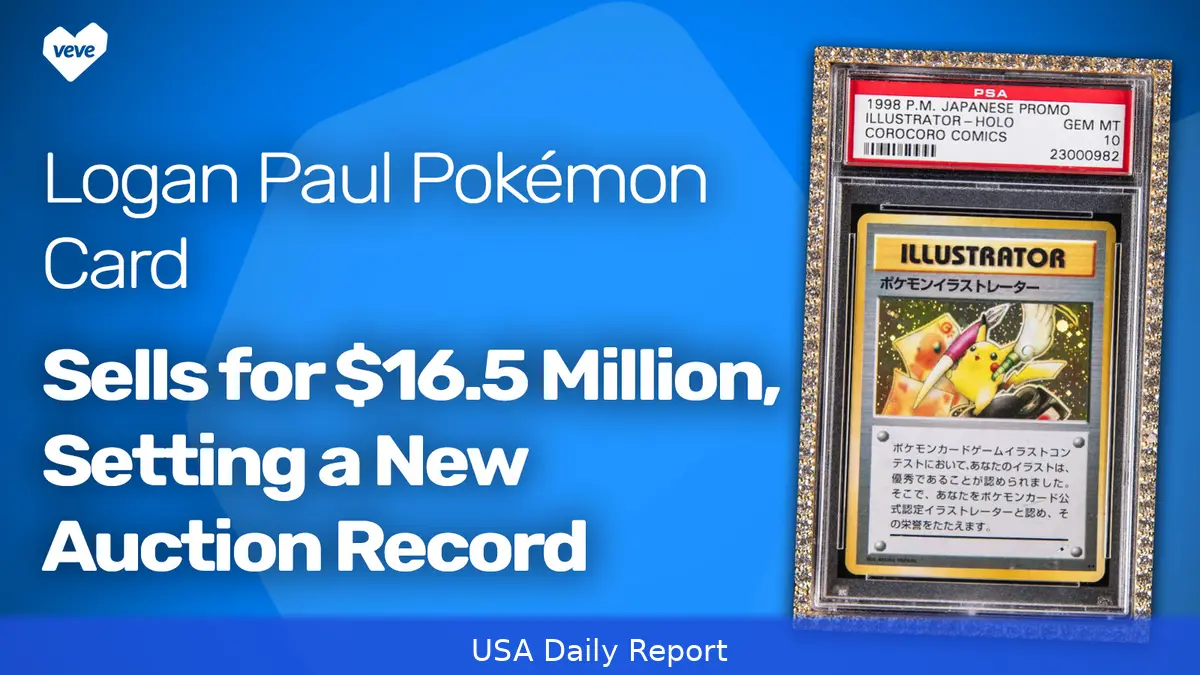
Logan Paul just flipped a rare Pokémon card for $16.49 million, shattering previous trading card auction records. The sale has investors paying close attention to the booming market for alternative assets.
From YouTube Star to Record-Setting Collector
Logan Paul isn’t your typical investor. The former YouTube prankster turned professional wrestler and entrepreneur made headlines Monday by selling an ultra-rare Pikachu Illustrator Pokémon card for $16.49 million. That’s the highest price ever paid for a trading card at auction, according to Guinness World Records.
Paul originally bought the card in 2021 for about $5.3 million, which was itself a record private sale at the time. Over nearly five years, the card’s value tripled, netting Paul roughly $8 million in profit.
What helped push the price so high? Paul didn’t just lock the card away; he turned it into a centerpiece of his personal brand. Wearing it in a diamond-encrusted necklace during major events like WrestleMania 38, he gave the collectible both cultural and financial weight.
Why the Pikachu Illustrator Card Is So Valuable
The card dates back to 1998, created as a prize for winners of an illustration contest by Japan’s CoroCoro Comic. Designed by Atsuko Nishida, Pikachu’s original illustrator, only around 40 copies are known to exist. Paul’s card is the only one confirmed to be in mint condition, graded a perfect 10.
Its rarity, pristine quality, and provenance have made it the 'holy grail' for Pokémon collectors. The card’s auction included a custom gold case and a diamond necklace Paul wore, adding to its mystique.
Collectibles Market Heating Up
Paul’s sale isn’t just a flashy headline; it signals a broader trend. Pokémon cards have surged in value over the last two decades, outperforming many traditional investments. According to data from Card Ladder, Pokémon cards have climbed more than 3,200% in value over 20 years.
Recently, the market has accelerated further. In just the past three months, Pokémon cards increased roughly 25%, outpacing tech stocks like Nvidia. This growth has drawn attention from both casual collectors and serious investors.
Venture capitalist A.J. Scaramucci, son of former White House communications director Anthony Scaramucci, was the winning bidder for Paul’s card.
Big investors and institutions are starting to see collectibles as a serious alternative asset.
Investors Eye Unconventional Assets
Younger investors like Gen Z and millennials often look for investments that mix nostalgia, culture, and value. From cryptocurrencies to designer handbags, these assets can offer a status symbol and a career path.
Logan Paul sees the sale as validation of his approach. "We're in an interesting time where everyone wants to critique, but no one wants to build," he said before the auction. His success is proof that some risks in nontraditional markets can pay off big.
This sale shows how mixing entertainment with investing can actually raise an item's worth. Paul’s public use of the card added a performance art element that made the collectible more desirable.
Logan Paul's journey is part of a bigger trend where pop culture and finance meet, making collectibles serious investments.
With rare collectibles hitting record prices, investors are keeping an eye on whether this trend will last or if it's just hype. For now, Paul’s $16.5 million sale stands as a landmark moment in the evolving world of alternative assets.


