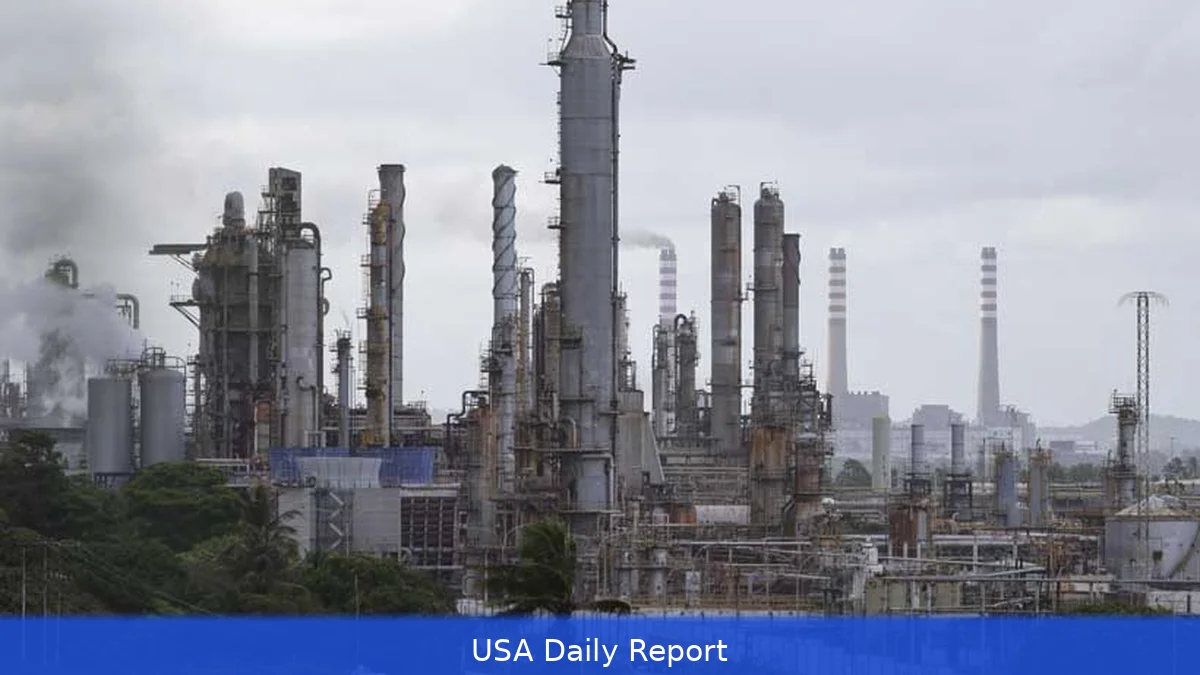
The U.S. Government is working hard to revive Venezuela’s battered oil sector. But despite high-level talks and halted asset sales, oil companies remain hesitant to jump back in.
Washington Halts Halliburton Asset Sale to Keep Door Open
Venezuela called off an auction of nearly $6.6 million worth of equipment owned by Halliburton after pressure from the U.S. Administration. The auction, ordered by a Venezuelan court in December, included trucks, power plants, forklifts, loaders, and cranes. The move came after a Halliburton exec raised concerns directly with former President Donald Trump in January.
Washington stopped the sale as part of its plan to revive Venezuela’s oil industry and encourage American companies to return. This White House is coordinating closely with Venezuela’s interim government. U.S. Energy Secretary Chris Wright has said oil sales could hit $2 billion by the end of February, signaling a push to ramp up production and exports.
Trump’s Venezuela Pitch Meets Industry Skepticism
President Trump recently met with major oil executives to pitch an ambitious drilling campaign in Venezuela. But the reception was cool. ExxonMobil CEO Darren Woods bluntly called Venezuela "uninvestible" right now, citing legal and commercial hurdles that cloud the outlook for returns.
Other executives echoed Woods’ concerns, emphasizing the need for strong security and financial guarantees before committing to what would be a multi-year investment in a politically volatile country. Harold Hamm, a well-known oil investor and Trump donor, acknowledged the challenges and said industry players would need time to evaluate the risks.
Trump insisted that interim leader Delcy Rodríguez would be a cooperative ally in the effort to bring U.S. Firms back. He touted Venezuela’s massive oil reserves and urged companies to seize the opportunity.
At one point, he even told executives there were many others ready to take their place if they declined.
Still, industry insiders see any fresh investment as years away. The hesitation in the sector shows how tough it is to rebuild oil production with political uncertainty and sanctions still in place.
Halliburton Eyes a Quick Return Pending U.S. Approval
Halliburton halted its Venezuelan operations in 2020 after the U.S. Tightened sanctions on Nicolás Maduro’s regime. Since then, the company has faced legal battles, including lawsuits from local workers and a global arbitration case against Venezuela.
Despite that, Halliburton’s CEO Jeff Miller recently visited facilities in Venezuela’s oil-rich Zulia and Monagas states. He said the company could restart operations within weeks if the U.S. Government greenlights the move and ensures protections for payments.
Meanwhile, U.S. Energy Secretary Wright met with acting president Delcy Rodríguez to discuss opportunities and challenges. Both sides pledged to move forward collaboratively, signaling a thaw in relations and a possible path for foreign investment.
Political Context and Economic Stakes
The U.S. Intervention in Venezuela’s oil sector comes after a dramatic political shift earlier this year, when U.S. Forces detained Nicolás Maduro. The new arrangement gives Washington oversight of Venezuela’s oil exports, with revenues managed through a fund in Qatar. Chevron, a longtime PDVSA partner, is already boosting Venezuela shipments.
If Venezuela’s oil industry is rebuilt, it could boost global supply and stabilize the country’s economy. But years of sanctions, mismanagement, and political turmoil have left infrastructure in poor shape. Companies want clear legal frameworks and security guarantees before risking large-scale investments.
The cautious approach from the oil sector reflects the challenge of balancing political aims with business realities. While Washington pushes for quick gains, executives are wary of repeating past failures in a challenging environment.
Right now, Venezuela’s oil revival is still underway. The U.S. Government’s efforts to help a return by American companies face tough questions about long-term stability and investment risk. Whether industry giants will commit billions to the project is still unclear.


