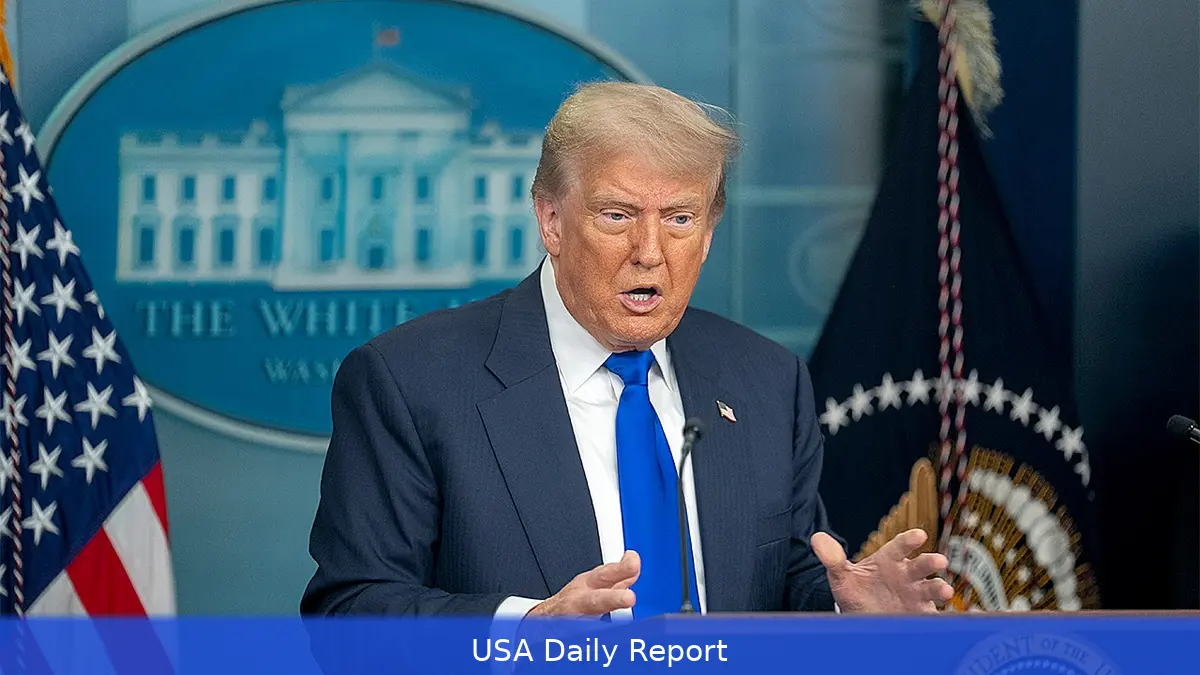
President Donald Trump showed up at the Supreme Court for the first time in history, but the justices made it clear they’re not sold on his plan to restrict birthright citizenship. This case challenges a core part of American identity and could change citizenship rules if the court rules in Trump's favor.
Trump's controversial move faces skepticism.
On a crowded day at the Supreme Court, President Trump was a striking presence—attending oral arguments in person, a first for a sitting president. Still, the justices grilled government lawyers tough over Trump’s executive order that aims to deny citizenship to children born on U.S. Soil to parents who are in the country illegally or temporarily. This policy challenges over a century of how the 14th Amendment’s citizenship clause has been understood.
“All persons born or naturalized in the United States, and subject to the jurisdiction thereof, are citizens of the United States,” the amendment states. Trump’s order narrows this guarantee, requiring at least one parent to be a U.S. Citizen or permanent resident.
Understanding the constitutional roots and history.
The 14th Amendment was ratified after the Civil War to ensure citizenship rights for formerly enslaved people. Its citizenship clause has been broadly understood to grant automatic citizenship to nearly anyone born in the U.S., with limited exceptions like children of foreign diplomats or invading armies. Trump's effort to limit birthright citizenship has sparked heated debate over what the amendment originally meant and how it applies today.
Justices from both sides questioned the legal grounds for the executive order. Chief Justice John Roberts, known for his conservative leanings, questioned how the administration’s narrower definition fits within the Constitution.
He pressed government attorney D. John Sauer on whether the law should adapt to today’s immigration realities while still respecting the amendment’s language.
There are legal challenges and practical issues.
Justice Ketanji Brown Jackson drilled into the logistics, asking how officials could practically determine citizenship eligibility in delivery rooms nationwide. Justice Neil Gorsuch highlighted that the historical understanding of citizenship didn’t hinge on parents’ legal status but on their residence.
He noted that even in 1868, the law accepted people establishing domicile regardless of legality.
Justice Amy Coney Barrett challenged the government’s stance by pointing out inconsistencies, especially how children of enslaved people unlawfully brought to the U.S. Would still be citizens under the 14th Amendment. These questions showed the court’s skepticism toward the administration’s new take on long-established principles.
Trump’s Reaction and Broader Implications
After leaving the courtroom early, Trump took to Truth Social to slam birthright citizenship, calling the U.S. The “only Country in the World STUPID enough to allow” it. In fact, about 30 countries, mostly in the Americas, offer citizenship to anyone born on their soil, showing the U.S. Is hardly alone in its approach.
Lower courts blocked the executive order right after it was announced, so it never went into effect. Still, the Supreme Court’s ruling could set a precedent that reshapes immigration law and citizenship rights nationwide. The stakes are high for families affected by immigration and for the nation’s identity.
The justices are still considering the arguments, and the outcome is uncertain. A decision is expected by early summer, and it will be closely watched by millions across the country.
The Supreme Court’s questions revealed strong hesitation to overturn a constitutional guarantee that’s lasted over 150 years. Whether Trump’s executive order survives legal scrutiny will shape the future of birthright citizenship and the definition of American identity.


