
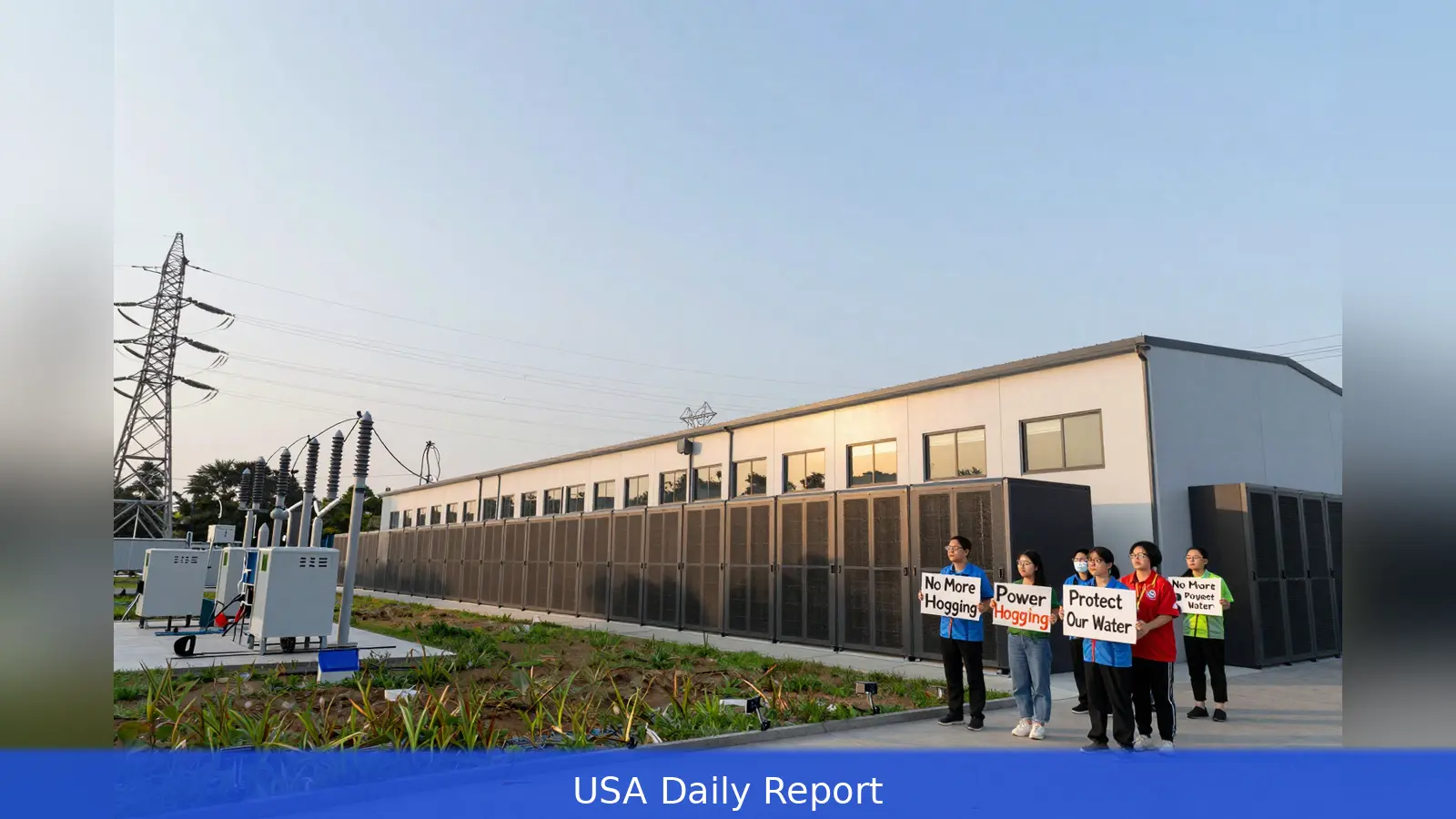
70 percent of Americans oppose new data center construction, according to a May Gallup poll. The White House, through the Office of Management and Budget, is allowing the Federal Data Center Enhancement Act to lapse without publishing a replacement or transition plan, and the General Services Administration hasn't prepared a successor framework, Wired reports. The law established centralized reporting, consolidation targets and efficiency standards for federal data centers; its lapse removes that statutory structure and leaves agencies without a mandated reporting regime. With Congress introducing a flurry of data-center bills this year but no clear statutory successor in sight, the pause hands more power to local permitting and ad hoc agency choices.
70 percent opposition frames the political backdrop for what's effectively a technical policy break within the federal IT world. The Federal Data Center Enhancement Act required agencies to report inventories, consolidation plans and efficiency metrics under a centralized regime. Letting the law lapse ends those statutory obligations, and Wired reports the Office of Management and Budget hasn't produced an interim directive and the General Services Administration hasn't prepared a replacement plan.
The FDCEA, passed to encourage consolidation and to create a consistent reporting standard across agencies, gave OMB and GSA a common touchpoint to enforce and track federal data center consolidation and efficiency. With the act no longer in force, agencies lose a legislated, centralized reporting structure for inventories and efficiency metrics. Current and former OMB and GSA staff told Wired that neither agency has issued interim guidance or mapped a path to continue the FDCEA's reporting obligations beyond the law's timeline.
Wired describes the move as unusual in recent federal administrative practice. A GSA employee who spoke on the condition of anonymity told Wired that allowing a data center policy to expire without a successor is rare in recent federal data center policy work. Under prior administrations, agencies typically developed replacement policies months in advance of statutory sunsets because the pace of technological change generally forces active policy revision well ahead of expiration.
The lapse arrives as federal agencies are accelerating adoption of artificial intelligence tools, which in turn is increasing demand for compute capacity and colocation services. Industry and independent researchers warn that rapid sector growth could materially increase power needs. The Electric Power Research Institute estimates that by 2030 data centers could consume at least 9 percent of U.S. electricity.

That projection has helped drive local resistance to new facilities. Residents in states including Utah and Georgia have mounted opposition to projects they view as energy and water intensive.
Wired notes public pushback as one reason congressional attention to data-center policy has intensified this year, and lawmakers have introduced a string of bills related to data centers, including proposals focused on environmental reviews and measures that would protect local moratoria on new construction.
Despite that congressional activity, Wired reports none of the bills introduced so far appear to replicate the FDCEA's specific requirements or to create a clear statutory successor to the reporting and standards regime that will no longer apply. The administration's choice not to issue an interim OMB directive or a GSA-led implementation plan signals, according to current and former agency staff quoted by Wired, a more hands-off federal posture on data-center oversight.
Practically, the lapse shifts the day-to-day compliance burden for federal IT managers away from a uniform federal touchpoint. Without the FDCEA, oversight will default to three venues: ad hoc agency decisions on when and how to consolidate or report; state and local permitting regimes that govern construction and utility use; and whatever congressional legislation, if any, emerges to fill the gap. Wired obtained no rollout timeline, pricing, region restrictions, or replacement schedule from OMB or GSA materials related to the lapse.
Federal IT officials used the FDCEA's reporting cadence as a predictable administrative anchor. The absence of that anchor will complicate multiagency planning for colocation, migration to cloud providers, and shared services that rely on aggregated inventory data. Current and former OMB and GSA staff told Wired that the administrative machinery that enforced and tracked compliance is left without an explicit mandate to continue that work.
The dynamic will matter most where data-center expansion intersects with local power grids and community opposition. The EPRI projection that data centers could account for at least 9 percent of U.S. electricity demand by 2030 provides a concrete metric that local planners and utilities will use when weighing new builds. Until federal guidance or new legislation arrives, communities and utilities will be principal gatekeepers on many projects.
For vendors and operators, the lapse reduces a layer of federal coordination that previously offered predictable reporting requirements across the federal estate. For lawmakers, the situation opens a legislative space: Congress is already debating multiple approaches, but Wired reports that none of the bills on the table so far replicate the FDCEA's centralized reporting and efficiency mandate.
Related Articles
- Brockovich's map catalogs U.S. data-center complaints
- FBI replica town trains 1,400 agents to fight cyberattacks
- 4 Floodlight Cameras That Improve Nighttime ID
Seventy percent opposition now hangs over data-center policy debates as lawmakers and local officials weigh whether to rebuild a federal reporting framework.
This article was created with AI assistance.


