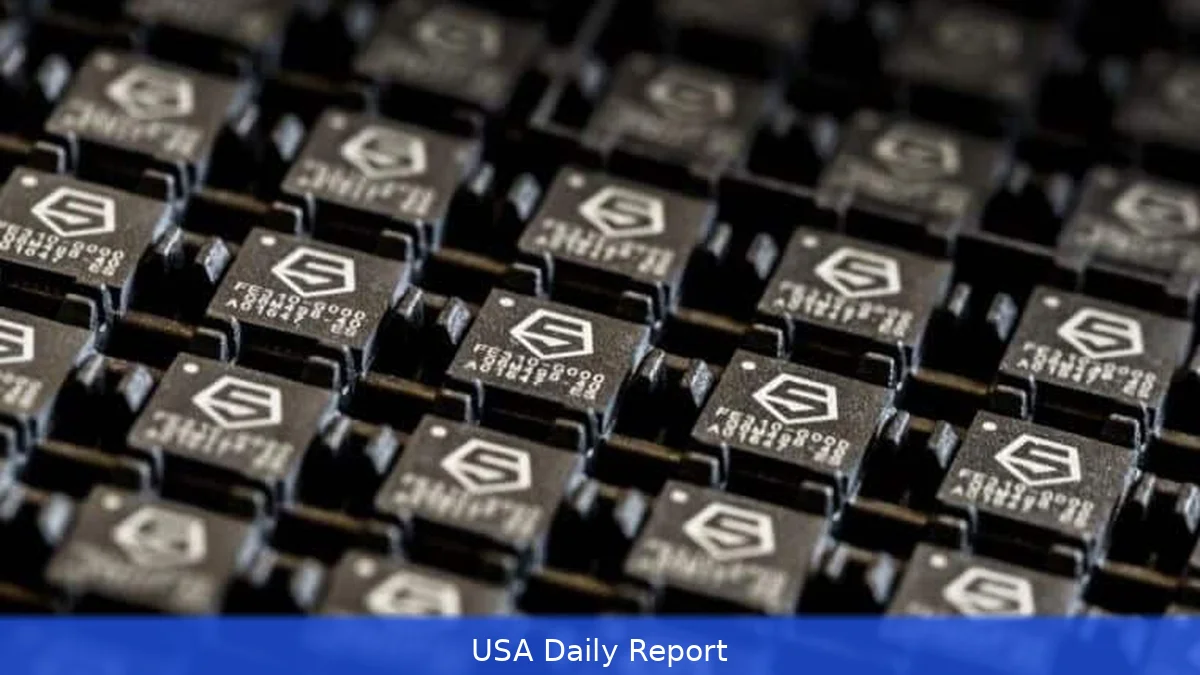
SiFive just jumped to a $3.65 billion valuation. The RISC-V chip designer closed an oversubscribed $400 million round. Big-name investors — including Nvidia — joined the deal.
Fresh cash for an open chip bet
SiFive, the startup born out of UC Berkeley that built its business on an open-source chip instruction set, announced it raised $400 million in a round that valued the company at $3.65 billion. The financing was oversubscribed, signaling strong demand from institutional investors that rarely back early-stage chip startups at such scale. Look, the headline number matters: it's a clear sign that backers see RISC-V as more than an embedded-systems play.
The company hasn't raised new capital since March 2022. At that time, PitchBook estimated SiFive's pre-money valuation at $2.33 billion when it took in $175 million led by Coatue Management.
Who backed the round
Atreides Management led the financing. Gavin Baker, founder of Atreides Management, put the firm at the front of the table for the deal. Other heavy hitters listed by the company include Apollo Global Management, D1 Capital Partners, Point72 Turion, T. Rowe Price and Sutter Hill Ventures.
Nvidia participated too, a noteworthy development because the chip maker has built its AI business around GPUs and a broad software stack. Nvidia's involvement effectively links its CUDA and NVLink ecosystems to an alternative CPU architecture — RISC-V — and that could change how data-center hardware gets assembled.
Why RISC-V now?
RISC-V started as an open, academic-derived instruction set that found early life in small, low-power chips for embedded devices. For years, it lived on the fringes of cloud and data-center compute because x86 and ARM dominated those spaces.
But the funding and attention SiFive just attracted show investors believe RISC-V can scale up.
Point is, SiFive isn't selling chips. It's licensing designs the way Arm long did: customers take a blueprint and modify it for their needs. That licensing model keeps SiFive neutral — it doesn't depend on a single customer to survive — and it lets cloud providers or system makers tweak cores for AI workloads.
Arm itself changed course in March when it launched a manufactured AI chip developed with Meta and with customers such as OpenAI, Cerebras and Cloudflare, blurring the lines between pure-IP licensing and product-making. SiFive's play is still to stay design-first, but now it's positioning those designs to sit alongside Nvidia's GPU stack in racks and servers.
Where SiFive fits in an AI data-center
Most AI training and inference today lean heavily on GPUs from Nvidia. Companies such as Intel and AMD have been trying to offer alternatives with various CPU and accelerator combos. SiFive's proposition is different — an open-architecture CPU that can connect into Nvidia's systems.
Technically, SiFive's cores are RISC-V based, so they don't follow x86 or ARM instruction sets. That gives customers an alternate path to design servers that talk to Nvidia's CUDA software and use NVLink Fusion, the rack-level system Nvidia promotes for linking processors. That could let data centers mix and match CPUs and accelerators in new ways.
Investors betting on modular hardware
Investors in the round include private equity, hedge funds and traditional venture firms, illustrating how bets on infrastructure have broadened. Apollo Global Management and D1 Capital Partners joined the cap table alongside Point72 Turion and T. Rowe Price, signaling institutional appetite beyond the usual Silicon Valley venture crowd.
Frankly, the who's-who in the deal matters for another reason: large institutional backers can bankroll the long product cycles chip startups face. Building out IP, tape-outs, validation and ecosystem support for a CPU architecture isn't quick or cheap. With deep-pocketed investors, SiFive gets runway to pursue data-center-class designs rather than only low-power embedded chips.
Technical and market hurdles
Shifting data centers toward RISC-V-based CPUs won't happen overnight. Software compatibility, ecosystem maturity and customer risk aversion are major barriers. Many cloud and AI stacks expect x86 or ARM CPUs at the host level; changing that requires both performance parity and a strong software toolchain.
SiFive will need partners to validate designs against real AI workloads and to prove cost, power and performance advantages. That's one reason Nvidia's participation matters: it links SiFive's designs to an established software and interconnect ecosystem. But integration work stays complex, and system makers will move cautiously.
Business model: licensing versus manufacturing
SiFive's approach echoes Arm's early days: design and license, not manufacture. That lets SiFive scale revenue through IP fees and royalties rather than the capital-intensive work of running fabs. It also keeps the company neutral so it can work with many system designers.
That said, the chip market has shifted. Arm recently decided to ship an actual chip developed with Meta, and its customers include big AI shops. So the lines between licensing and product-making are blurring. SiFive's challenge is to keep the licensing model attractive enough that customers prefer to adapt its designs instead of buying a finished product.
What this means for competitors
Intel and AMD have been jockeying for position against Nvidia in AI compute. Now there's another variable: an open-architecture CPU supplier with fresh capital and big backers. If SiFive's designs can be proven in racks that use Nvidia GPUs, system architects might start considering RISC-V hosts as one path among several.
That doesn't guarantee market share. But it does give customers more choices — and more potential pressure on incumbents to offer flexible, interoperable designs.
Next steps for SiFive
Expect the company to push its designs toward data-center validation and to deepen partnerships that tie RISC-V hosts to GPU accelerators. SiFive has the cash to accelerate silicon development and tooling, and the investor list gives it credibility with customers who may want reassurance before adopting a new CPU architecture.
Point is, the round buys SiFive time and credibility. The company has to turn that into silicon running real-world AI workloads.
Related Articles
- Nvidia’s Next Big Bet: Autonomous Vehicles Could Fuel a New AI Investment Boom
- CoreWeave Inks Multi-Year Deal to Power Anthropic's Claude, Stock Pops
- Alibaba Shifts Focus From Open-Source AI to Revenue Amid China’s Tech Self-Reliance Push
Atreides Management led the $400 million round; other investors included Nvidia, Apollo Global Management, D1 Capital Partners, Point72 Turion, T. Rowe Price and Sutter Hill Ventures.


