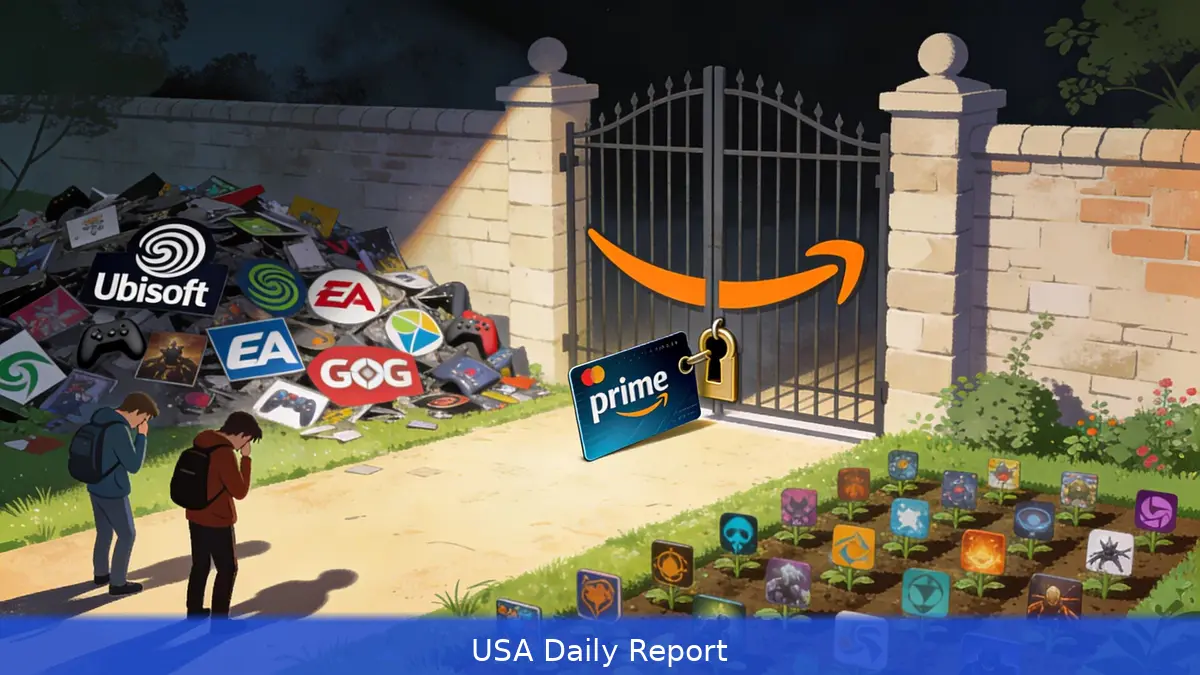
Amazon Luna is pulling the plug on third‑party game purchases. Players will lose Luna access to those titles this June.
What’s changing and when
Amazon Luna said Friday it will stop supporting game purchases and subscriptions that were tied to third‑party stores like EA, Ubisoft and GOG. The platform will remove previously bought third‑party games from Luna on June 10, 2026, and the service will end its Bring Your Own Library feature on June 3, 2026.
Look, that timeline is tight for anyone who built a Luna library around buys from those outside stores. After the cutoff, titles you bought through EA, Ubisoft or GOG won’t be playable on Luna anymore, even though you’ll still be able to run them on the original storefronts using the accounts you used to buy them.
The change affects both a-la-carte purchases and subscriptions that came through Luna. Amazon said it will stop offering subscriptions to Ubisoft Plus and Jackbox Games on the Luna storefront, and it will cancel any active subscriptions purchased through Luna at the end of the current billing cycle.
Amazon also told The Verge it won’t issue refunds for third‑party games bought through Luna.
How Luna’s own subscriptions stack up
Luna offers its own catalog plans and will now focus on that content. The service’s Luna Standard plan is included with an Amazon Prime subscription, which costs $14.99 per month. That plan includes titles such as EA Sports FC 26, Hogwarts Legacy, Skyrim and Death Stranding.
That said, Luna Premium — a separate tier priced at $9.99 per month — expands the library with games like Alien: Isolation, Borderlands 3 and Sonic Frontiers.
Players who stick with Luna’s built‑in subscriptions can continue playing whatever titles are part of those bundles. But if you bought a third‑party game through Luna’s storefront, you’ll lose access to it on the Luna platform after the June dates above.
Amazon’s explanation and messaging
Brittney Hefner, a spokesperson for Amazon Luna, told The Verge the company is "transitioning away from certain subscription, game store, and a-la-carte purchasing models in favor of approaches we believe work better for our customers long term."
Hefner added that Amazon will keep investing in a wide variety of gaming experiences and that Luna subscribers will still see "strong third‑party titles" within Luna’s subscription plans.
Amazon’s comment frames the move as strategic — a shift toward a model centered on curated subscription libraries rather than being a marketplace for purchases from other publishers. But the practical result is simple: if you used Luna to buy outside games, those purchases won’t stay on Luna.
What this means for players and developers
Players who used Luna as a one‑stop shop for buying games from third‑party sellers will need to adjust fast. The platform will remove those titles on a set date, and customers won’t get refunds from Luna for the purchases, according to the company’s announcement.
That raises a few clear follow‑ups for affected players: how to recover save data, whether cloud saves transfer off Luna, and how purchases made during bundle promotions get handled. Amazon’s public message covered the removal and the lack of refunds, but it didn’t lay out a step‑by‑step for migrating progress or ensuring continuity of DLC and add‑ons bought through Luna’s storefront.
Developers and publishers who previously made their stores accessible through Luna now face a tighter relationship with Amazon’s subscription-centric approach. EA, Ubisoft and GOG are named as examples of third‑party stores that will no longer be supported on the platform. Those companies still host the games on their own services, and players who logged purchases with those storefronts can keep playing there.
Ownership hasn't disappeared — you can still play those games on EA, Ubisoft, or GOG, but Luna won't host them anymore. If you bought a title via an EA, Ubisoft or GOG account, you can still access it on those services.
But Luna will no longer serve as a middleman for those purchases.
How this fits into the wider cloud‑gaming picture
Cloud platforms combine subscriptions, storefronts, and one‑off purchases in different ways. Some platforms lean heavily into subscription catalogs, while others combine subscriptions with direct purchases and cross‑store integrations.
Amazon’s move to trim third‑party purchases on Luna pushes the service more toward a subscription model. For players, subscriptions make it clearer what you get; for Amazon, they reduce licensing and support complexity. For players who prefer to own games outright or have purchases across multiple PC and console stores, the change narrows choices.
Don't call this the death of ownership across cloud gaming — the games remain playable on their original storefronts. Amazon’s notice makes clear that titles bought through the original storefronts remain playable on those platforms. It’s Luna as a player-facing hub that’s changing, not the availability of the games themselves across the wider ecosystem.
Practical steps for affected users
If your Luna library includes third‑party purchases, log into your EA, Ubisoft, or GOG accounts now to confirm those buys. Make sure you still have access credentials for those accounts and that your purchases show up there. That’s the route the company says will let you keep playing once Luna stops supporting third‑party storefronts.
Also verify active subscriptions made through Luna so you know when Amazon will cancel them at the end of their billing cycle. Those cancellations are automatic, according to Amazon’s announcement, so tracking the next billing date matters if you want to keep a subscription active elsewhere.
Also check whether season passes, DLC, or extras you bought through Luna are tied to Luna accounts or the original storefronts so you can recover access.nt specifically. Amazon’s statement focused on storefront support and refunds, and it didn’t explicitly promise migration paths for add‑ons tied to purchases made through Luna.
If you’re unsure about the status of particular titles or purchases, contact the original store tied to the game — EA, Ubisoft or GOG — using the accounts you used to buy the games. According to Amazon, those accounts are the places where you’ll retain access.
What Amazon left unsaid
Amazon’s announcement explains the what and when, and it offers a rationale about favoring certain models over others. But it doesn’t answer every practical question players might have. There’s no public plan, in the company’s statement, for refunding Luna purchases, nor is there a published migration guide for save files or DLC continuity.
Who’s responsible for customer support in edge cases — corrupted saves, overlapping purchases, or cross‑platform entitlements — isn’t spelled out in detail. The company’s guidance points players back to the original storefront accounts for access, while the Luna team will continue to push its own subscription catalog.
Frankly, customers who used Luna as a purchase portal are the ones who have to do most of the legwork now.
Related Articles
- How Amazon’s Echo Learned to Listen and Talk Smarter Than Ever
- Startup Sells Paid Chats With AI Versions of Real Experts
- How to Protect Your Data Online: The 2026 Cybersecurity Guide for Americans
Amazon says it won't offer refunds for third‑party games purchased through Luna.


