
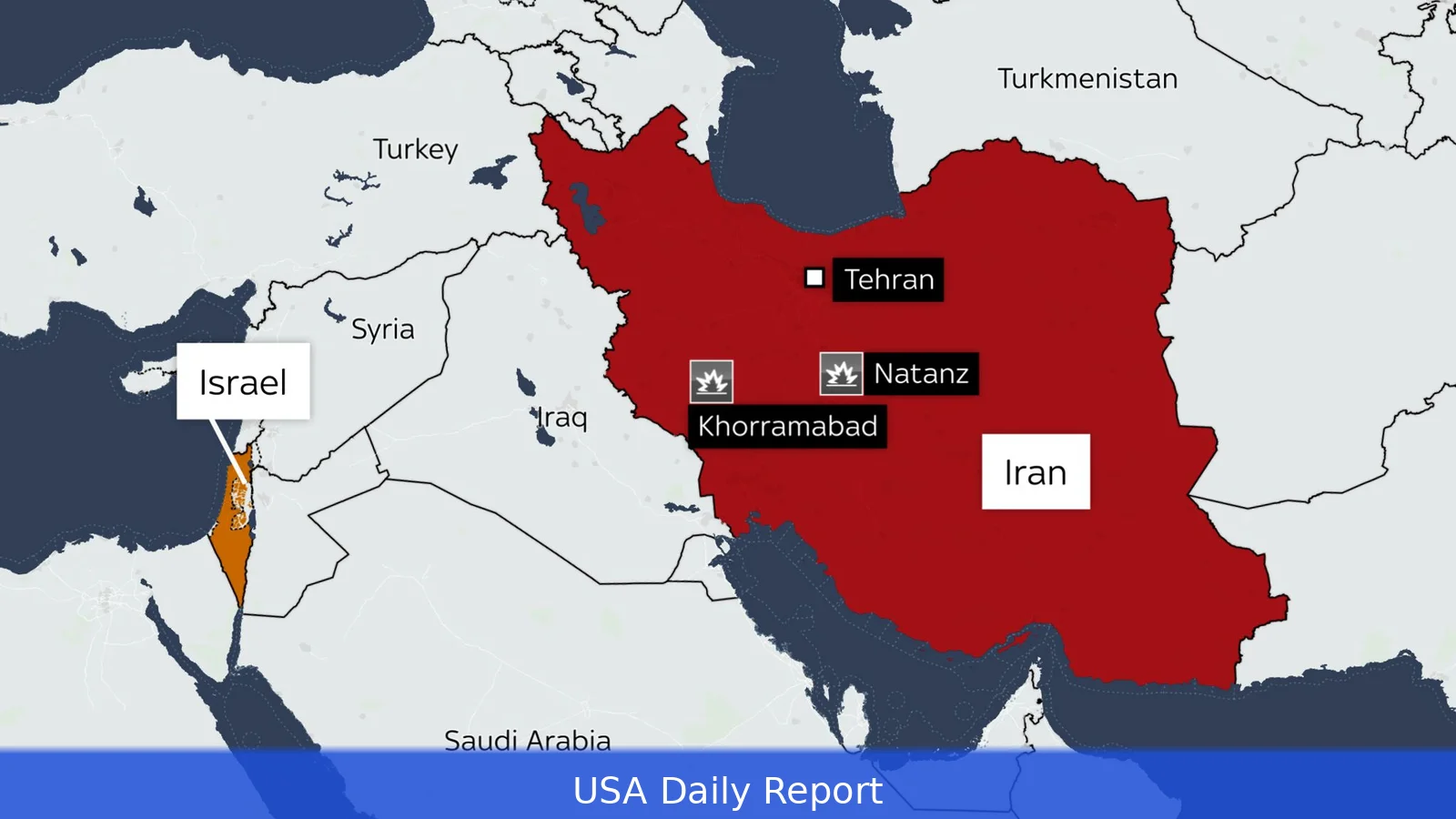
'Epic Fury,' 'kafir' and 'Hormuz' are reshaping how people read the US‑Israel campaign on Iran. Al Jazeera journalists Alma Milisic and Basel Ghazoghli map the language around the campaign, tracing English operation-style phrases, Arabic religious terms and regional place names. Those words do more than describe events — they shape how audiences understand motives, legal arguments and the stakes for trade and diplomacy. What follows unpacks the key terms and explains their concrete political and economic effects for the United States.
How language is being used
Alma Milisic and Basel Ghazoghli examined a range of labels and phrases that have circulated as the conflict around Iran intensified. Some are short, dramatic English constructions meant for broad audiences. Others come from Arabic, Persian or regional place names. The mix matters because each term carries different historical and emotional associations.
Short English tags like “Epic Fury” travel fast on social media and in English-language briefings. They frame an episode of violence as decisive or cinematic, compressing complex events into a single mood and making military action seem inevitable or justified to outside observers.
Arabic and Persian words bring religious and cultural resonances. The word “kafir,” for example, is a longstanding Arabic term historically used to indicate nonbelievers or those outside a particular faith community.
Its use in contemporary political messaging can mark an opponent as illegitimate in moral or religious terms, not just as a rival power.

Geographic names such as Hormuz — shorthand for the Strait of Hormuz — function differently. They point to strategic facts on the map. The strait sits at a choke point for global energy shipments. Invoking Hormuz brings immediate associations with oil, shipping and the vulnerability of international trade routes.
Framing, legality and public backing
Words do legal work. They’re used to justify steps that would otherwise be controversial. When leaders or commentators deploy religious terms or moral language, they can recast a conflict as one of civilizational or existential stakes rather than routine geopolitics. That shift affects how courts, legislatures and publics evaluate the legality of strikes, sanctions or other coercive measures.
Names that suggest a sweeping response — the sort of branded English phrase designed for headlines — can narrow debate. They make nuanced discussion harder by pushing people toward a binary: are you for the action or against it? That can boost short-term political support and make it harder for lawmakers to authorize limited measures, since calls for restraint may be framed as weak.
At the same time, geography-based language centers policy conversations on tangible risks. References to Hormuz, for instance, point negotiators and military planners toward logistics and contingency planning: how to keep oil moving, how to protect merchant ships, how to reassure allies that supply lines will hold. That grounds political discussion in operational choices rather than symbolic rhetoric.
Economic implications for the United States
Terms that evoke the Strait of Hormuz have immediate economic resonance for the US. A disruption there can ripple through global oil markets, hitting prices at the pump and adding volatility to financial markets. Businesses that depend on steady energy prices — airlines, manufacturers, logistics firms — respond quickly to such risks. Investors do too.
That makes language about Hormuz more than symbolic. When policymakers and commentators emphasize the strait, they’re flagging an axis where economic consequences are measurable. Insurance costs for shipping rise. Companies reroute vessels to longer, costlier passages. Those are practical costs that show up in budgets and corporate earnings.
Related Articles
- Tehran’s preconditions stall Islamabad talks, rattle emerging markets
- Iran layoffs climb as conflict with US, Israel hits economy
- Lufthansa Cuts 20,000 Short‑haul Flights to Save Fuel
Al Jazeera's explainer by Alma Milisic and Basel Ghazoghli was published April 22, 2026.
This article was created with AI assistance.


