
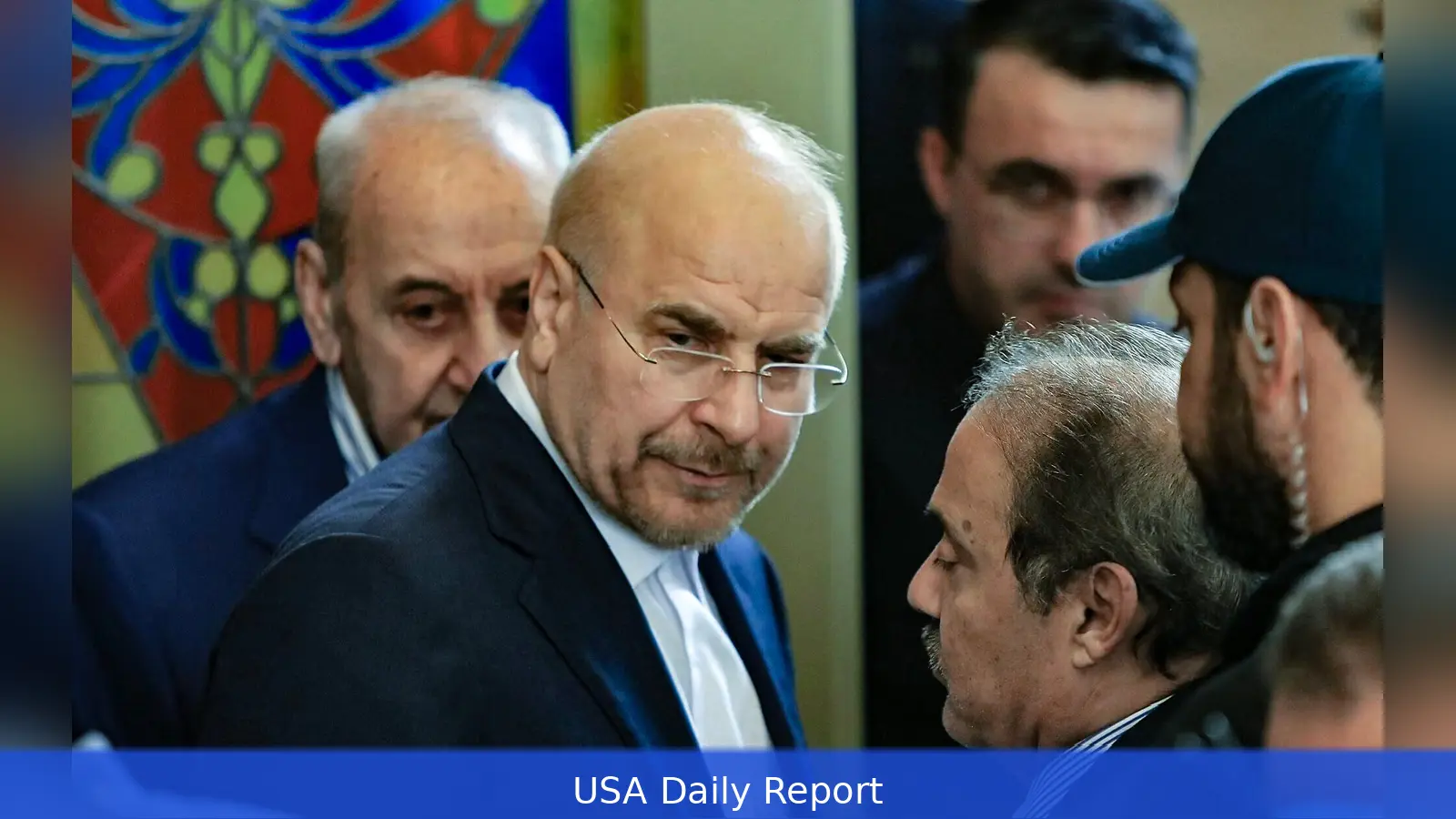
A ceasefire in Lebanon matters as much as one in Iran, Ghalibaf said.
Diplomatic push amid stalled talks
Mohammad Bagher Ghalibaf, speaker of Iran’s parliament, told Lebanon’s parliamentary leader that Tehran views a Lebanese ceasefire as equally vital to one in Iran. He posted the comment on Telegram after a phone call with Nabih Berri, Speaker of Lebanon’s Parliament, the Iranian statement said.
The call followed Ghalibaf’s role leading the Iranian delegation at last week’s US–Iran meeting in Pakistan, a session that ended without a deal. Ghalibaf said Tehran has been "striving to compel our enemies to establish a permanent ceasefire in all the conflict zones, in accordance with the agreement," according to his post.
These talks are part of a broader diplomatic effort to halt a war that's already expanded. Iran wants any truce that halts fighting involving Tehran to include Lebanon; Washington and Jerusalem have signaled they don't see Lebanon as part of that package.
Lebanon’s losses and accusations
Berri used the conversation to detail the toll on Lebanon. "So far 1.2 million Lebanese people have been displaced by the fighting," Nabih Berri told Mohammad Bagher Ghalibaf, the Iranian post quoted him as saying.
Berri also charged that "Israel is literally committing crimes in our country and seeking to displace Lebanese people."
At least 2,000 people have been killed in Lebanon since the conflict widened on March 2, the statement added. The violence began after Hezbollah, aligned with Tehran, fired rockets toward Israel, which Hezbollah said were in retaliation for the killing of Iran’s Supreme Leader, Ayatollah Ali Khamenei, on February 28.
The numbers matter more than just humanitarian headlines. Displacement on that scale strains neighboring economies, sends refugees to Europe and elsewhere, and stretches the humanitarian response that international donors and agencies provide. It also creates political pressure inside Lebanon to find partners able to halt the suffering — or to push the country further into factional divisions.
Where the US fits in
US President Donald Trump announced late Wednesday that the leaders of Israel and Lebanon would speak with each other for the first time in 34 years on Thursday, a development Washington said would open a new diplomatic channel. An Israeli official confirmed the planned call, while Lebanon’s government had not immediately commented.

The US is already at the center of talks with Iran, having met last week in Pakistan where the Iranian delegation, led by Ghalibaf, took part. That session failed to produce an agreement. Now Washington faces competing pressures: pressure from Israel to limit any deal so it doesn't constrain Israeli operations against Iranian targets, and pressure from regional partners and humanitarian groups to halt the fighting wherever civilians are being displaced or killed.
Washington’s choices have practical effects. US military planners and diplomats will have to decide whether to back new ceasefire terms that explicitly cover Lebanon, press Israel to show restraint, or keep a narrower focus on direct Iran-related hostilities. Each path carries risks: widening the terms could antagonize Israel; narrowing them could leave Lebanon exposed and deepen anti-US sentiment across the region.
Regional ripple effects and economic stakes
Beyond lives and politics, the fighting has economic consequences. Lebanon’s economy was fragile before the war; massive displacement and infrastructure damage threaten to undercut recovery efforts for years. Neighboring states already coping with refugee flows and energy and food price shocks will feel more strain.
Global markets watch closely when conflicts in the Middle East escalate. Oil and gas prices can spike on perceived threats to supply routes or to facilities in the region. Even if Lebanon itself isn't an oil hub, the fear of spillover into wider US–Israel–Iran hostilities can push trading desks to reprice risk, and that affects American consumers and businesses.
And there's another layer: donor aid. If Lebanon needs a bigger humanitarian response, the US government and private American charities may be asked to increase funding. That comes during a period when US budget priorities are already contested in Washington, making any large new overseas expenditure politically sensitive.
Political calculations inside Lebanon and Iran
Berri’s criticism of Israel is a signal to his domestic base and to Tehran. Nabih Berri framed the displacement and attacks as crimes and warned against any official Lebanese contact with Israel, the statement added. That stance keeps the Lebanese leadership aligned with constituencies demanding firm resistance to perceived aggression.
For Iran, Ghalibaf’s messaging serves two audiences. Domestically, it projects Tehran as defending allied communities. Internationally, it seeks to push Washington and Tel Aviv toward a broader ceasefire that would freeze hostilities across multiple fronts. The problem: the US and Israel have resisted including Lebanon in any Iran-focused ceasefire, arguing the Lebanese front is a separate matter.
Ghalibaf’s comments after the Pakistan meeting show Tehran is still trying to bind ceasefire terms to wider regional outcomes. But the failed meeting also shows the limits of those efforts when diplomatic trust is thin and demands on each side are high.
What Washington must weigh
For the US, the calculus will balance strategic, humanitarian and domestic political concerns.
Are the political costs of pressing Israel to agree to broader terms acceptable? Can the US thread a diplomatic needle that calms Lebanon without undercutting Israeli security priorities? Those questions will shape Washington’s next moves.
In the end, American officials will be closely monitoring whether the planned call between Israel and Lebanon’s leaders produces practical steps to reduce civilian harm or whether it becomes a symbolic gesture. Either outcome will affect how Congress, the White House and American aid agencies respond in funding and policy.
Ghalibaf’s intervention keeps Lebanon at the center of regional talks even as negotiators haggle over language and scope. The statement signals Tehran’s insistence that any meaningful halt to the wider war must be comprehensive — a stance that will complicate, not simplify, next steps for diplomats in Washington and beyond.
Related Articles
- Iran Offers to Reopen Strait of Hormuz if U.S. Lifts Blockade; Washington Skeptical
- Bennett-Lapid bloc trails Likud by 1 seat
- U.N.: U.S.–Israel war on Iran could push 32.5 million into poverty
Donald Trump announced the first Israel‑Lebanon leader-to-leader call in 34 years, a move Washington framed as opening a diplomatic channel.
This article was created with AI assistance.


