
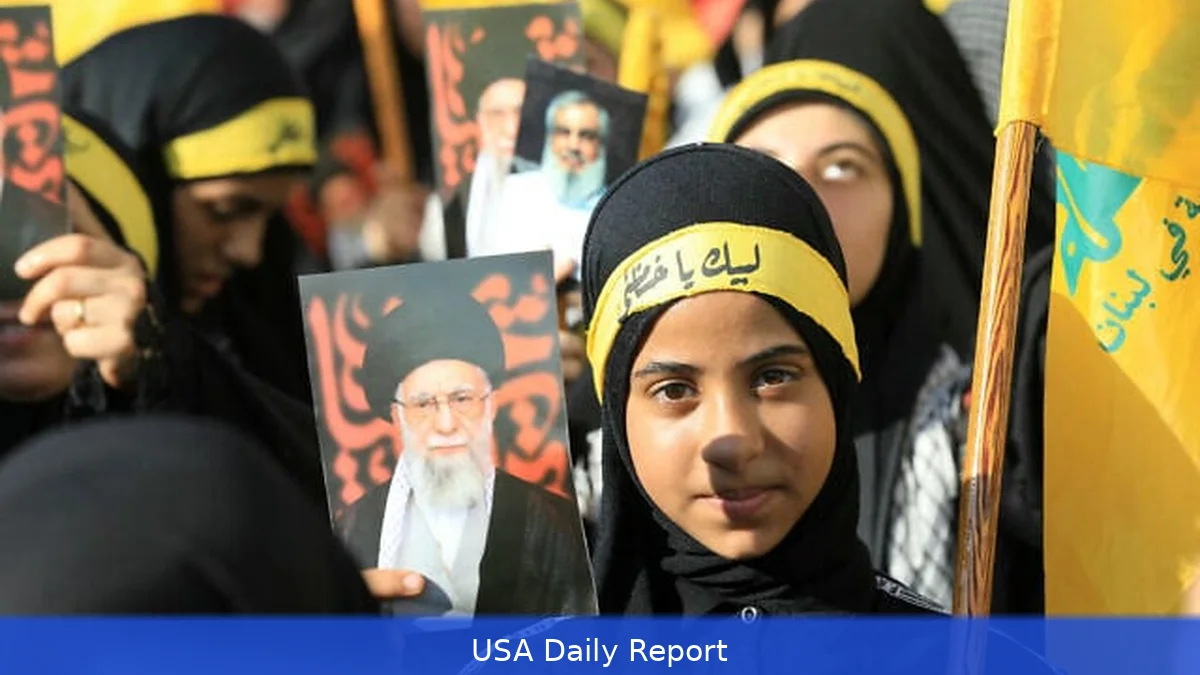
Lebanon says it wants calm along its border with Israel. But convincing Hezbollah to stand down looks far harder. Analysts say the group's choices may be made in Tehran, not Beirut.
Who's holding the keys?
Hezbollah is more than just a political party in Lebanon. It's an armed movement with political offices and a place in government. Its symbol even shows an arm gripping a rifle — a visual reminder that armed resistance remains central to what the group says it is.
That identity shapes everything. Hezbollah's role in Lebanon's security debate isn't simply domestic politics; it's tied to a regional network that includes Hamas in Gaza and the Houthis in Yemen. Together, those groups are often described as part of an "Axis of Resistance" backed by Iran.
Because of these regional ties, Tehran's strategic priorities influence Hezbollah's decisions. Nicholas Blanford, author of Warriors of God: Inside Hezbollah's Thirty-Year Struggle Against Israel, told reporters that any major change in the group's direction would likely be decided not in Beirut but in Iran's capital. That observation helps explain why Lebanese officials who want peace face a tough sell.
How the October 2023 war changed the picture
The Hamas-led attacks on Israel on Oct. 7, 2023 and the fighting that followed reshaped the region. Israel and the United States launched campaigns that weakened several armed groups' operational capacity.
Hezbollah, analysts say, was damaged but not defeated.
So the group still has fighters, weapons stockpiles and political influence inside Lebanon. But its military balance has shifted — enough to make Hezbollah more cautious in some ways and more assertive in others. Lebanese politicians who argue for de-escalation point to the high cost of open conflict. Some international actors speak of reducing the risk of a broader war. Yet Hezbollah's self-image and ties to Iran give it its own calculations.
Why Tehran matters
Iran supplies money, weapons and strategic direction to several armed groups in the region. It sees those groups as a buffer against rivals and as leverage in a contest with Israel and Western powers. On the Lebanese front, that means Hezbollah doesn't operate in isolation.
That doesn't mean every move is micromanaged from Tehran. The group's local leaders still make tactical choices based on conditions inside Lebanon. But when a change would affect the wider regional balance — a truce, a pullback, or a switch to purely political activity — Iran's view matters. Blanford pointed to Tehran's role in past decisions, suggesting that Beirut's attempts to broker peace will run into limits if Iran isn't on board.

Political pressure inside Lebanon
Lebanese leaders are juggling competing pressures. Many in Beirut want to avoid another major conflict that would wreck the fragile economy and worsen a humanitarian crisis. Lebanon's government must also manage sectarian politics and public anger over inflation, unemployment and corruption.
That's when domestic politics touch foreign policy. Political figures who favor calm are trying to carve out a path that keeps Hezbollah's military wing from pulling the country into a new war. But those figures lack the tools to force the group to change its posture unless Hezbollah's own calculus shifts.
What this means for the United States
The U.S. Views Hezbollah as both a challenge to regional stability and a proxy of Iran's reach. Washington has supported Israel's efforts to degrade armed groups it sees as threats, and the U.S. Has tightened sanctions on networks that supply weapons or funds to those groups. Those policies aim to raise the cost of sustained militia operations.
But there are limits. The U.S. Doesn't have a direct lever over Hezbollah's internal decision-making. Instead, Washington tries to shape outcomes through diplomatic pressure on allies, economic sanctions and military support to partners in the region. This approach can reduce aggression but won't change Hezbollah's strategy if Iran stays committed to its proxies.
Economic fallout and regional risk
Lebanon's economy is fragile. It suffered a banking collapse, a currency meltdown and a huge drop in living standards in recent years. New fighting would make things worse. Trade routes could be disrupted, investment would dry up, and reconstruction costs would soar.
International aid groups warn that renewed conflict could trigger mass displacement and worsen shortages of food, fuel and medicines. Neighboring countries could also face an influx of refugees, straining already stretched services. For Washington, that means more humanitarian assistance and logistical planning — both costly and politically sensitive.
Diplomacy, deterrence and a narrow window
Diplomats in Beirut and capitals across the region are pushing for steps that lower the chance of miscalculation. Proposals include new ceasefire monitors, confidence-building measures between Lebanon and Israel, and back-channel talks that involve regional players.
Deterrence remains important. Israel's military posture along the northern border, and the possibility of U.S. Intelligence or logistical support, are meant to raise the cost of any Hezbollah attack. At the same time, Iran and its regional partners view deterrence through a different lens — one that includes political and ideological aims as well as battlefield metrics.
Choices ahead for Lebanese leaders
Lebanese officials who want to maintain peace have to balance public demand for safety against Hezbollah's entrenched role. They can push for stronger state authority, trying to prevent militias from making decisions that drag the country into war. Or they can seek quiet understandings that limit flare-ups while the larger regional conflict continues.
Neither option is easy. Any move that looks like sidelining Hezbollah risks internal political backlash. At the same time, failing to limit the group's military autonomy risks periodic clashes that keep Lebanon on edge and deter investment.
What to watch
Watch three things. First, whether Tehran signals a change in support or strategy toward its regional partners. Second, any shifts in Hezbollah's rhetoric or troop posture along the border. Third, how quickly Lebanon's political class can translate a desire for calm into effective steps on the ground.
Those signals will determine if Lebanon's push for peace is a durable shift or another temporary pause in a longer regional contest. For Washington, the practical questions are about risk management: how to reduce the odds of a wider war while limiting costs to U.S. Interests and humanitarian obligations.
Related Articles
Hezbollah's flag features an arm holding an assault rifle — a symbol that armed resistance remains central to the group's identity.
This article was created with AI assistance.


