
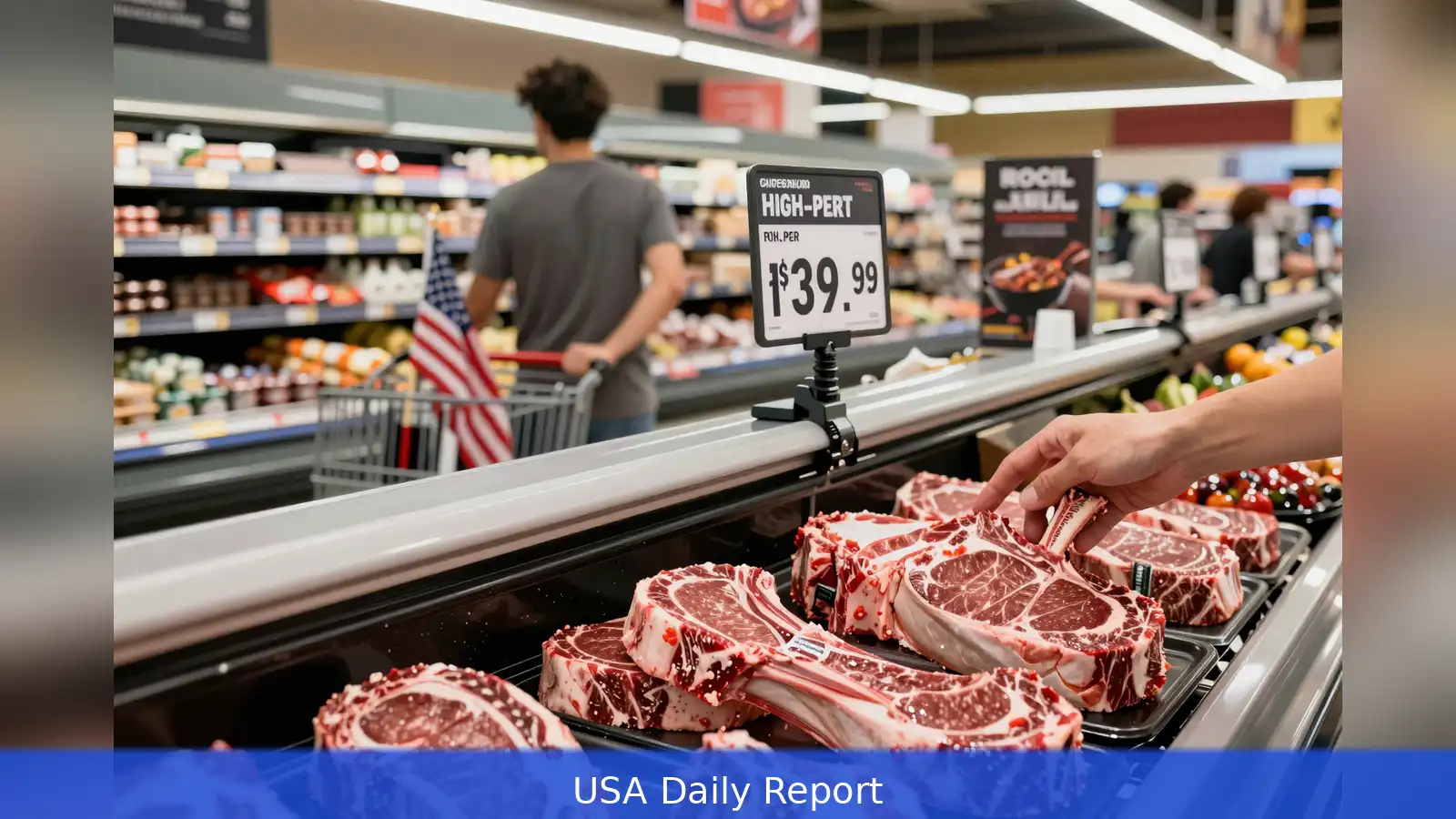
"We are seeing customer demand for steaks remain quite high, with a shift towards more premium and organic options," a Kroger spokesperson said. U.S. retail beef prices remain near record levels: the Bureau of Labor Statistics shows ground beef averaged $6.75 per pound in May 2026, up nearly 13 percent from a year earlier and just below April's record $6.90. Steak averaged $12.80 per pound in May, up 16 percent year over year and the second-highest level on record. Government projections and industry forecasts expect prices to stay elevated as herd rebuilding takes years.
"Consumers are entering the holiday with discipline, making more trips but with clear intent behind each one," NielsenIQ said in a June report as shoppers prepared for Independence Day. The report found roughly $352 million in extra dollar sales for beef ahead of the holiday compared with a year earlier, driven by stronger spending on steak as a centerpiece purchase. That pattern shows up at grocery chains and restaurants alike: households are paying more at the store and diners are seeing higher menu prices.
Why prices are high
Supply constraints are the main engine behind the price surge. USDA data compiled through January 2026 put the national cattle herd at roughly 86.2 million head, down from about 95 million in 2019 and at its smallest size since 1951, according to reporting in June. Producers point to years of drought, high feed and fertilizer costs, and prior herd liquidation as the reasons they reduced breeding inventories. Those pressures raised the cost of keeping and feeding breeding animals and shrank the pool of calves coming to market.
Rebuilding a herd is slow. Analysts and academics quoted in coverage for Marketplace and Fortune note that a calf typically takes 16 months to two years to reach slaughter weight, meaning a return to larger supplies can't happen overnight. The lag time helps explain why retail and restaurant prices have stayed high even as consumers shift purchases within the grocery basket.
Compounding the domestic shortage, a reemergence of the New World screwworm in U.S. livestock in 2026 disrupted animal movements and prompted quarantines and new inspection rules in several states. Public officials said the outbreak led to temporary export and import restrictions, including Canadian bans on shipments that had been in affected Texas areas in the previous 21 days, and a U.S. halt on certain exports to Mexico. Those measures tightened availability and pushed margins higher for processors and exporters.

Why demand is holding
Part of the price resilience is mechanical: beef has a relatively inelastic demand curve. Historical academic work cited in coverage puts beef's price elasticity around -0.70, implying consumers reduce purchases by less than the price increase.
In practice that shows up as shoppers cutting elsewhere while keeping steak as an occasional splurge.
NielsenIQ and other consumer trackers report shoppers treating steak as an "affordable luxury," trading up on claims such as USDA Prime, no added hormones, grass-fed, and no antibiotics ever. Those attributes lifted in purchase data, and specialty sellers reported steady interest in premium proteins as celebration and gifting items. For example, Omaha Steaks told CNBC that premium cuts remain a go-to for gifts and holidays even as shoppers pare back on other categories.
Retailers have tried targeted promotions around grilling holidays to blunt the pain at the register. Kroger and other large chains report sustained demand for steak despite discounting efforts. But the promotions haven't erased the overall price rise because the shortage and higher production costs are broad based, not limited to a few cuts or chains.
With fewer cattle on the ground and replacement animals taking years to enter the supply chain, retailers and restaurants face a structural constraint. Consumers show they will shift within meat categories and seek quality cues, but many still choose steak for weekend meals and special occasions.
That combination, analysts say, leaves prices set to remain elevated even if short-term consumption patterns soften a bit. The USDA projected further price increases in 2026, and industry analysts expect herd expansion to be gradual.
Related Articles
Watch USDA cattle inventory reports and the Bureau of Labor Statistics' monthly retail price releases for early signs of herd recovery or price relief. Originally reported by CNBC.
This article was created with AI assistance.


