
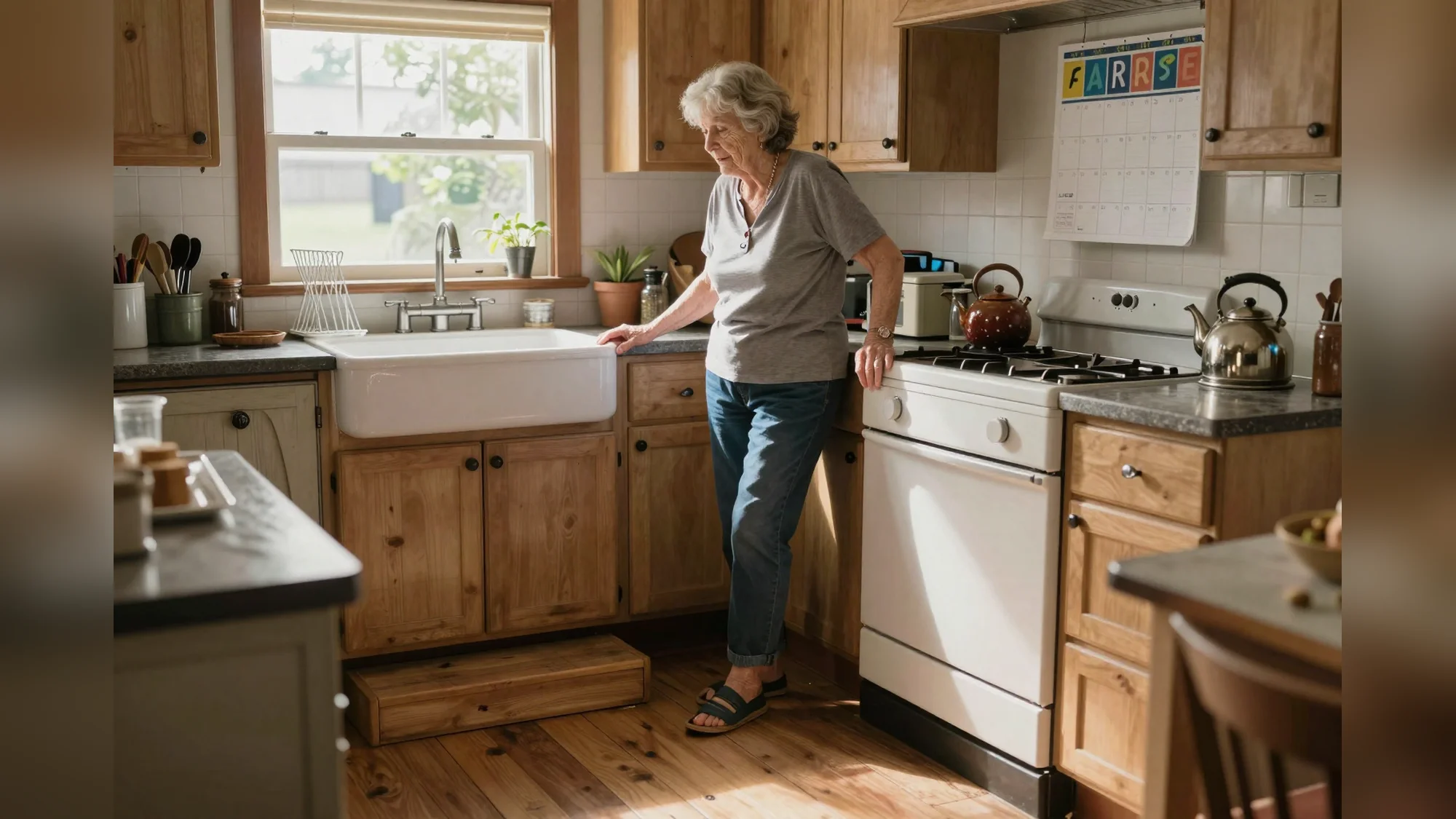
In a cluttered kitchen in a Midwestern ranch house, a 78-year-old pauses at the sink and stares at a step that used to be only a nuisance. The moment sums up a decision millions of Americans will face as baby boomers age: retrofit the house and try to stay independent, or move into a senior living community with services bundled into a monthly fee. MarketWatch frames the choice as primarily financial, warning that homeownership can look cheaper at first but carries recurring and often overlooked costs. By 2030 all baby boomers will be at least 65 years old, a demographic shift that will tighten demand for both in-home services and senior housing.
She remembers the step as an annoyance. Now it feels like a risk and a ledger entry. For many households the math begins with visible one-time bills: grab bars, ramps, wider doorways, bathroom retrofits and stair-lift installation. MarketWatch singles out those home modification expenses as common early costs, and it notes that the spending rarely ends there.
Beyond renovations, families must budget for ongoing maintenance, more frequent repairs, and, often, paid caregivers. MarketWatch warns that recurring care hours, transportation to appointments and emergency-response services add up over years. Those line items stack against a counteroffer from senior living communities that convert chores and many medical linkages into one predictable monthly charge. Communities commonly bundle on-site medical support, meals, housekeeping and social programming under a single fee that some households find easier to manage than fragmented bills.
But the packaged model can surprise homeowners who compare fees only to mortgage-free shelter. MarketWatch says community charges are sometimes higher than retirees expect.
The trade-off is partly financial and partly about daily life. Staying put preserves a known home and neighborhood.

Moving offers structured staffing, quicker access to care and built-in social life.
Technology has shifted the calculation in recent years. Wired profiles always-on monitoring devices marketed to extend the safe period someone can remain at home. These systems can detect falls, flag changing risk patterns and, in some cases, record ambient audio and produce transcripts for caregivers. Wired reports that such visibility can cut paid care hours and allow remote supervision, but the devices introduce privacy trade-offs and new family tensions over surveillance and consent.
Insurers and lenders are reacting to the demographic wave. CNBC notes that as demand for both in-home services and institutional senior housing rises, financial firms are adjusting products for older buyers.
CNBC reviewed life insurance options for seniors and found that premiums rise with age but that many companies still offer term, whole and no-medical-exam policies into older ages. The review also found guaranteed-issue products that cap modest death benefits and are aimed at final-expense coverage. Those policy choices matter because they affect estate plans, the ability to pay upfront move-in fees and the buffer available to cover long-term home care.
Families with tight retirement savings face a sequence of trade-offs. Some shrink housing costs by downsizing. Others invest in in-home care and hope to preserve independence. A third group allocates savings to a community that reduces day-to-day management. MarketWatch reports that many retirees pursue a staged pathway: retrofit first, add part-time care, then reevaluate as needs accelerate. Others move earlier to capture social and health advantages.
Financial advisers quoted in the coverage urge a pragmatic approach. They recommend mapping expected care trajectories, isolating recurring costs and comparing those sums with community fee schedules. They also tell clients to factor in predictable income sources, such as pensions, Social Security and any insurance proceeds that might offset expenses. The goal is to compare like with like: ongoing caregiving hours and emergency services versus an all-in monthly community fee.
Technology can lengthen the time someone stays at home, Wired says, but it shifts responsibilities to remote caregivers and paid monitoring services. That setup can reduce some costs but also creates new ones and social dynamics families must manage. Meanwhile CNBC reports lenders and insurers are tweaking the market to reflect older buyers who need different financing and coverage choices.
Related Articles
- Samsung stock falls 7% despite 19-fold profit surge
- Buffett warns 'gambling mood' heightens valuation risk
- $6.5 Million at 50: Quitting a $200K Job Is Doable
The calendar sets the deadline: by 2030 every baby boomer will be at least 65, concentrating demand for home care and senior living and forcing families to choose which combination of costs and trade-offs they can shoulder. Originally reported by marketwatch.com.
This article was created with AI assistance.


