
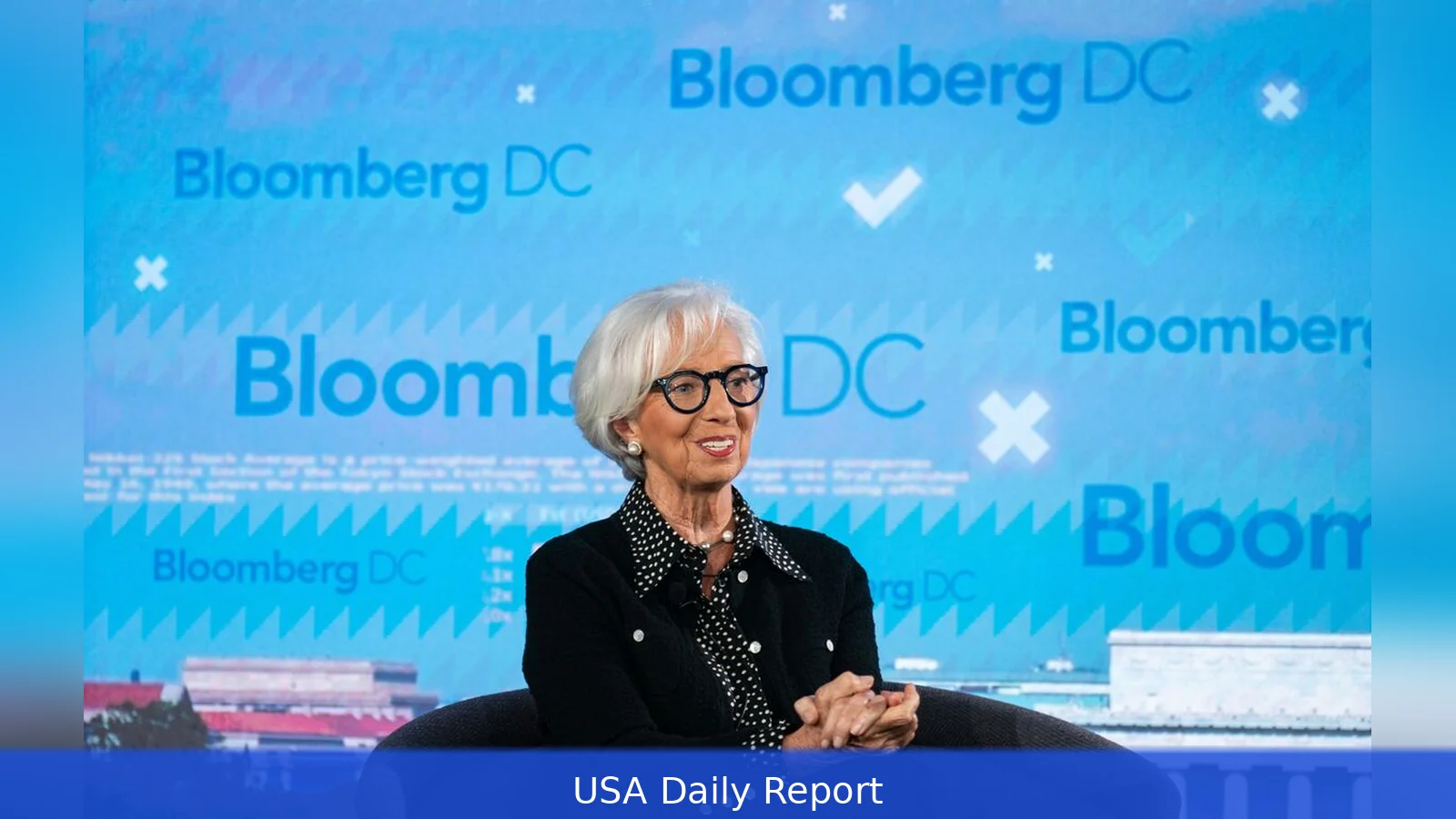
ECB policymakers are leaning toward holding rates in April. They say fallout from the Iran war doesn't yet justify a hike. Market bets still price in two quarter-point lifts this year.
Why officials favor a pause
Policy discussions inside the European Central Bank have tilted toward keeping borrowing costs unchanged at the April meeting, people involved in the conversations said. Tighter financing conditions are already helping the ECB by keeping inflation expectations steady for the time being. Officials say that raising rates right away might not change market pricing much but could hurt the economy if conditions worsen.
The bank's governing council meets on April 29-30, and delegates want to see more evidence before changing course. The data arriving before the meeting won’t clearly show how almost two months of conflict in the Middle East have impacted growth, supply chains, or the ECB’s inflation target.
Some policymakers remember past mistakes when they considered acting faster. They point to 2022, when Russia's invasion of Ukraine coincided with a sharp acceleration in inflation and the ECB's policy choices were criticized for lagging; and to 2011, when two rate increases amid the euro-area sovereign-debt crisis had to be reversed quickly. Those memories are shaping a cautious mood now.
What officials are watching
Officials are tracking several variables: energy prices, trade disruptions, business sentiment and the extent to which tighter finance is already cooling demand. The spike in energy costs tied to the conflict has pushed euro-area inflation to 2.5% in March, according to ECB data cited by officials.
But the length of time those pressures persist depends on how long the war continues and whether peace talks succeed.
ECB Executive Board member Isabel Schnabel said there's no need to rush into a decision to raise rates. Her remarks reflect a view among some policymakers that acting prematurely risks having to reverse course if the shock turns out to be temporary. At the same time, several governing council members are mindful of upside inflation risks should energy prices remain elevated.
Bank of France Governor François Villeroy de Galhau urged caution on the April timetable, saying a focus on that meeting would be premature. His stance highlights an internal debate: some officials prefer to wait for clearer signals, while others worry that delaying too long could let inflation expectations drift higher and become harder to anchor.
Markets and outside voices
Investors remain split from the central bank's emerging cautious tone. Market-implied paths still show two quarter-point hikes priced in for the year, reflecting bets that the ECB will tighten further if inflation reaccelerates. Those positions influence borrowing rates and borrowing costs across the euro area even before any decision is taken.

Kristalina Georgieva, Managing Director of the International Monetary Fund, urged restraint for central banks facing similar trade-offs. "Central banks should resist the urge to tighten borrowing costs as That could damage economic output," she said, flagging the risk that policy moves intended to cool inflation could also tip growth lower. Her view adds weight to the argument for a measured approach.
President Christine Lagarde has stressed the need for agility at the ECB but has also said the bank doesn't start from a bias toward higher rates. "We need to be completely agile," she said, emphasising flexibility. Her comments underline the institution's willingness to change course if the incoming data warrant it — but not to move for the sake of moving.
Downside risks and growth forecasts
Governments and international forecasters have trimmed growth projections for the euro area since the conflict began. Firms say they're preparing for weaker demand among customers, which could pass through to hiring and investment decisions. Those second-round effects are what many policymakers want to see before they commit to a new tightening cycle.
Officials also note the lagged impact of past rate rises. Higher borrowing costs are already filtering through bank lending and corporate financing. So a decision to pause would rely both on incoming data and on the recognition that policy is working with a delay. The challenge is deciding whether to act now to stop inflation or hold back to avoid hurting growth.
Some central bankers inside the ECB worry that if they wait too long while inflation remains above the target, they could face larger, more painful moves later. Others counter that an early hike risks repeating the mistakes of the past when policy was reversed after economic conditions quickly shifted.
Implications for financial markets
A hold in April would likely tighten the debate in markets.
Short-term interest-rate futures and bond yields will respond to the bank's accompanying statement and any forward guidance. If the ECB signals strong readiness to act again, markets may retain their bets on additional hikes. If the statement leans toward optionality and patience, investors could scale back their expectations, easing some pressure on long-term borrowing costs.
Analysts also expect central bank communication to be carefully calibrated. The bank will likely stress uncertainty around the supply shock, the time it takes for higher financing costs to affect demand and the need to monitor inflation expectations. Officials understand that their words alone can influence markets nearly as much as an actual rate change.
For euro-area households and firms, the practical effect of a pause would be modest in the short run. Many borrowing rates already embed parts of earlier tightening cycles. But the direction of policy still matters: a sustained pause could make loans slightly cheaper over time if market expectations soften, while renewed hikes would keep borrowing costs high.
What to expect next
The ECB will watch incoming data in the days before the April meeting. Employment reports, inflation prints, and energy price trajectories will be scrutinized alongside geopolitical developments. The bank's preference for agility means it's prepared to pivot, but the current lean toward a pause reflects a judgment that the full economic impact of recent shocks is still unfolding.
Hang on though — surprise data or another sharp move in energy markets could shift the calculus quickly. Officials have signaled they won't be locked into a particular bias and will adjust if evidence mounts that inflation is set to move away from the target more persistently.
Related Articles
- Fed signals patience, projects one cut in 2026
- Bank of Canada Likely to Hold at 2.25% After 40% Oil Surge
- Three risks that could push the Fed to pause
The ECB's governing council meets on April 29-30 to decide whether to keep rates unchanged.
This article was created with AI assistance.


