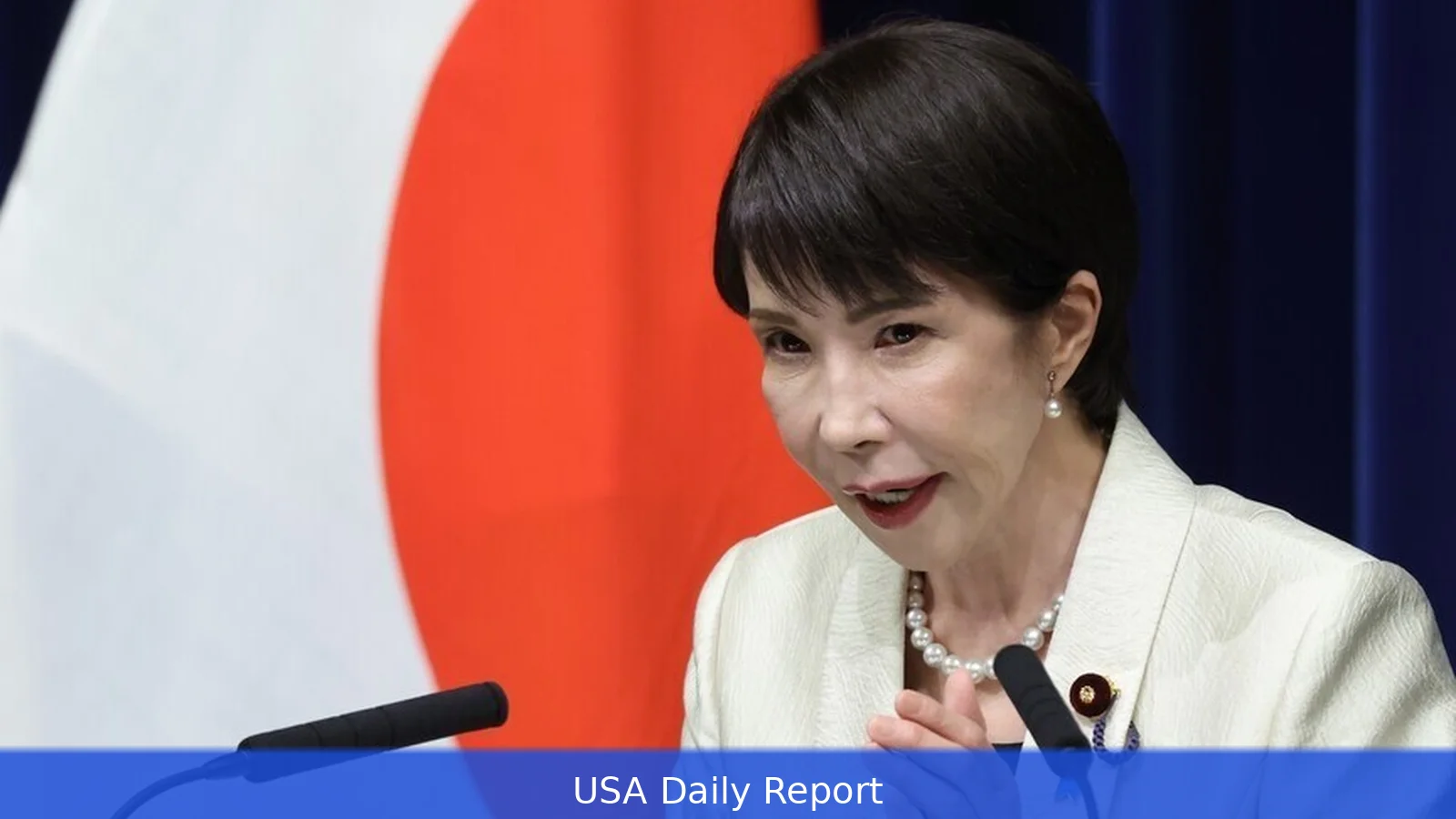
Japan will provide $10 billion to help Asian countries secure crude oil and fuel. Prime Minister Sanae Takaichi unveiled the plan after an online summit of regional leaders.
What Tokyo is offering
Japan's government announced a new $10 billion cooperation package aimed at helping countries in Southeast Asia and beyond obtain crude oil and petroleum products amid a deepening supply shock tied to the Iran war. The program, announced by Prime Minister Sanae Takaichi after the Asia Zero Emission Community plus summit, is designed to shore up procurement, support supply chains and expand fuel stockpiles across the region.
Ten billion dollars is a significant amount. The foreign ministry described the amount as roughly equal to about a year's worth of crude imports for countries in the Association of Southeast Asian Nations. Funding will flow through a mix of public, state-backed and multilateral channels — including the Japan Bank for International Cooperation, Nippon Export and Investment Insurance, the Japan International Cooperation Agency and the Asian Development Bank.
The plan won backing from leaders who joined the online meeting: representatives from the Philippines, Malaysia, Singapore, Thailand, Vietnam, Bangladesh and South Korea were among those who welcomed the initiative, Tokyo said.
Why Japan is stepping in
Japan depends heavily on Middle Eastern oil. Its exposure matters: the Strait of Hormuz handles nearly 90% of the oil and gas shipments bound for Asia, and disruptions there have sent crude prices higher and supply lines into turmoil. The sudden strains have forced several Asian governments to take emergency steps — the Philippines declared a national energy emergency and Vietnam temporarily suspended value-added tax on fuels — and they've prompted travel and work changes to save fuel.
Prime Minister Takaichi told reporters that the region is tightly linked by supply chains and mutual economic dependence. She said Tokyo will pursue measures to assist neighbors while protecting Japan's own energy security.
Japan has already used its strategic reserves to respond to the crisis. At the end of 2025, Tokyo held enough oil in reserve for 254 days of domestic consumption. Earlier this year authorities released a record chunk of that stockpile, handing 50 days' worth of oil to the market and scheduling another 20-day release for early May, officials said.
How the money will be used
Tokyo plans to use the $10 billion for several specific purposes. Governments and public financial institutions will help finance purchases of crude and refined products, underwrite trade and credit lines, and support the build-out of storage. The goal is to lower the immediate procurement costs for countries that are scrambling for barrels and to reduce the risk of local shortages for critical petrochemical feedstocks.
These feedstocks are important. Naphtha, a petrochemical product made from crude oil, is the base ingredient for many medical supplies and plastics, including syringes, gloves and dialysis equipment. Japan has warned that naphtha shortfalls could stress hospitals and other health services — especially important given the country's aging population.
Funding will come from a combination of Japan's state-backed lenders and international partners. The Japan Bank for International Cooperation and Nippon Export and Investment Insurance are expected to be central to the scheme, alongside the Japan International Cooperation Agency and loans or guarantees from the Asian Development Bank.
Regional reactions and immediate impacts
Several Southeast Asian countries are already feeling the squeeze. The Philippines, which depends on Middle Eastern supplies for nearly all its oil imports, saw retail fuel prices double in months after hostilities escalated. Airlines and logistics chains are cutting capacity and routes as jet fuel and diesel shortages bite.
Vietnam temporarily removed VAT on gasoline, diesel and jet fuel for a short period this spring. Other governments have urged conservation measures: carpooling, cutting air-conditioning, even shortening work weeks to save fuel. Japan's dollar-backed offer aims to give governments more breathing room to secure physical shipments and avoid panic measures that can further push prices up.
However, the details of how this works are important. Money alone won't open tankers or bypass chokepoints. What it can do is support pre-financing, underwriting and storage investments that make buyers more competitive in tight markets.
What it means for Japan's economy and central bank policy
Tokyo says the assistance won't drain domestic supplies — the package is intended to help neighbors without drawing down Japan's own stockpiles. But there's a balance to strike. Japan already participated in an International Energy Agency-coordinated release this year: Tokyo committed to contribute 80 million barrels as part of a broader 400-million-barrel release, including 54 million barrels of crude and 26 million barrels of oil products.
Financial markets and monetary policymakers are watching how the aid changes the economic backdrop. Central bankers consider energy shocks in their decisions because sudden fuel price spikes affect both inflation and growth. Some analysts say the pledge could ease regional price pressure, although the broader geopolitical picture still drives oil prices.
Bank of Japan Governor Kazuo Ueda has signaled the central bank's attention remains on external shocks and inflation dynamics. If the funding stabilizes regional energy markets, it could shave some near-term risk from the BOJ's table — and that would affect the debate over rate moves. But markets still see a low probability of near-term easing from the BOJ unless the geopolitical situation changes materially.
Limitations and risks
Money helps, but logistics, shipping capacity and security at sea are the hard constraints. The Strait of Hormuz remains a choke point; naval blockades or attacks that keep tankers from sailing will limit how quickly purchased oil can reach buyers even with financing secured. And global crude prices are still set by global supply-demand and risk premiums tied to conflict.
There's also political risk. Any perception that Tokyo is prioritizing exports of fuel or feedstocks over domestic needs could be politically costly. Takaichi addressed that concern by stressing Japan's interdependence with neighbors and by saying domestic supplies won't be compromised.
Point is, the pledge is big, but it's not a cure-all. It reduces financial frictions — bridges payment gaps, underwrites purchases, and helps expand storage — but it doesn't eliminate the core issue: barrels need to move, and the route through the Middle East is contested.
How markets may react
Traders are likely to treat the pledge as a moderating factor for regional demand-side stress. If countries can secure cargoes more easily, that may reduce panic buying and short-term price spikes on Asian markets. But the global oil price will remain sensitive to the conflict's next moves — and to how fast reserves can be restocked.
For now, governments are juggling emergency measures alongside diplomatic and military developments. Japan's $10 billion appears aimed at buying time: more storage, more insured shipments, less immediate pressure on retail markets. That time could matter if it prevents rationing or helps maintain production of critical goods that rely on petrochemicals.
Look, the payoff will depend on execution: how quickly funds are disbursed, how lenders structure guarantees, and whether physical shipments can actually reach buyers in need. If Tokyo and its partners move fast, the package could blunt the worst of the shock. If not, countries may still face shortages even with the money in place.
Still, this is a clear step by one of Asia's largest economies to use finance as a tool of regional stabilizing policy — and it shows how energy security and finance are increasingly linked in a volatile era.
Related Articles
- Abu Dhabi, Jordan Ink $2.3B Aqaba Rail Deal
- Asia Stocks Rise on Iran Deal Hopes, Strong Earnings
- China Leans on Infrastructure as Consumers Pull Back
At the end of 2025, Japan’s reserves held enough oil for 254 days of domestic consumption.


