
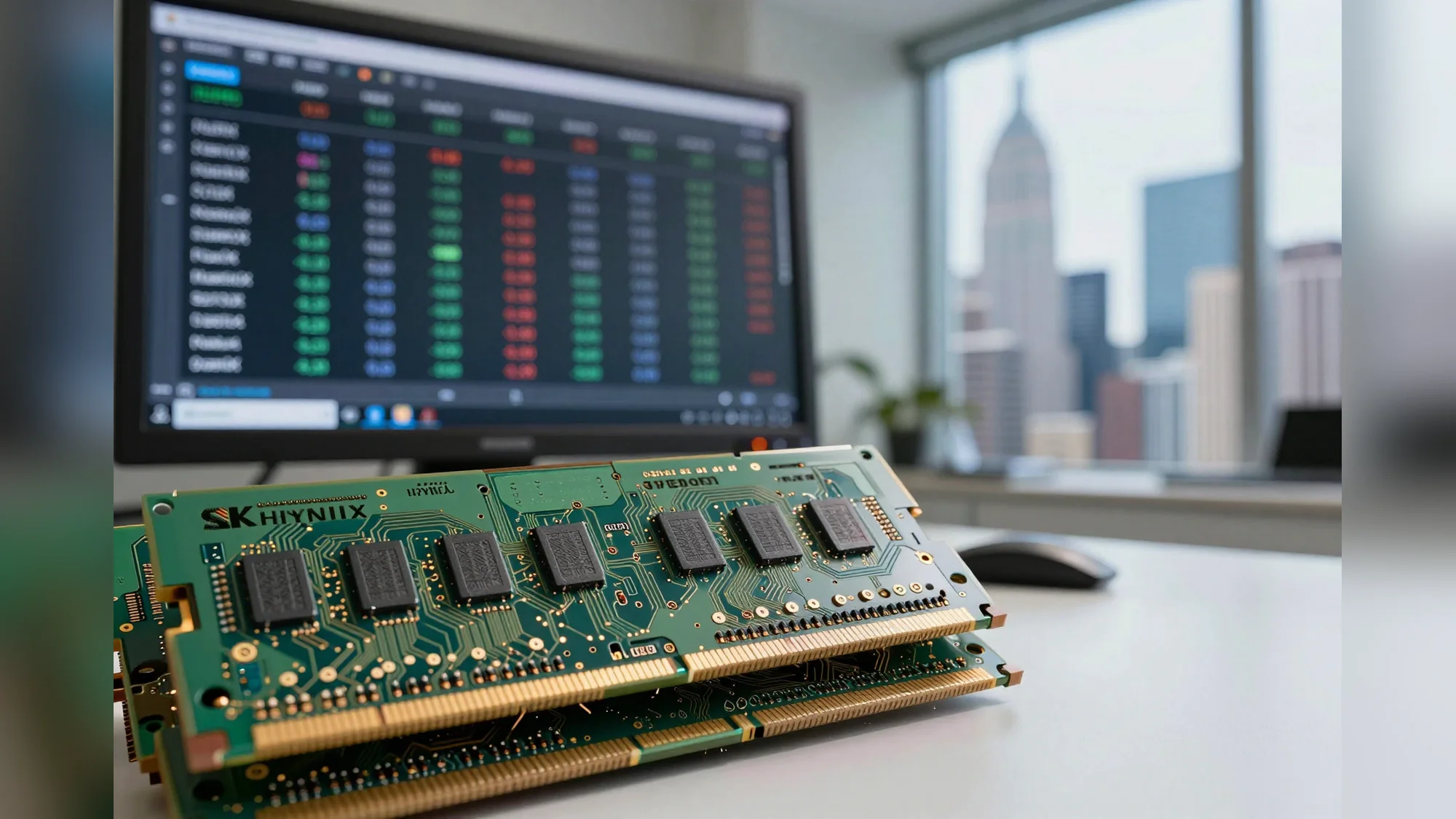
A U.S. listing could raise as much as $29.4 billion for SK Hynix, a move that will let American investors buy direct exposure to the memory supplier powering the AI data center boom. The company filed to sell up to 17.79 million American depositary shares, each equal to one-tenth of a common share, according to the filing. SK Hynix told regulators first-quarter revenue rose roughly 198 percent year over year to about $38 billion, and its share price has climbed several hundred percent so far in 2026 on AI-driven demand. Pricing is expected on July 9, 2026, with trading to begin July 10, 2026.
The company's filing shows it plans to sell up to 17.79 million American depositary shares, a potential $29.4 billion raise at the top of the proposed range.
How big is the deal and how will U.S. investors buy it? The prospectus filed for a Nasdaq listing proposes ADSs that each represent one-tenth of a common share, letting mutual funds, index funds and individual U.S. investors gain Hynix exposure without trading on the Korea Exchange. This $29.4 billion figure is the headline amount in the filing and assumes pricing at the high end of the range.
Why are buyers paying up now and how central is AI to Hynix's momentum? SK Hynix is the world's largest supplier of high-bandwidth memory, the premium RAM used inside AI accelerators, and it told regulators that AI-related demand drove explosive recent sales and margins. The company reported roughly $38 billion in revenue in the March quarter, about a 198 percent year-over-year increase, and market accounts link that surge to hyperscalers such as Amazon, Microsoft, Google and Oracle building memory-intensive AI data centers.
What could a Nasdaq listing change for investors and valuations? The prospectus and related market commentary say listing on Nasdaq will make SK Hynix easier for global and U.S. passive funds to hold and could narrow a longstanding valuation discount on Korean stocks by putting Hynix on the same index screens as peers such as Micron. Analysts cited in coverage expect increased index and ETF inflows and a potential re-rating that would shift comparative allocations among major memory suppliers.
What will the company do with the money and what are the risks? SK Hynix said it will use proceeds to expand manufacturing capacity, including plans to build new fabs.
The filings and market reports warn these expansion plans carry execution and market-timing risk: if capacity comes online after demand shifts, the industry could face excess supply that pushes prices down. Coverage also notes memory markets are cyclical and aggressive capacity builds expose producers to commodity-like price swings.
How does this affect the memory market and cloud providers? The filing and market commentary point to tight supply for HBM, DRAM and NAND as hyperscalers rush to scale AI infrastructure, lifting prices across the sector and boosting profitability. Market participants say the listing could change where portfolio dollars flow, and some commentators warn that if Hynix ramps supply aggressively the longer-term pricing dynamic could soften.
Related Articles
- BofA Warns of 'Upside Crash' After Nasdaq's 13-Day Rally
- Micron stock jumps 15% after $41.46B quarter
- SpaceX IPO hands public near-zero control, despite $80B bet
The next concrete milestone is pricing on July 9, 2026 and the start of Nasdaq trading on July 10, 2026. Originally reported by techcrunch.com.
This article was created with AI assistance.


