
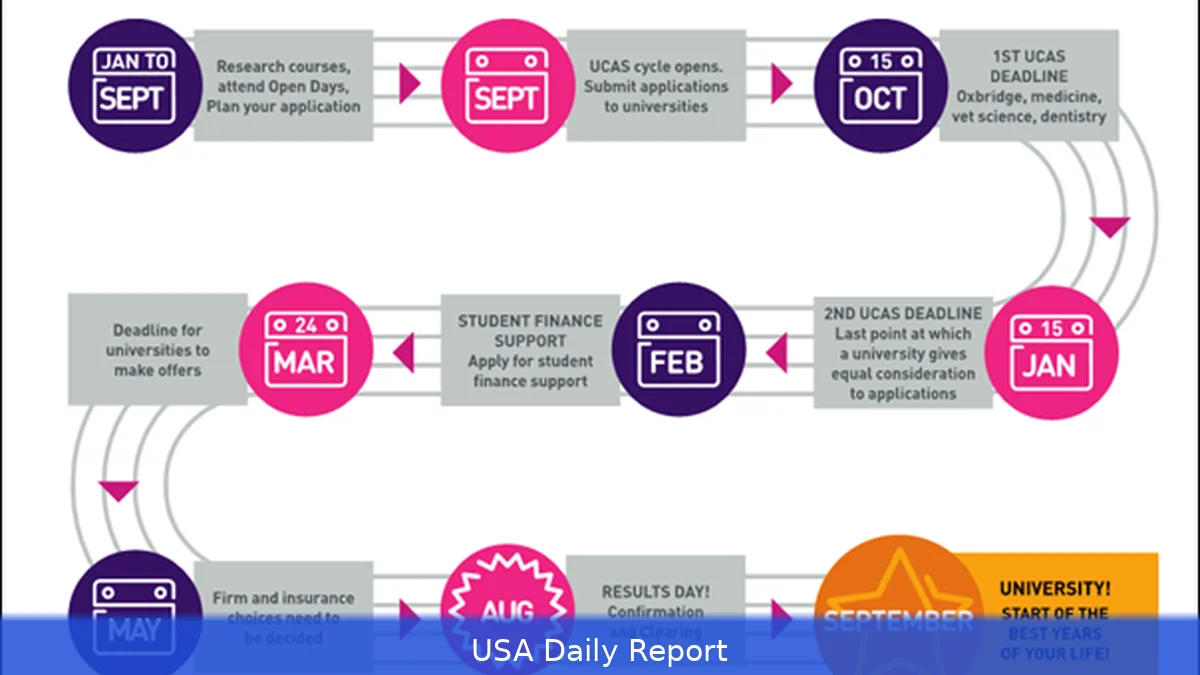
Many students initially don't know that UCAS is only for UK applications. But many UK and international students apply to US universities at the same time they use UCAS for UK options. Here’s a guide covering the 2026 timeline, platforms, costs, tests, and a checklist to help you keep track of deadlines for both systems.
Quick reference: key figures and links
- UCAS personal statement limit: 4,000 characters (or 47 lines). See https://www.ucas.com
- UCAS key deadlines: Oct. 15 (Oxford, Cambridge, most medicine/dentistry/veterinary), Jan. 31 (major UK deadline). See https://www.ucas.com
- Common App essay limit: 650 words. Common App fee: $20 at time of writing.
See https://www.commonapp.org
- US application rounds: Early Action/Early Decision deadlines usually Nov. 1 or Nov. 15; Regular Decision deadlines typically Jan. 1–Jan. 15. Decisions: ED/EA in mid-December; RD March–April. National Candidate Reply Date: May 1.
- FAFSA opens Oct. 1 each year at https://fafsa.ed.gov. CSS Profile at https://cssprofile.collegeboard.org. UK student‑visa guidance: https://www.gov.uk/student-visa
- UCAS: https://www.ucas.com • ONS stats and pay data: https://www.ons.gov.uk
Why these two systems matter together
Just so you know, UCAS doesn’t send your application to US colleges. It's a UK portal for undergraduate courses. But lots of students apply to a mix of US and UK schools. Running both tracks at once is the hard part. You’ll juggle different essays, different referees, different test schedules, and different deadlines. Get that calendar right and you’ve already won half the battle.
Prerequisites — what you need before you start
Make sure to prepare these early since both systems require them.
- Transcripts: official school transcripts, translated to English if needed.
- Predicted grades or mid‑year reports: UK teachers give predicted A‑level grades; US colleges use GPA and counselor recommendations.
- Reference letters: at least one teacher reference and a counselor recommendation for US apps; UCAS requires one academic reference.
- Standardized tests: consider SAT/ACT (many US schools are test‑optional, but check each school). English tests: TOEFL iBT or IELTS if applicable. Typical ranges schools ask for: TOEFL 80–100 iBT or IELTS 6.5–7.5, though requirements vary.
- Portfolio or auditions for arts courses where required.
- Payment method for application fees (credit card or fee waiver where eligible).
Step-by-step: How to run UCAS and US applications together (numbered plan)
-
Set a master calendar.
Add all your deadlines to a single calendar. Include UCAS dates (Oct. 15 and Jan. 31), Common App deadlines (Nov. 1/15 for early, Jan. 1–15 for regular), SAT/ACT test dates and registration cutoffs, TOEFL/IELTS dates, and FAFSA opening (Oct. 1). Mark decision windows: ED/EA mid‑December, RD March–April, reply deadline May 1.

-
Decide which platform each US school accepts.
Most US colleges accept the Common App (https://www.commonapp.org). Some use the Coalition App, others have their own portals. Create accounts early — the Common App opens each year on Aug. 1 for the coming year. Add schools to your list so you see school‑specific supplements and fees.
-
Complete UCAS first if you’re applying to competitive UK courses.
If you’re applying to Oxbridge or medicine in the UK, the Oct. 15 UCAS deadline is fixed. Finish UCAS elements — personal statement (4,000 characters), academic reference, predicted grades — before that date. You can’t reuse your UCAS statement for US supplements, but writing it early helps you shape your story for US essays.
-
Write the Common App main essay and school supplements.
Common App: 650 words max. Many selective US colleges also require 1–3 supplemental essays (150–300 words or longer). Draft early and get multiple reviews. Keep versions tracked — some schools want different focuses than UCAS.
-
Arrange references and transcripts twice.
Your UCAS referee submits one academic reference to UCAS. For US schools, ask your counselor and teacher referees to submit through Common App or each college’s portal; note deadlines and any upload instructions for predicted grades or mid‑year reports.
-
Schedule tests and send scores well in advance.
Sign up early for SAT/ACT and TOEFL/IELTS since spots fill quickly. Send official score reports to each college; on Common App you can indicate which colleges to send to, but you’ll usually need to order official score reports from ETS (for TOEFL/SAT) or ACT. Allow two to three weeks processing time.
-
Pay fees and apply for fee waivers if eligible.
Common App fee is typically $20; many US colleges charge additional fees (often $50–$90). Seek fee waivers via Common App if you meet income guidelines. UCAS charges a fee for undergraduate applications — check https://www.ucas.com for the current rate.
-
Submit early where possible.
Applying Early Action or Early Decision can get you decisions by December. If you’re set on one US school and willing to commit, ED can improve admission chances — but it’s a binding choice for most ED programs. Coordinate this with UCAS: you can apply ED to a US college and still submit UCAS for UK options.
-
Track offers and respond by the deadlines.
US schools send offers on different schedules — watch emails and portals. If admitted Early Decision, you usually must withdraw other applications. For UCAS offers, respond through UCAS Track. For US colleges, accept via their portals and, for domestic aid, complete FAFSA after Oct. 1.
Detailed breakdown: costs, visa and funding basics
Application fees vary. Common App charges about $20 to use the platform, plus per‑college fees. Individual US colleges often charge $50–$90 each. UCAS has its own fee for undergraduate applications—confirm at https://www.ucas.com.
Financial aid: US need‑based aid requires FAFSA (opens Oct. 1) for federal aid and sometimes state aid. Many selective private colleges also require the CSS Profile (https://cssprofile.collegeboard.org) for institutional aid. Deadlines differ — some are in early winter. Start financial aid forms the day after Oct. 1.
Visas: Accepted international students apply for a US F‑1 student visa after receiving the I‑20 from the college. For UK students heading to UK universities, check Student Visa guidance at https://www.gov.uk/student-visa.
Regional differences and special cases
UK applicants: teachers will supply predicted A‑level or Scottish Advanced Higher grades for UCAS. US colleges accept predicted grades as context but focus on GPA, class rank, and standardized tests. International qualifications (IB, European systems) are widely accepted by both systems — confirm conversion policies on each college site.
Applicants in the US: FAFSA eligibility and state deadlines matter. Some states require separate forms for state grants.
Start FAFSA Oct. 1 and check state deadlines immediately.
Applicants from outside UK/US: translation, notarization, and credential evaluation (like WES) may be needed. Factor extra lead time for these documents.
Tips — practical actions that make a difference
- Write the UCAS statement first. It’s strict in length (4,000 characters) and forces clarity. Then adapt material into multiple US essays and supplements.
- Keep an evidence folder: activity dates, awards, internships, supervisor contacts, and short descriptions you can paste into applications.
- Use a spreadsheet to track each school’s deadline, fee, test requirements, essay prompts, and financial aid forms.
- Request references early — at least six weeks. Give referees a packet with deadlines, your CV, and a summary of what to highlight for UK vs US choices.
- Run mock interviews if a school invites you (some US colleges use alumni interviews; Oxford/Cambridge use formal interviews). Practice talking about coursework, projects, and why the school fits you.
- Apply for fee waivers where you qualify. Both Common App and individual colleges offer waivers for eligible students.
Common mistakes to avoid
- Missing the Oct. 15 UCAS deadline for Oxbridge and medicine. That one’s strict — no late submissions for equal consideration.
- Assuming one essay fits both systems. UCAS wants an academic narrative; the Common App asks for a personal story and supplements probe fit with the program.
- Waiting to request transcripts and references. Schools often won’t process incomplete applications.
- Ignoring financial aid forms. If you want institutional aid from US colleges, missing FAFSA or CSS deadlines can cost thousands.
- Overlooking differences in deadlines between individual US schools. Don’t assume all Early Decision dates are identical.
Related Articles
- US GCSE and A-Level Results Days 2026 — Dates and What to Expect
- Best Part-Time Jobs US 2026 — Flexible Work That Pays Well
- US Gender Pay Gap 2026 — Latest Data by Industry and Company
Applying to US universities while using UCAS for UK choices is a two‑track process — different platforms, different essays, different deadlines. Make one calendar, finish UCAS early if you need it for competitive UK courses, draft and adapt essays for the Common App, order tests and transcripts early, and submit financial aid forms on time. Keep all confirmations and check portals daily. Meet the dates and the rest becomes routine.
This article was created with AI assistance.


