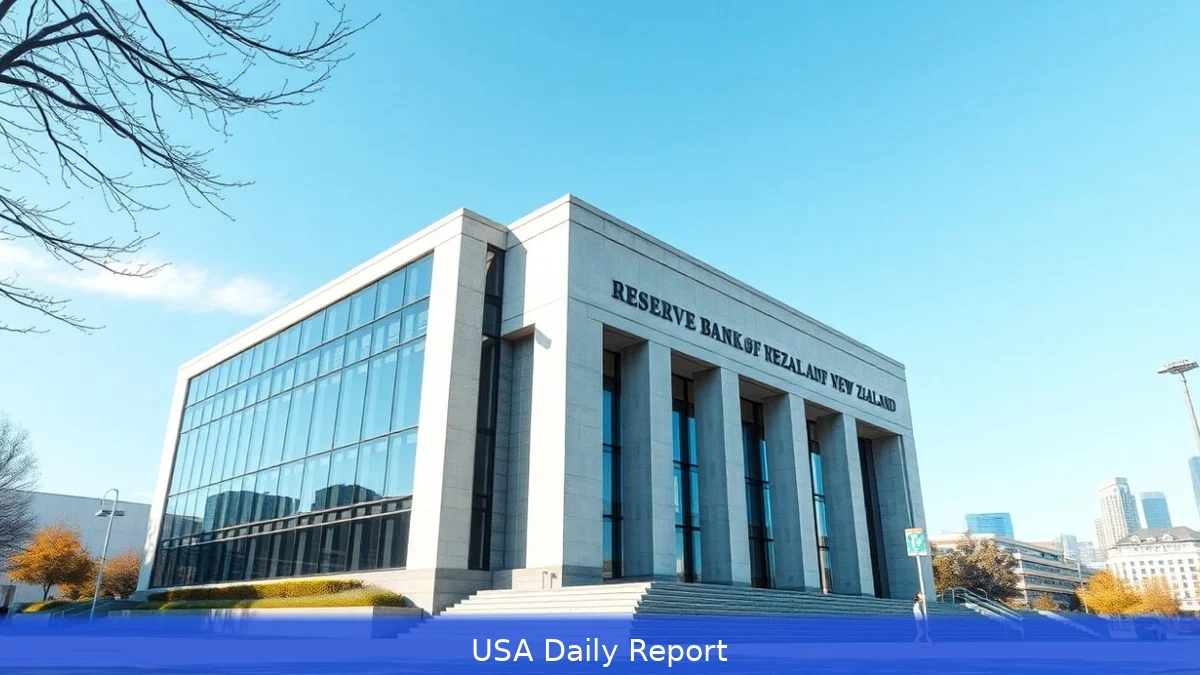
Anna Breman opened her debut briefing with a long slide deck.
New governor signals clearer communication
Anna Breman, the Reserve Bank of New Zealand's new governor, used her first policy briefing to send a message: clarity matters. She spent roughly 10 minutes walking markets through slides, a noticeably more visual and longer presentation than her predecessor’s brief remarks. The central bank left the official cash rate, or OCR, unchanged at the meeting, but Breman took pains to cool talk of immediate rate hikes.
Markets clearly noticed the change. Jarrod Kerr, chief economist at Kiwibank, said Breman "made her mark with an exceptionally simple, well delivered, statement and OCR track."
What Breman actually said
"We want to keep the OCR on hold to support the recovery while ensuring that inflation falls back to target," Breman told reporters, laying out the bank’s near-term stance. She said the economy is in the early stages of recovery, but she also acknowledged many households haven't felt that improvement yet. The tone was cautious and aimed at steering expectations: no hike until inflationary pressures and a stronger economy emerge.
And she announced one concrete change to policy operations: the RBNZ will hold eight monetary policy meetings next year instead of seven. The move responds to critics who argued a long summer break made communication unclear and left markets guessing during a key part of the year.
FMA pushes banks to show how OCR changes pass on
The Financial Markets Authority has published a report focused on transparency around how quickly banks and other lenders pass OCR moves through to customers.
This FMA says it requested detailed information from eight institutions that together provide roughly 98% of New Zealand housing loans. The data covers how big interest rate moves are for floating mortgages and on-call savings, and how long it takes for those changes to take effect for new and existing customers.
The FMA wants consumers and markets to understand how policy changes affect the prices households pay. Banks already publish product rates and change notices in various ways, the FMA noted, but the new publication aims to put comparable information in one place so the speed and size of pass-through is clearer.
Why pass-through transparency matters
When a central bank nudges the OCR, the immediate impact is on the wholesale cost of money. But the effect households feel depends on how fast and how much banks change retail rates.
Floating-rate mortgage customers, savers with on-call accounts, and borrowers with variable pricing structures can all see different timing and amounts.
Under former governor Adrian Orr, the RBNZ faced criticism for heavy stimulus during the pandemic and then later had to lift rates sharply to wrestle down inflation. That episode left consumers and lawmakers focused on both central bank decisions and the banking sector’s reaction. The FMA's new data aims to make that reaction more visible.
Markets, households and the politics of central bank independence
Breman's arrival followed a turbulent period. Adrian Orr resigned last year amid rising criticism of the bank's pandemic-era actions and its handling of broader economic management. Breman, a 49-year-old Swedish national, became the RBNZ's first female governor after an international search that identified about 300 candidates.
Her briefing didn't shy away from risks. She noted global pressures — including unsustainable fiscal policies in some countries and political pressure on central bank independence — among various threats to the outlook. Breman was also publicly rebuked by New Zealand's foreign minister after she had signed a statement backing Jerome Powell, chair of the U.S. Federal Reserve. The RBNZ later said she did so because she believes strongly in central bank independence.
Practical fallout for borrowers and savers
The FMA’s snapshot of pass-through timing is meant to give households concrete information when they shop for mortgages or evaluate savings accounts. Consumers will be able to see, for example, whether Bank A typically adjusts floating rates within days of an OCR move while Bank B takes weeks. That matters a lot when rates are moving or when households are budgeting for mortgage payments.
The FMA's push puts more pressure on banks to explain when and how much they adjust rates. Financial institutions already have to disclose rate changes; the FMA wants comparable, public data so the market can judge whether customers are getting fair treatment. For the RBNZ, clearer public understanding of pass-through could also reduce noise when the OCR changes — if people can see the chain from policy decision to retail rate, reaction might be less volatile.
How the RBNZ is changing its own playbook
Breman hasn’t just altered presentation style. She adjusted the policy calendar and is leaning into more visual and frequent communication. That's a deliberate attempt to avoid the mix-ups that critics said hurt the bank under its previous leadership. Breman's approach is methodical: more meetings, longer briefings, and a clear statement that the bank won't rush into hikes without signs inflation is proving persistent.
The RBNZ, like many central banks, must balance acting early to curb inflation against the risk of slowing a fragile recovery. Breman's explicit linking of holding rates to a recovery in the real economy is a signal of where the bank stands — cautious and patient.
What to watch next
Observers will be watching the FMA’s published tables for patterns in pass-through timing and size across the big lenders. They'll also watch RBNZ communications at future meetings to see whether the extra session and more graphic briefings change market behavior. The interplay matters: clearer public data on pass-through might shape expectations about how fast households feel OCR moves, and those expectations feed back into inflation dynamics.
Look for continued scrutiny from politicians as well. The debate over central bank independence has become louder globally, and Breman has already felt some of that pressure. How she balances independence with transparent, straightforward messaging will shape how the RBNZ is judged in months to come.
Related Articles
- Bitcoin Rallies After Treasury-Linked Stablecoin Forecast Goes Viral — But the $1.5 Quadrillion Claim Comes From Chainalysis
- Out of Prison, Binance Founder Lays Bare Secret Talks, Legal Fight and a Rare Fall in New Memoir Draft
- ‘The plan is working,’ Trump's trade adviser tells Rust Belt amid rising inflation
"We're not planning on hiking the OCR until we see more inflationary pressures and a stronger economy," Breman said.


