
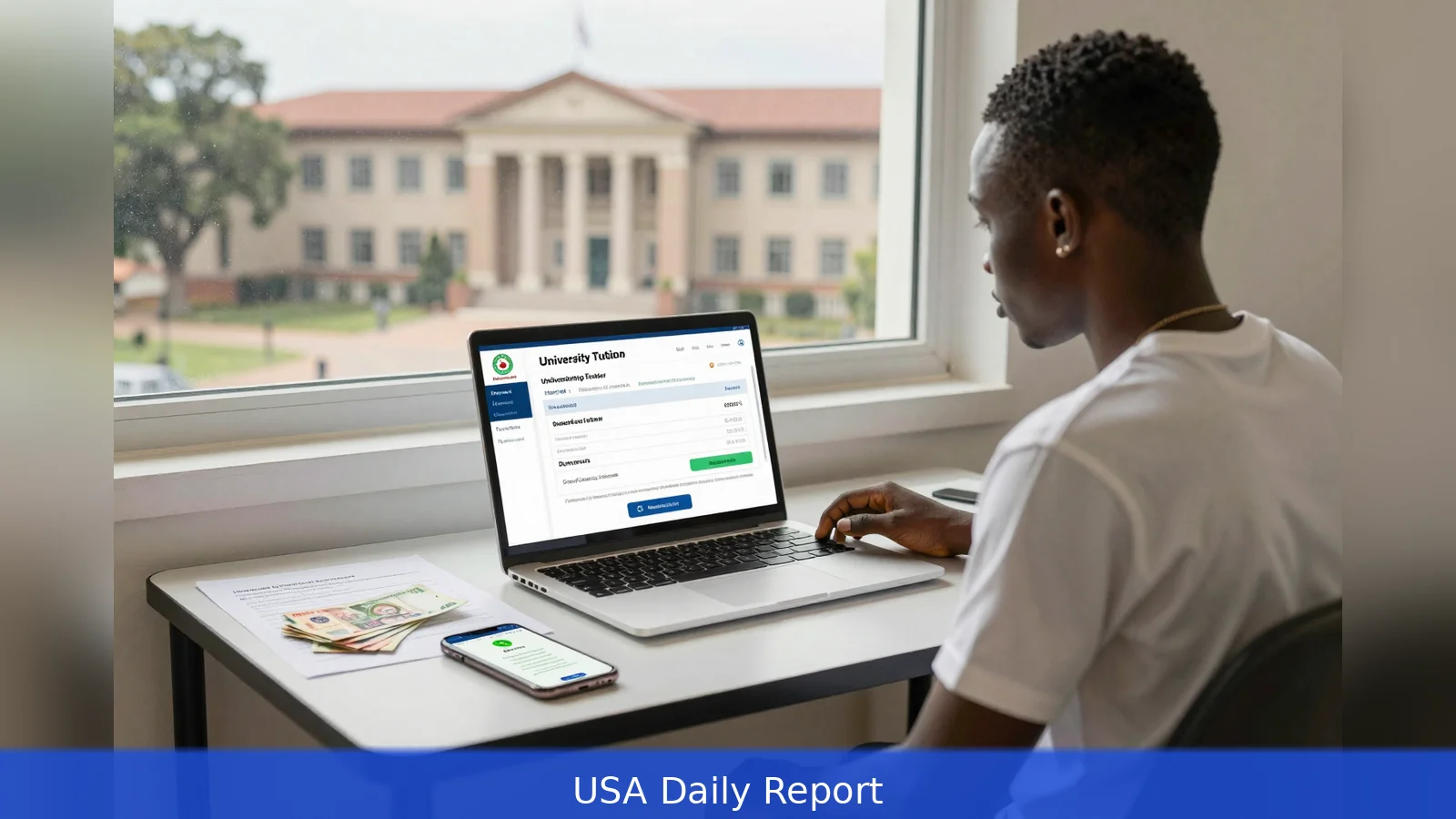
How can paying a US university from a Nigerian bank account cost twice as much as using a fintech app, and still arrive later? The difference comes down to three things every sender cares about: how many dollars the school actually receives, how long the payment takes, and how much paperwork your Nigerian bank will demand. Specialist platforms, MoneyGram, banks and apps like Wise, Pesa, Grey and Money.ng each present different trade-offs on fees, exchange rates and timing; a NairaCompare 2026 worked example shows a $500-equivalent transfer can leave the recipient roughly ₦45,000 to ₦50,000 worse off when done by bank wire with a $35 fee and a 4 percent exchange-rate markup. Start by asking your university for the exact wiring instructions and the currency it prefers, then get an on-the-record delivered-amount quote from at least two providers that can deposit USD to the school.
Why the paradox happens
Why do traditional bank wires often cost more and take longer than specialist platforms? The short answer is the total cost isn't the headline fee. It's the sum of the transfer fee, the exchange-rate markup and any intermediary or receiving bank charges, and banks often lose this comparison on two of those three items.
First, the exchange-rate markup matters. An industry worked example used a mid-market benchmark and showed how a bank fee plus an exchange-rate markup can push a bank-wire sender into paying far more than a specialist that quotes close to the mid-market rate. Second, timing differs: fintech platforms and some digital operators hold local US liquidity or maintain multi-currency rails that let them deliver USD in minutes to same-day, while Nigerian bank wires typically take two to five business days. Third, paperwork varies. Banks often demand Form A or equivalent export documentation and heavier KYC, while many fintech apps require only standard ID uploads and a selfie during onboarding.
1. Confirm the school's exact payment instructions
First, get the school to give you the exact wiring instructions and preferred currency in writing. Tuition offices commonly provide either a US-dollar account number plus a routing number for domestic US deposits, or instructions to accept international wires by SWIFT. MoneyGram's user flow and fintech platform guides both emphasize that the sender must enter beneficiary details exactly. The required fields are consistent across guides: beneficiary full name, beneficiary bank account number, bank routing number for US domestic transfers, SWIFT or BIC if the school requires a SWIFT wire, and the school's remittance reference or invoice number. If any of these fields are missing or wrong, a transfer can be delayed or rejected.
2. Choose the corridor that matches the school's rails
Second, choose the transfer corridor and delivery method that match the school’s instructions. If the school requires an incoming USD deposit to a US bank account, the simplest match is a provider that can deliver USD directly to that US account. Fintech platforms that maintain local US liquidity, support direct USD transfers, offer multi-currency accounts, or provide linked US virtual accounts will usually be the cleanest route for a USD beneficiary account. If the school accepts other methods, agent networks and MTOs remain an option for emergencies, but cash pickup is irrelevant for tuition payments.
3. Compare total cost, not just the headline fee
Third, compare the delivered amount rather than the fee line. Three components determine the true cost: the transfer fee, the exchange-rate or conversion method, and any intermediary or receiving bank charges. Use the checkout screen to confirm the final delivered amount in USD. MoneyGram and other established operators show both the total cost and the delivery timing in the checkout flow so you can compare side by side before confirming. A worked example shows the gap can be large: on a $500-equivalent transfer, typical bank fees and exchange markups can leave the recipient substantially worse off compared with a specialist digital platform that quotes close to the mid-market rate and low fees. For semesterly or yearly tuition payments, those differences compound.
4. Decide between a domiciliary route and a naira-to-USD conversion route
Fourth, pick whether you will send from a domiciliary or dollar-capable account or convert naira to USD inside a fintech. Nigerian banks commonly ask senders to fund a domiciliary account or to supply foreign-exchange paperwork for outward remittance. Traditional bank wires typically take two to five business days and are used for large or corporate transfers. Another route is to open a dollar-capable foreign account or a US virtual account inside a fintech app, fund a naira balance, convert to USD in the app, and then send USD to the US bank account. That route avoids a full bank wire in some cases, but you must use a platform that supports currency conversion and outbound USD transfers.

5. Complete identity and compliance steps without surprises
Fifth, follow identity and compliance steps precisely. Expect KYC checks and be ready to upload the documents platforms request. Many fintech onboarding flows require a government-issued ID and a selfie for verification. MoneyGram's flow shows verification steps during setup and highlights any required steps before the transfer can proceed. Some Nigerian banks or remittance channels may additionally request Form A or equivalent export documentation for certain transactions. Save the school invoice, your ID and recent bank statements in case the provider or bank asks for them.
6. Pick the provider type by weighing speed, cost and paperwork
Sixth, pick a provider type by balancing three priorities: speed, cost and documentation burden. Specialist digital platforms and fintech transfer apps generally offer the most transparent rates and the fastest rails for USD transfers. Some platforms use close-to-mid-market rates and low fees; others build margin into the exchange rate. MTOs such as MoneyGram combine agent networks with digital channels and show the total cost and delivery timing up front. Banks will often be the slowest and the most document-intensive, but they remain the fallback for very large payments or for institutions that insist on a SWIFT wire from a bank account.
7. Reconcile conflicting claims on fees and speed
Seventh, reconcile provider claims before you send. Providers disagree. Some apps advertise zero-fee instant transfers to the United States, which can contradict operators that charge a visible fee plus an exchange-rate spread. Because the total cost depends on the exchange rate applied at conversion plus any intermediary charges, the safest practice is to get the full cost and delivered amount quoted in the checkout screen and to compare that delivered USD amount with what the school requires. If possible, get that delivered-amount quote in writing or in the app before initiating the transfer.
8. Handle exchange-rate timing and locking
Eighth, understand the conversion mechanics and timing. If you use a fintech that converts naira to USD inside the service, confirm whether you fund the transfer in naira or in a domiciliary balance and whether the quoted exchange rate is locked for a short period. Industry notes emphasize that the mid-market rate differs from provider rates and that providers may add a spread. Some platforms advertise rate-locking or scheduled transfers. If you expect currency volatility before a tuition deadline, ask your platform whether you can lock a rate or schedule a transfer to execute earlier.
9. Anticipate timing, proof and fallbacks
Ninth, choose a route that matches your deadline and prepare fallbacks. For incoming USD to a US account, fintech transfers that hold USD in local rails or use local US liquidity can be instant or same-day for many transactions, and fintechs often deliver in minutes to one business day. Bank wires typically take two to five business days. If timing is critical, pick a provider that explicitly lists delivery timing and get proof of payment to show the bursar. If the school requires a SWIFT wire and you must use a Nigerian bank, prepare Form A or the documentation your bank requests and expect the two to five business day window.
10. Track receipts and know dispute channels
Tenth, track everything and save receipts. After sending, keep confirmation numbers and screenshots. MoneyGram provides real-time tracking in its app. Fintech platforms usually list transaction history and status updates. If the school doesn't receive funds within the promised window, use the provider's customer service and dispute resolution process and retain copies of invoices and remittance confirmations used in the transfer. That paperwork will speed any investigation.
Practical workflow example
Here is a practical sequence you can follow for a typical 2026 tuition payment. First, confirm the school's bank account and the remittance reference or invoice number. Second, choose a fintech that supports outbound USD to the United States or, if required, plan a bank wire and assemble Form A or the bank's export paperwork. Third, complete KYC and fund the transfer in naira or a domiciliary balance according to your chosen route. Fourth, review the final USD delivered amount and all fees in the checkout before confirming. Fifth, confirm the transfer and save the receipt, then track it until the school confirms receipt.
Use platform checklists and MoneyGram and Pesa's documented operational steps as a setup reference when you make your first transfer. If you will make recurring semester payments, consider a route that minimizes exchange-rate spread and provides rate-locking or scheduled transfers so you can budget the whole term's cost in advance.
Gotchas and final checks
Before you click send, do these checks. First, verify every beneficiary field the school gave you: full name, US account number, routing number or SWIFT/BIC, and the remittance reference. Second, confirm the delivered USD amount in the provider's checkout and compare it with the school's invoice. Third, confirm timing and whether the provider offers tracking or instant confirmation. Fourth, keep copies of your ID, the school invoice and any bank paperwork you filed in case of a dispute.
I'll save you the trouble of trial and error: start by asking the university for the exact wiring instructions and the currency it prefers, then get an on-the-record delivered-amount quote from at least two providers that can complete a USD deposit to that account.
Related Articles
- Apply for Los Angeles County Jobs in 9 Clear Steps
- 10 Practical Tips to Stay Productive Working From Home
- Medicare food allowance: $25 to $200 via Medicare Advantage
A $500-equivalent transfer illustrates the risk: at a mid-market benchmark of ₦1,379.47 per dollar, a $35 bank fee plus a 4 percent exchange markup can leave the recipient roughly ₦45,000 to ₦50,000 worse off than using a specialist platform. Get two written delivered-amount quotes that can deposit USD to the school before you send.
This article was created with AI assistance.


