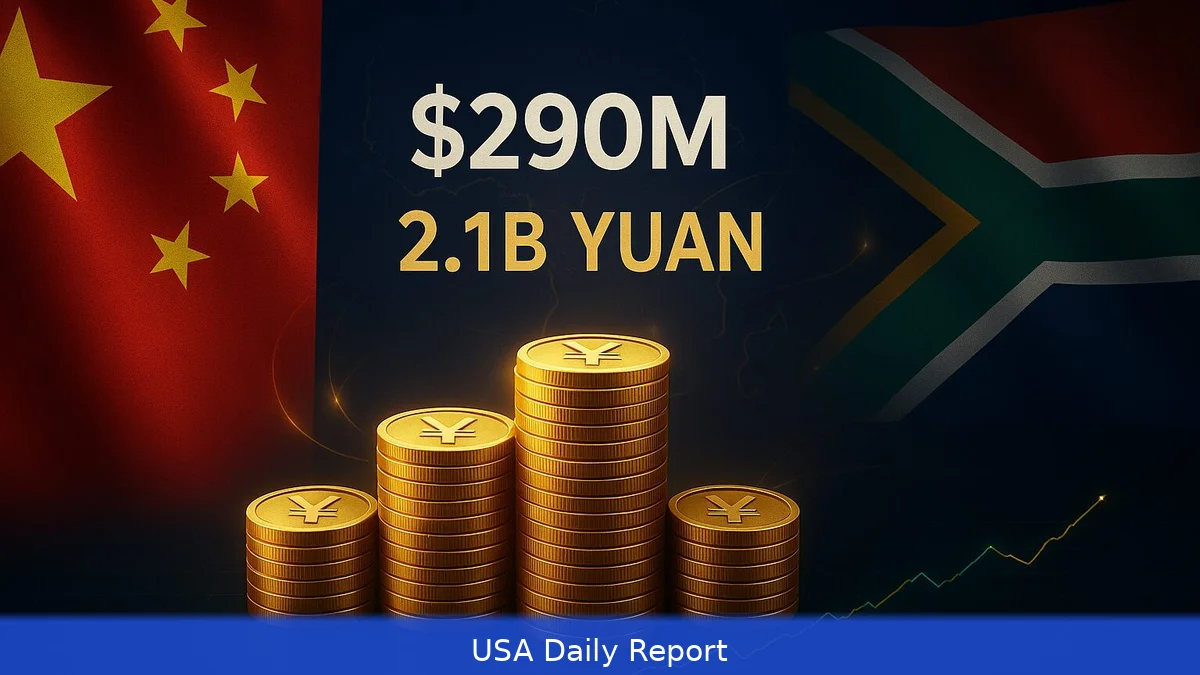
The BRICS-led New Development Bank (NDB) is ramping up efforts to finance infrastructure and development projects across emerging economies using the Chinese yuan. The move marks a shift toward alternatives to the U.S. Dollar in global finance, aiming to strengthen economic ties among the Global South.
Yuan Takes Center Stage in BRICS Financing
The New Development Bank, set up by Brazil, Russia, India, China, and South Africa, seems to be using the yuan more often for its loans. The strategy aligns with China's broader push to internationalize its currency and reduce dependency on the dollar system dominated by Western institutions.
There are some benefits to using yuan for development loans. For one, it helps participating countries diversify their foreign exchange risk. Nations that face dollar shortages or volatility can access funding in a stable alternative currency. At the same time, it strengthens China's financial influence throughout Asia, Africa, and Latin America, where many BRICS members have strategic interests.
Historical Context: Currency and Power
For a long time, controlling currency has been a way countries show their power. The U.S. Dollar's status as the world’s primary reserve currency stems from post-World War II arrangements and America's economic might. However, rising debt levels and inflation concerns in the U.S. Have prompted some countries to seek alternatives.
China's yuan is slowly becoming a real option because of the country's big economy and growing trade. The NDB's yuan loans symbolize a broader trend of emerging economies aiming to reclaim financial sovereignty and push back against dollar hegemony.
Historically, attempts to shift away from the dominant currency face challenges. The yuan isn't yet fully convertible, and trust in its stability takes time to build. Still, the BRICS coalition’s unified approach signals a serious effort to carve out a new financial order.
Implications for Global South Economies
Lots of countries in Africa, Asia, and Latin America find it hard to get cheap loans for building projects and energy. Traditional lenders often impose stringent conditions tied to Western political interests.
The NDB's yuan loans come with fewer strings attached, making them more attractive to governments seeking autonomy.
Also, yuan lending could reduce transaction costs and currency mismatch risks for countries trading heavily with China. This might lead to smoother project execution and better debt management. However, dependence on a single currency still carries risks if economic conditions in China deteriorate.
Plus, the NDB's model challenges existing development banks like the World Bank and IMF, which have historically been U.S.-led. It offers an alternative governance structure where emerging economies have more say in decision-making.
Challenges and the Road Ahead
Even with the potential, there are still challenges. The yuan's global use is limited compared to the dollar and euro. Many financial markets and institutions aren't yet equipped to handle yuan-denominated bonds or loans at scale. Plus, political tensions between BRICS members occasionally surface, potentially complicating joint initiatives.
Still, the push for yuan-based funding reflects a growing appetite among emerging economies for diversified finance sources. The NDB’s recent projects funded in yuan include renewable energy and transportation infrastructure, signaling confidence in the approach.
The big question is if this trend will really change global finance in a big way. For now, it represents a strategic step by BRICS to assert greater influence and offer more options to the Global South.
The New Development Bank’s emphasis on yuan lending not only challenges dollar dominance but also gives emerging economies new tools to finance growth. How far this shift will go depends on global political dynamics and the yuan’s acceptance beyond BRICS borders.


