
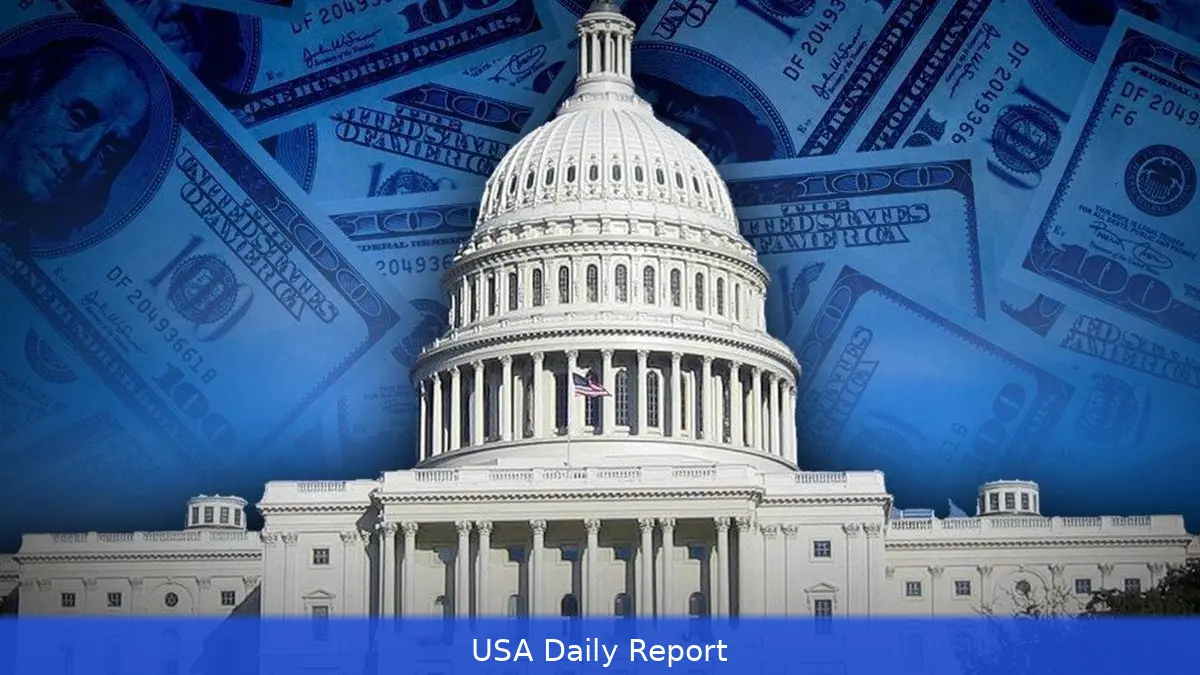
The U.S. Federal debt recently surged past $39 trillion. Meanwhile, American households are drowning in record credit card and loan balances. Some states are turning to gold as a shield against looming financial risks.
Federal Debt Hits rare Heights
The national debt has climbed faster than ever, crossing $39 trillion just months after surpassing $38 trillion. At this pace, the government is borrowing over $3 trillion a year. Interest payments alone are nearing $1 trillion annually, close to what the country spends on defense. This problem isn’t going away soon; it’s a fundamental issue built into the system. Federal spending now tops $7 trillion each year, with yearly deficits exceeding $2 trillion. The debt per American is nearing $114,000, and each taxpayer’s share exceeds $350,000. These numbers aren’t just statistics—they represent real challenges that could slow down economic growth and limit opportunities ahead.
Over the last century, the federal government has shifted from a modest borrower to the dominant holder of public debt. In 1900, total U.S. Debt was under 8% of GDP, mostly held by state and local governments. Today, federal debt stands at about 125% of GDP, while state and local debt remains under 11%. States face tough budget choices every year, bound by balanced budget laws and no option to declare bankruptcy. The federal government, in contrast, operates without those limits.
Households Struggle With Mounting Debt
It’s not just Washington facing debt problems. American families have racked up a staggering $18.8 trillion in household debt, spread across mortgages, auto loans, credit cards, and student loans. Credit card debt alone has topped $1.28 trillion nationwide, with average interest rates climbing above 21%. That high rate makes it tough for borrowers to chip away at balances, especially when interest compounds on top of prior charges.
For many, the pressure feels unbearable. Job losses, medical bills, and other hardships push some to explore aggressive debt relief options. Debt forgiveness, or debt settlement, is one such approach where creditors agree to accept less than the full amount owed. Successful settlements typically cut balances by 30% to 50%. On $15,000 of credit card debt, that could mean paying as little as $7,500 and saving thousands. But this isn’t a universal fix—negotiations can vary, and settlements might impact credit scores.

States Stockpile Gold to Hedge Against Debt Risks
As worries over the federal debt grow, some states are making bold moves. Wyoming recently purchased $11.6 million in gold bars, following a law requiring a minimum $10 million precious metals reserve. The idea is to diversify investments, preserve capital, and guard against inflation, debt defaults, and other risks.
GOP State Senator Bob Ide said there’s no timeline, but a sovereign debt crisis is coming due to unchecked federal spending.
Wyoming isn’t alone. Utah holds about $60 million in gold reserves and passed a law allowing vendors to be paid in gold and silver, inching back toward a gold standard last used decades ago. Other states like West Virginia, Tennessee, and Georgia are considering similar moves. Gold’s price surged in 2025, though it remains volatile. Experts warn that gold isn’t for growth like stocks but is a store of value to shield against market shocks.
The Broader Picture: Lessons From History
History offers warnings. The Roman Empire collapsed under military spending, inflation, and fiscal imbalance. The Weimar Republic of Germany unraveled similarly, losing confidence in its government and currency. This U.S. Isn’t facing the exact same fate, but the pattern is clear: borrowing faster than growth erodes economic strength over time. With federal debt rising so quickly, and household debt hitting new highs, the pressure is mounting on multiple fronts.
Meanwhile, many Americans are dipping into retirement savings to cover day-to-day costs. Hardship withdrawals from 401(k)s have increased each year for six years straight. That’s a sign families are struggling to meet immediate needs, jeopardizing their financial future.
Related Articles
- Intel to Raise $6.5B Debt for $14.2B Ireland Buyback
- Fed signals patience, projects one cut in 2026
- UAE Leaves OPEC — Saudi Arabia Picks Up the Slack
The country’s debt problems are complex and getting worse. Federal borrowing is rising fast, families are struggling with expensive debt, and some states are buying gold to protect themselves. The big question is how long this can last before it all comes to a head.
This article was created with AI assistance.


