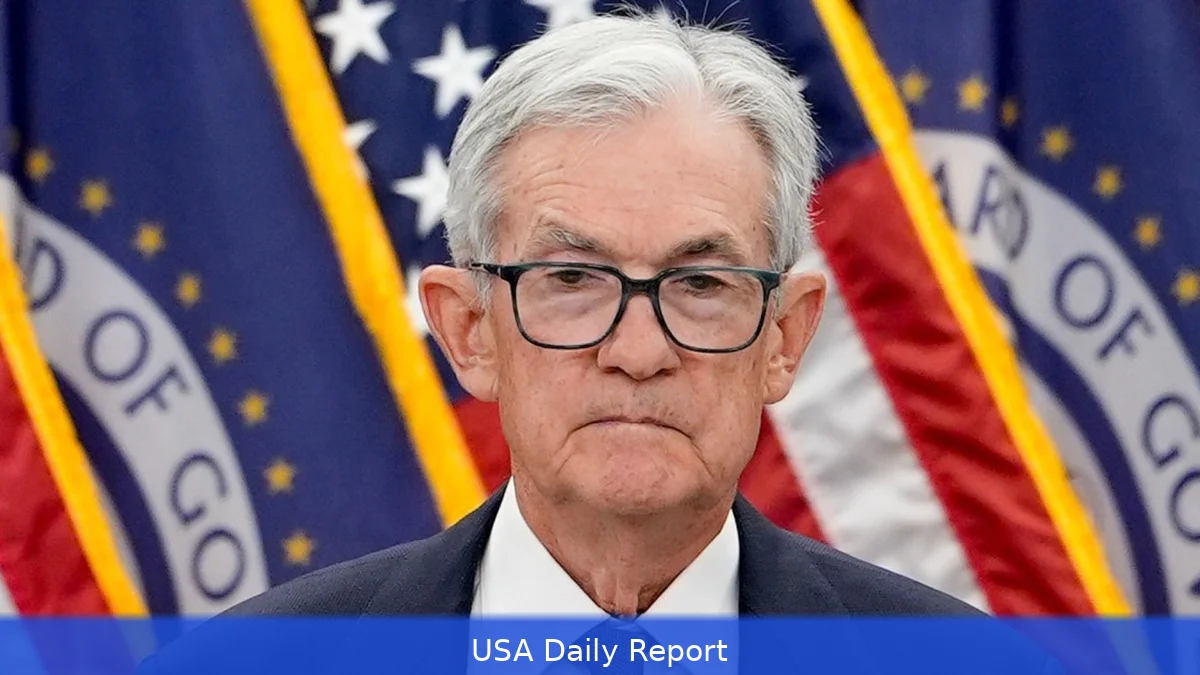
A federal judge refused Friday to reconsider his ruling blocking Justice Department subpoenas aimed at the Federal Reserve and its chair, Jerome Powell. The subpoenas, tied to a $2.5 billion renovation project, were seen as part of a political push against Powell, who has faced criticism from former President Trump for resisting interest rate cuts.
Judge Denies Motion to Reopen Subpoenas
U.S. District Judge James Boasberg, who presides over Washington’s federal trial court, stood firm against the Justice Department’s request to revive subpoenas seeking documents related to the Federal Reserve’s headquarters overhaul. The subpoenas, which had been quashed last month, targeted the Fed’s board of governors and sought records connected to the costly refurbishment of the Marriner S. Eccles and Federal Reserve Board East buildings.
The renovation, initially pegged at $1.9 billion, ballooned to $2.5 billion due to design changes, rising expenses, and unexpected issues. Powell testified before the Senate Banking Committee in June about the necessity of these updates to the central bank’s facilities.
But Boasberg said the government failed to show a legitimate criminal investigation was underway. Instead, he pointed to "abundant evidence" suggesting the subpoenas were a tactic to pressure Powell. The judge highlighted concerns that the investigation aimed to push Powell to lower interest rates or step down—moves favored by Trump but resisted by the Fed chair.
“The subpoena power isn't unlimited and may not be abused,” Boasberg wrote in his six-page ruling. He stressed that the government’s broad claims to subpoena authority overlooked a key question: whether the subpoenas had a real investigative purpose or were just political tools.
Political Pressure at the Heart of the Dispute
The Justice Department’s probe into the Fed’s renovation began earlier this year, shortly after Powell’s Senate testimony. The timing raised eyebrows given Powell’s high-profile role and his clashes with Trump over monetary policy.
Trump publicly criticized Powell and other board members for refusing to cut interest rates amid the administration’s push for cheaper borrowing costs. The subpoenas appeared to align with this pressure campaign, according to Boasberg’s assessment.
In his latest ruling, the judge dismissed the government’s argument that the subpoenas didn’t directly target Powell. He wrote, “No matter whom the subpoenas were addressed to, then, it was clear whom they sought dirt on: Powell.”
Jeanine Pirro, the U.S. Attorney leading the investigation, has denounced the judge’s decision. She called Boasberg an "activist judge" who neutered the grand jury’s ability to investigate the Fed and Powell. Her office says it will appeal the ruling to the D.C. Circuit Court of Appeals.
Implications for the Fed and Its Leadership
The ongoing legal battle threatens to make the Federal Reserve’s leadership transition. Powell’s term as Fed chair expires in mid-May, but the probe could delay confirmation of any successor. Senator Thom Tillis, a key member of the Senate Banking Committee, has said he won’t support any Fed nominee until the DOJ investigation wraps up. His stance creates a roadblock for Kevin Warsh, Trump’s pick to succeed Powell.
Powell has indicated he’s willing to remain as chair temporarily if the Senate hasn’t confirmed a replacement by the end of his term. His willingness to stay on reflects the uncertainty surrounding the Fed’s leadership amid the legal turmoil.
At the same time, the Supreme Court is considering whether Trump had authority to fire Lisa Cook, another Fed board member, adding to the political tension enveloping the central bank.
This probe by the Justice Department is unusual, especially since it’s the first one looking into the Fed’s renovation spending and comes with clear political overtones. Many are questioning if law enforcement is being used to sway monetary policy, which has usually stayed clear of political meddling.
“The government has missed this distinction,” Boasberg wrote, criticizing the DOJ for ignoring the lack of a good-faith basis to suspect a crime. The judge’s ruling clearly separates real criminal probes from political attacks disguised as legal actions.
By refusing to revive the subpoenas, the judge has left the investigation hanging, which only adds to the ongoing tension between the Justice Department and the Federal Reserve. As appeals move forward and the Fed’s leadership stays uncertain, the clash between law enforcement and politics keeps grabbing attention in Washington.


